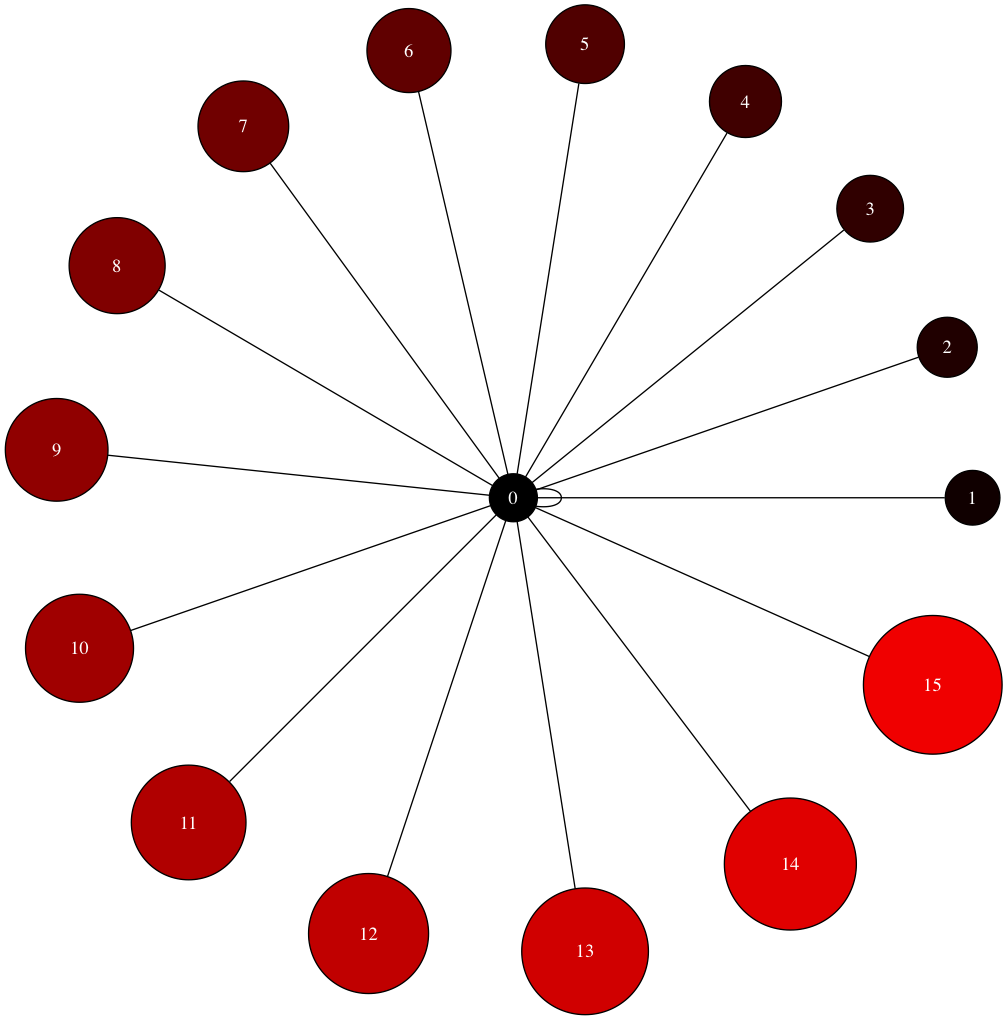
Graph Theory Unveiled: A Profound Journey Through Network Landscapes
The Timeless Symphony of Connections
Imagine standing before an intricate tapestry of interconnected points, each node whispering stories of relationships, pathways, and hidden mathematical poetry. This is the enchanting world of graph theory—a discipline that transforms complex networks into comprehensible, analyzable structures.
The Genesis of Graph Understanding
Graph theory isn‘t merely a mathematical construct; it‘s a lens through which we perceive the fundamental interconnectedness of our universe. From the moment Leonhard Euler solved the legendary Königsberg Bridge Problem in 1736, mathematicians and scientists recognized that graphs represent something far more profound than simple line connections.
Mathematical Foundations: Beyond Simple Connections
At its essence, a graph [G = (V, E)] represents a mathematical structure where:
- [V] symbolizes vertices (nodes)
- [E] represents edges connecting these vertices
But this definition barely scratches the surface of graph theory‘s complexity and beauty.
The Evolutionary Narrative of Network Representation
Consider how graph theory has metamorphosed from a pure mathematical curiosity to a critical tool across multiple disciplines. Each breakthrough represents a quantum leap in our understanding of complex systems.
Pioneering Moments in Graph Theory
-
Königsberg Bridge Problem (1736): Euler‘s groundbreaking solution demonstrated that mathematical thinking could solve seemingly impossible spatial challenges.
-
Bipartite Graph Discoveries (1840): Mathematicians began exploring more nuanced network representations, revealing intricate relationship structures.
-
Four-Color Theorem (1852): This problem challenged mathematicians to color maps using only four colors without adjacent regions sharing the same hue, introducing computational complexity concepts.
Computational Perspectives: Graphs as Living Ecosystems
Modern graph theory transcends static mathematical models. Today, graphs are dynamic, breathing entities that capture real-world complexity with unprecedented precision.
Machine Learning and Graph Networks
In artificial intelligence, graphs serve as fundamental representations of knowledge. Neural networks increasingly leverage graph-based architectures to model intricate relationships, enabling more sophisticated learning algorithms.
[P(connection) = \frac{1}{1 + e^{-(\omega_1x_1 + \omega_2x_2 + b)}}]This logistic function represents how machine learning models evaluate potential connections within a graph, mimicking biological neural networks.
Python‘s NetworkX: Transforming Theoretical Concepts into Practical Tools
NetworkX emerges as a powerful Python library that bridges theoretical graph concepts with practical implementation. Let‘s explore a comprehensive example demonstrating its capabilities:
import networkx as nx
import matplotlib.pyplot as plt

# Creating a sophisticated social network graph
class SocialNetworkAnalyzer:
    def __init__(self):
        self.graph = nx.Graph()

    def add_social_connections(self, connections):
        self.graph.add_edges_from(connections)

    def analyze_network_centrality(self):
        centrality_metrics = {
            ‘degree‘: nx.degree_centrality(self.graph),
            ‘betweenness‘: nx.betweenness_centrality(self.graph),
            ‘closeness‘: nx.closeness_centrality(self.graph)
        }
        return centrality_metrics

    def visualize_network(self):
        plt.figure(figsize=(12, 8))
        nx.draw_networkx(
            self.graph,
            node_color=‘lightblue‘,
            node_size=500,
            with_labels=True
        )
        plt.title("Social Network Graph Visualization")
        plt.show()

# Practical implementation
social_network = SocialNetworkAnalyzer()
social_network.add_social_connections([
    (‘Alice‘, ‘Bob‘),
    (‘Bob‘, ‘Charlie‘),
    (‘Charlie‘, ‘David‘),
    (‘Alice‘, ‘David‘)
])

centrality_results = social_network.analyze_network_centrality()
social_network.visualize_network()
Interdisciplinary Graph Applications
Neuroscience and Cognitive Mapping
Graphs provide unprecedented insights into neural network structures. By modeling brain connections, researchers can:
- Understand synaptic relationship patterns
- Analyze neurological disease progression
- Develop advanced brain-computer interfaces
Quantum Computing Frontiers
Quantum graph algorithms represent an emerging computational paradigm. By leveraging quantum superposition, these algorithms can solve complex network problems exponentially faster than classical approaches.
Real-world Graph Network Challenges
Consider supply chain optimization—a domain where graph theory becomes mission-critical. Companies like Amazon and Google utilize advanced graph algorithms to:
- Minimize transportation costs
- Predict potential disruption points
- Optimize routing strategies
Emerging Technological Horizons
As artificial intelligence evolves, graph networks will become increasingly sophisticated. Future developments might include:
- Self-adapting neural graph architectures
- Quantum-enhanced network analysis
- Predictive modeling using hypergraphs
The Human Element: Understanding Complexity
Beyond mathematical abstractions, graph theory represents a profound way of understanding human interactions, technological systems, and natural phenomena.
Conclusion: A Continuous Journey of Discovery
Graph theory isn‘t just a mathematical discipline—it‘s a philosophical approach to comprehending interconnectedness. As technology advances, our understanding of network structures will continue expanding, revealing ever more intricate relationship patterns.
Your journey into graph theory has just begun. Each connection you explore, each network you analyze, represents a step toward unraveling the complex tapestry of our interconnected world.
Recommended Further Exploration
- Advanced NetworkX tutorials
- Academic research in graph theory
- Machine learning graph network courses