Image Processing using CNN: A Transformative Journey into Artificial Vision
The Genesis of Machine Perception: A Personal Exploration
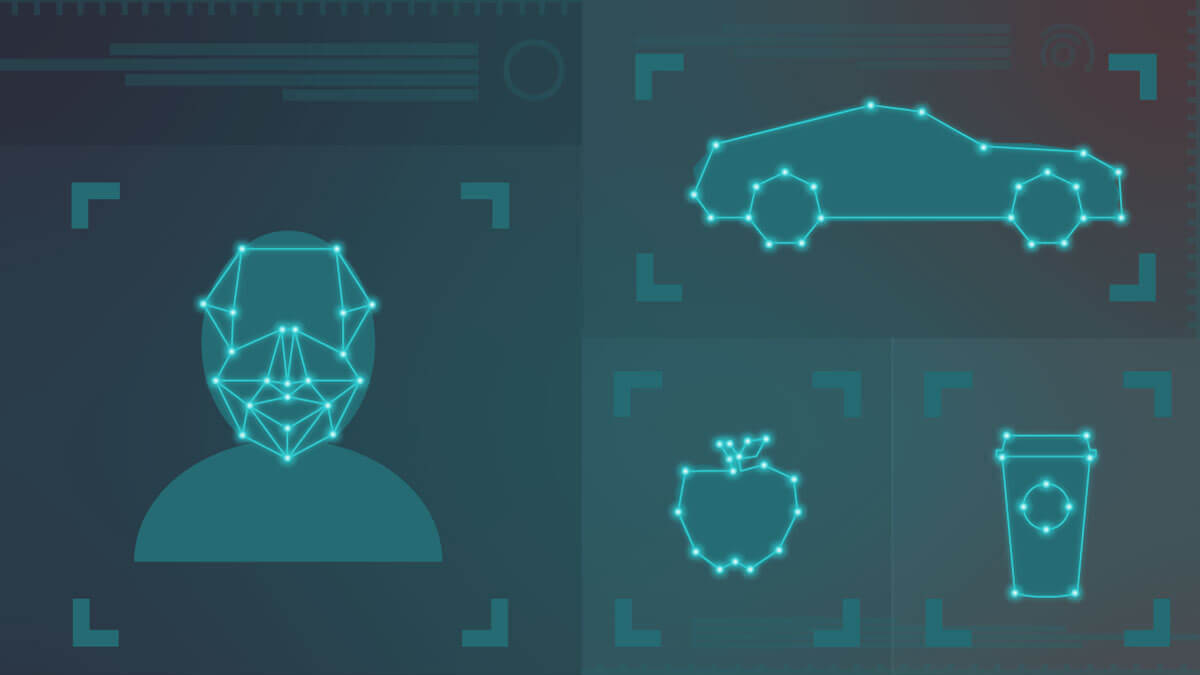
When I first encountered Convolutional Neural Networks (CNNs), it felt like witnessing magic unfold through mathematics and computational brilliance. Imagine a technology that could perceive and understand visual information almost as humans do – that‘s the remarkable world of image processing using CNNs.
Tracing the Evolutionary Path of Visual Intelligence
The story of machine vision isn‘t just about algorithms and computational power; it‘s a profound narrative of human curiosity and technological innovation. Long before sophisticated neural networks, researchers dreamed of creating machines that could "see" and comprehend visual information.
In the early days of artificial intelligence, image recognition was an incredibly complex challenge. Traditional computer vision techniques relied on rigid, rule-based systems that struggled with variations in lighting, angle, and context. These approaches were like trying to understand a language by memorizing every possible word combination – inefficient and ultimately limiting.
The Biological Inspiration
Nature has always been the most profound teacher of technological innovation. The human visual cortex processes images through hierarchical layers, extracting increasingly complex features from simple edges to intricate shapes. CNNs mirror this biological process, creating a computational framework that learns and adapts.
Understanding the Architectural Symphony of Convolutional Neural Networks
Imagine constructing a visual perception system that can learn and adapt. CNNs are not just algorithms; they‘re sophisticated learning architectures designed to mimic the intricate information processing of biological neural networks.
The Layered Learning Mechanism
Each layer in a CNN serves a specific purpose, working in concert to transform raw pixel data into meaningful representations:
- Input Layer: The gateway of visual information
- Convolutional Layers: Feature extraction zones
- Pooling Layers: Dimensional reduction and feature preservation
- Fully Connected Layers: Comprehensive interpretation
Mathematical Elegance: The Language of Visual Perception
The mathematical foundations of CNNs reveal a beautiful complexity. Consider the convolution operation, a fundamental transformation that slides a small filter across an image, detecting patterns and features:
[S(x,y) = (I * K)(x,y) = \sum{i} \sum{j} I(x+i, y+j)K(i,j)]This elegant equation represents how CNNs transform raw pixel data into meaningful representations, much like how a painter transforms individual brush strokes into a coherent image.
Practical Implementation: Breathing Life into Algorithms
Let me walk you through a comprehensive implementation that transforms theoretical concepts into tangible code. We‘ll use the MNIST dataset as our playground for understanding image recognition.
import tensorflow as tf
from tensorflow.keras import layers, models

def create_advanced_cnn():
    model = models.Sequential([
        layers.Conv2D(32, (3, 3), activation=‘relu‘, input_shape=(28, 28, 1)),
        layers.MaxPooling2D((2, 2)),
        layers.Conv2D(64, (3, 3), activation=‘relu‘),
        layers.MaxPooling2D((2, 2)),
        layers.Conv2D(64, (3, 3), activation=‘relu‘),
        layers.Flatten(),
        layers.Dense(64, activation=‘relu‘),
        layers.Dense(10, activation=‘softmax‘)
    ])

    model.compile(optimizer=‘adam‘,
                  loss=‘categorical_crossentropy‘,
                  metrics=[‘accuracy‘])

    return model
Real-World Applications: Beyond Academic Exercises
CNNs have transcended academic research, becoming transformative technologies across multiple domains:
Medical Diagnostics
Radiologists now leverage CNN models to detect subtle anomalies in medical imaging, potentially identifying diseases earlier than traditional methods.
Autonomous Navigation
Self-driving vehicles rely on CNN architectures to interpret complex visual environments, making split-second decisions that can save lives.
Creative Industries
From digital art generation to film visual effects, CNNs are redefining creative possibilities by understanding and generating visual content.
Emerging Challenges and Ethical Considerations
As CNNs become more sophisticated, we must navigate complex ethical landscapes. Questions of bias, privacy, and responsible AI development become increasingly critical.
The Future of Visual Intelligence
The horizon of CNN research is expansive and exciting. Emerging techniques like few-shot learning, generative adversarial networks, and quantum-enhanced neural networks promise to push the boundaries of what‘s computationally possible.
Personal Reflection: A Continuous Learning Journey
My journey with CNNs has been a testament to human ingenuity. Each algorithm, each model represents not just a technological achievement but a profound exploration of perception itself.
Conclusion: An Invitation to Explore
This exploration of Convolutional Neural Networks is more than a technical tutorial – it‘s an invitation to understand how machines are learning to see, interpret, and interact with the visual world.
For aspiring machine learning practitioners, researchers, and curious minds, the world of CNNs offers an endless landscape of discovery. Your journey is just beginning.
Recommended Resources
- Deep Learning by Ian Goodfellow
- Coursera‘s Deep Learning Specialization
- TensorFlow and Keras Official Documentation
Happy exploring, and may your neural networks always converge beautifully!