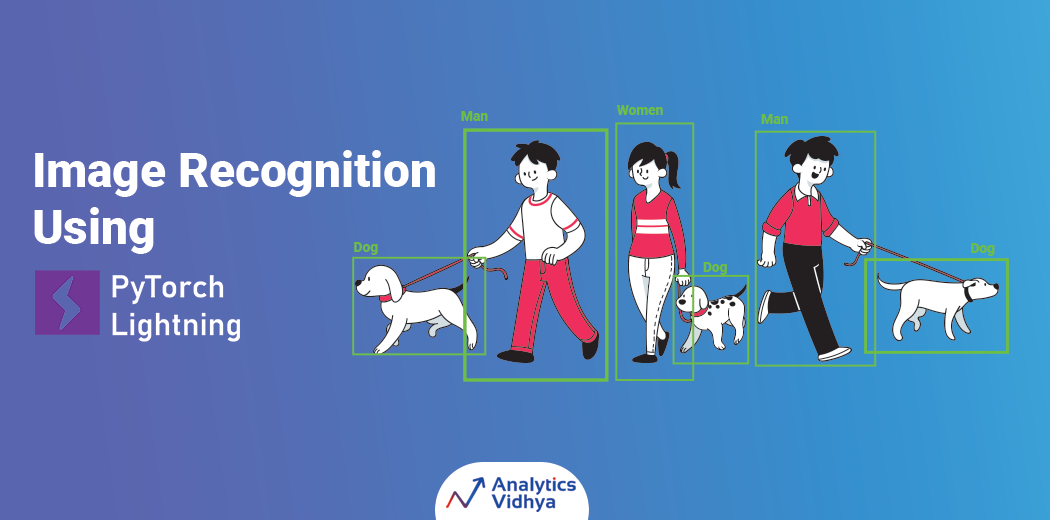
Mastering Image Recognition with PyTorch Lightning: A Deep Dive into Modern Computer Vision
The Journey of Visual Intelligence: From Pixels to Perception
Imagine standing in a bustling art gallery, surrounded by countless paintings. Each artwork tells a unique story, capturing moments frozen in time. Just like an art curator carefully analyzing brushstrokes and compositions, modern artificial intelligence systems decode visual information with remarkable precision.
My fascination with image recognition began years ago, watching how machines gradually learned to "see" and understand visual landscapes. Today, I‘m excited to share a comprehensive exploration of image recognition using PyTorch Lightning – a framework that transforms complex neural network development into an elegant, streamlined process.
The Evolution of Machine Vision
Computer vision has undergone a remarkable transformation. What once required intricate manual feature engineering now happens through sophisticated deep learning architectures that learn representations autonomously. PyTorch Lightning emerges as a powerful ally in this technological revolution, simplifying neural network implementation while maintaining exceptional performance.
Understanding Neural Network Architectures
When we discuss image recognition, we‘re essentially talking about teaching machines to interpret visual information similar to human perception. Convolutional Neural Networks (CNNs) serve as the foundational architecture, mimicking how our visual cortex processes visual stimuli.
Architectural Components
Consider a CNN as a sophisticated visual processing pipeline. Each layer extracts increasingly complex features:
- Initial layers detect basic edges and textures
- Middle layers recognize shapes and patterns
- Deeper layers comprehend complex object structures
class AdvancedVisualNetwork(pl.LightningModule):
    def __init__(self, input_channels=3, num_classes=1000):
        super().__init__()
        self.feature_extractor = nn.Sequential(
            # Multi-scale feature extraction
            nn.Conv2d(input_channels, 64, kernel_size=3, stride=1, padding=1),
            nn.BatchNorm2d(64),
            nn.ReLU(inplace=True),
            nn.MaxPool2d(kernel_size=2, stride=2),

            # Increasing receptive field
            nn.Conv2d(64, 128, kernel_size=3, stride=1, padding=1),
            nn.BatchNorm2d(128),
            nn.ReLU(inplace=True),
            nn.MaxPool2d(kernel_size=2, stride=2)
        )

        self.classifier = nn.Sequential(
            nn.Linear(128 * 56 * 56, 1024),
            nn.ReLU(inplace=True),
            nn.Dropout(0.5),
            nn.Linear(1024, num_classes)
        )
Transfer Learning: Accelerating Model Performance
Transfer learning represents a paradigm shift in machine learning. Instead of training models from scratch, we leverage pre-trained networks that have already learned robust feature representations.
Real-World Transfer Learning Scenario
Consider medical imaging diagnosis. Training a model to detect rare diseases requires extensive labeled data, which is often scarce. Transfer learning allows researchers to adapt pre-trained models from large datasets, dramatically reducing training complexity and improving accuracy.
Performance Optimization Strategies
Developing high-performance image recognition models requires more than just architectural design. It demands sophisticated optimization techniques that balance computational efficiency and model accuracy.
Computational Considerations
Modern deep learning demands intelligent resource management. PyTorch Lightning provides built-in mechanisms for:
- Distributed training across multiple GPUs
- Automatic mixed precision computation
- Efficient memory utilization
Advanced Data Augmentation Techniques
Data augmentation transforms limited training datasets into rich, diverse learning environments. By introducing controlled variations, we help neural networks develop robust, generalized representations.
augmentation_pipeline = transforms.Compose([
    transforms.RandomRotation(degrees=15),
    transforms.RandomHorizontalFlip(p=0.5),
    transforms.ColorJitter(brightness=0.2, contrast=0.1),
    transforms.RandomAffine(degrees=10, translate=(0.1, 0.1)),
    transforms.Normalize(mean=[0.485, 0.456, 0.406],
                         std=[0.229, 0.224, 0.225])
])
Ethical Considerations in AI Vision
As we develop increasingly sophisticated image recognition systems, ethical considerations become paramount. Responsible AI development requires careful attention to:
- Bias mitigation
- Privacy preservation
- Transparent decision-making processes
Future Trajectories in Computer Vision
The horizon of image recognition continues expanding. Emerging trends like self-supervised learning and multimodal AI promise to revolutionize how machines interpret visual information.
Emerging Research Directions
- Few-shot learning techniques
- Generative adversarial networks
- Neuromorphic computing approaches
Practical Implementation Recommendations
For practitioners eager to implement cutting-edge image recognition models, consider these strategic approaches:
- Start with well-established architectures
- Implement rigorous validation protocols
- Continuously monitor model performance
- Embrace iterative improvement methodologies
Conclusion: The Continuous Learning Journey
Image recognition represents more than technological capability – it‘s a testament to human creativity and computational innovation. PyTorch Lightning provides an elegant framework for transforming complex neural network development into an accessible, powerful process.
As machine learning continues evolving, our ability to teach machines visual understanding will unlock unprecedented technological frontiers.
Recommended Resources:
- PyTorch Lightning Documentation
- Computer Vision Research Papers
- Online Machine Learning Communities
Happy coding, and may your neural networks always converge beautifully!