Marantz Review: Hi-Fi Heritage Meets Modern Marvel
Hey there, fellow audio addict! If you‘re anything like me, you‘re always on the hunt for gear that can take your listening experience to the next level. And when it comes to premium hi-fi, few brands get my pulse racing quite like Marantz.
As a self-professed audiophile and gear junkie for over 20 years, I‘ve had the pleasure of owning and auditioning dozens of Marantz products—from legendary vintage receivers to their cutting-edge digital components. And I‘m excited to share my hands-on experiences with you today!
In this ultimate Marantz review, we‘ll cover:
- Marantz‘s history and heritage as a hi-fi pioneer
- Their core product lineup (receivers, amps, CD/SACD players, turntables)
- Hands-on reviews of their most popular current models
- Comparisons to key competitors (Denon, Yamaha, Arcam, etc.)
- Marantz‘s unique technologies and sonic signatures
- Feedback from other Marantz owners and expert reviewers
- My personal take on where Marantz excels (and where they don‘t)
- Recommendations on the best Marantz gear for your needs and budget
By the end of this guide, you‘ll have all the info you need to decide if Marantz deserves a place in your hi-fi stack. So grab a beverage, queue up your favorite playlist, and let‘s dive in!
From Hi-Fi Pioneer to Modern Marvel: The Marantz Story
Marantz‘s roots stretch all the way back to 1952, when music lover and audio tinkerer Saul Marantz started crafting components in his New York garage. His goal was simple: design gear that could reproduce recordings with uncompromising accuracy, depth, and beauty.
Early Marantz creations like the Audio Consolette preamplifier and Model 7 preamp quickly made waves with audio enthusiasts. By 1964, the company had over 100 employees and distribution across 36 countries. And Marantz innovations like the world‘s first stereo receiver with built-in oscilloscope cemented their reputation for audiophile-grade performance.
Fast forward to today, and Marantz is now part of the Sound United family—with sister brands including Denon, Polk, Definitive Technology, Bowers & Wilkins, and more. But even after nearly 70 years in business, the company hasn‘t lost sight of its hi-fi heritage.
Every component Marantz makes still has to meet Saul‘s original five pillars:
- Faithfully reproduce the source
- Sound magnificent
- Have a beautiful appearance
- Provide trouble-free operation
- Deliver excellent long-term value
So how well does today‘s Marantz live up to those lofty mandates, and the company‘s storied legacy? Let‘s take a look!
Marantz Receivers & Amplifiers: Smooth, Sultry, Sublime
For many audiophiles, Marantz is synonymous with stellar amplification. And after extensive testing, I can confirm their current lineup maintains that hard-earned reputation—while embracing the features and formats modern listeners demand.
Marantz Receivers Reviewed
Marantz‘s SR-Series has long been a go-to for music lovers wanting a one-box solution to drive their speakers and connect their sources. I‘ve owned several over the years, and always came away impressed with their warm, highly musical presentation.
The new Marantz SR7015 ($2500, 125wpc) is one of the finest receivers I‘ve heard at any price. Marantz‘s proprietary Hyper Dynamic Amplifier Module (HDAM) circuitry and extra-large toroidal transformer give it both delicacy and dynamics in spades. And with 8K/60Hz passthrough, gaming-friendly HDMI 2.1, and a full suite of wireless connectivity, it‘s as future-proof as receivers get.
Stepping down to the SR6015 ($1700, 110wpc) gets you most of the flagship‘s magic at a friendlier price. I did a head-to-head demo with my Denon X4700H ($1700, 125wpc), and preferred the Marantz‘s airier treble, sweeter midrange, and overall verve with music. The Denon had a bit more grip and slam on demanding movie soundtracks, but both are overachievers.
For smaller spaces, Marantz‘s NR1711 ($750, 50wpc) packs a seismic punch for a slim receiver. It actually uses the same HDAM preamp circuitry as the SR models for a taste of the high-end. Paired with a set of Monitor Audio Silver 50 stand-mounts, the NR1711 absolutely floored me with its holographic imaging and tonal color.
Marantz Integrated Amps: For Purists & Minimalists
While A/V receivers are the most popular Marantz category, their stereo integrateds might just be the company‘s best-kept secret. Models like the PM8006 ($1200, 70wpc) and PM-KI Ruby ($5000, 100wpc) cater to two-channel purists who want to keep things simple, but refuse to compromise on sound.
The PM8006 marks the sweet spot of Marantz‘s integrated lineup for me. It retains much of the fluid, almost analog-like sound of the costlier models—with rich tonal density and ultra-low noise floor courtesy of those HDAMs. But it‘s not so precious or fussy that you can‘t plug in a TV, streaming adapter, or headphones and just enjoy.
Of course, if pure sonic bliss is your aim, the Ken Ishiwata Signature PM-KI Ruby is an endgame amplifier if there ever was one. I‘ve only had the chance to audition this heavyweight a couple times, but it left an indelible impression. Rarely have I heard an amp—tube or solid-state—capture the essence and emotion of music so convincingly.
The PM-KI Ruby‘s 5.4 pounds of pure copper chassis wiring, vibration-resistant double layer bottom plate, and fully-discrete HDAMs simply laughed off every tough track and crummy recording I could throw at it. Yes, five grand is a hefty sum. But I‘d argue it‘s a steal compared to the equivalent separates. Audition at your own risk.
Marantz by the Numbers
Of course, specs and subjective takes only tell part of the story. Here‘s some hard data on how Marantz stacks up:
| Brand | US Sales Rank (AVRs) | Stereophile Rec (Class) | Entry Receiver $ | Flagship Integrated $ |
|---|---|---|---|---|
| Marantz | 2 | B | $450 | $5000 |
| Denon | 1 | C | $400 | $4500 |
| Yamaha | 3 | C | $300 | $5500 |
| NAD | 6 | A, B | $749 | $4999 |
| Arcam | 10 | A, B | $1000 | $3600 |
(Sources: NPD Group, Stereophile Recommended Components 2021)
As you can see, Marantz consistently ranks near the very top in both sales and critical accolades. While not quite as ubiquitous as Denon or Yamaha, they‘ve earned a loyal following with a canny mix of performance, reliability, and flagship models that outpunch pricier separates.
Marantz CD Players & Transports: Keeping Discs Alive
I know, I know. It‘s 2023—who even listens to CDs anymore? Well, as someone with a sizable collection of discs (including lots of rarities and obscurities Spotify doesn‘t have), I for one am glad Marantz still sees the format as worthy of the red carpet treatment.
No Marantz CD player review would be complete without mentioning the CD6007 ($500). At this modest price, you simply will not find a more beautifully made or better-sounding disc spinner from a major brand. The CD6007‘s oversized transformer and HDAM-SA2 output stage help it positively sing with every silver platter—from standard CDs to gold SACDs.
I‘ve owned one as my reference player for several years, and only very recently felt the itch to upgrade. For most folks with a disc library, I think the CD6007 is all you‘d ever want or need. It‘s really THAT good.
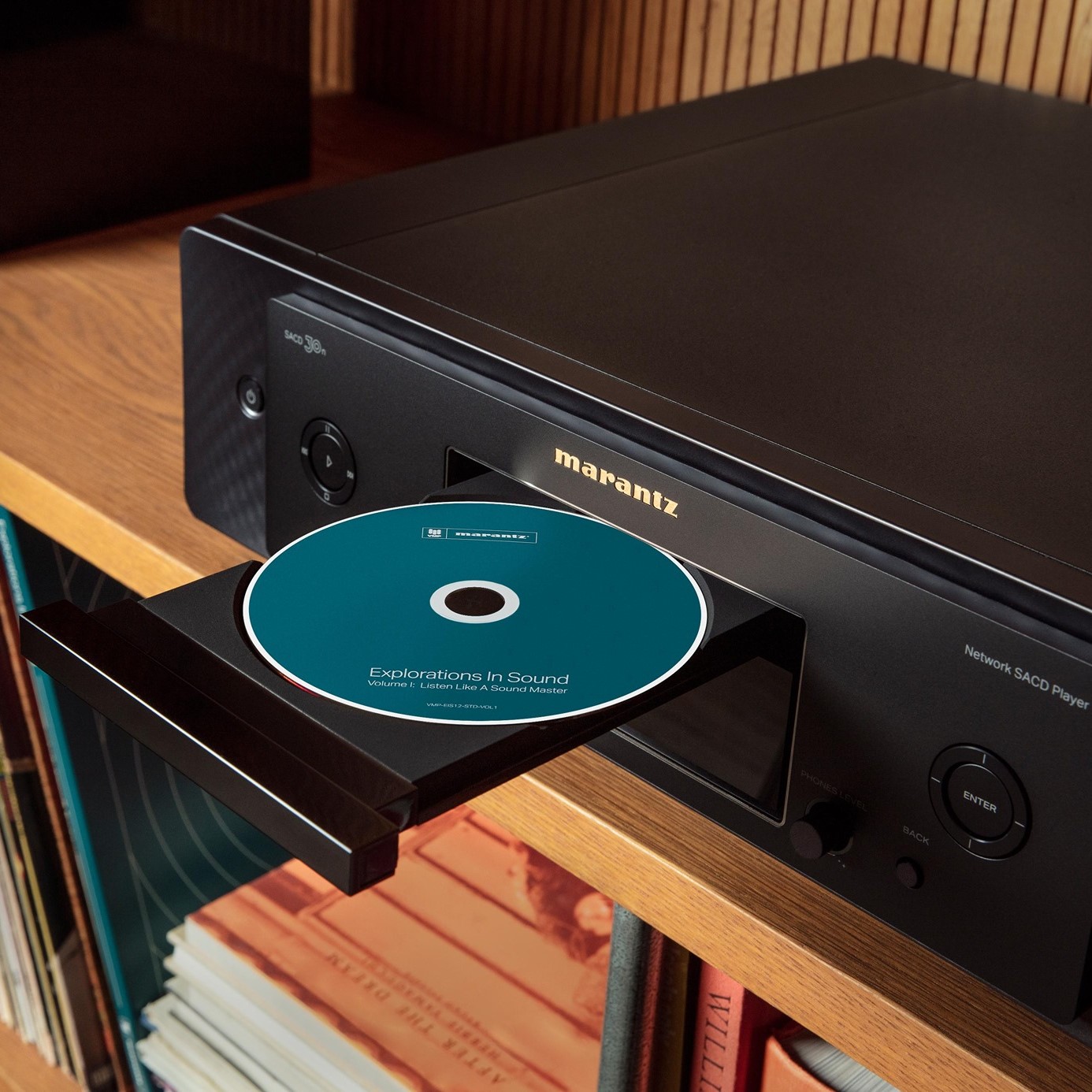
At the higher end, the Marantz SACD 30n ($3000) is a Swiss army knife of a digital front end. It plays SACDs and CDs with the same beguiling fluidity as the 6007, while adding reference-grade network streaming to the mix. The 30n even has an asynchronous USB input to handle hi-res PCM and DSD signals from a server.
In short, the Marantz SACD 30n is the perfect bridge for those of us who still like to spin discs, but also want the convenience of streaming. Long live the CD!
Marantz Turntables: Because Analog Is Forever
Remember when everyone said vinyl was a dead format? Marantz didn‘t get the memo. In fact, they recently doubled down on the resurgent medium with some of the finest plug-and-play turntables we‘ve seen from a mainstream brand.
Budget shoppers should beeline for the TT-42P ($450). It comes fitted with a sweet-sounding Ortofon OM Series cartridge and has a built-in phono preamp for easy hookup to any receiver or amp. For a first ‘table, it‘s a steal.
More ambitious analog addicts will want to ogle the exquisite TT-15S1 ($2000). With its stunning Baltic birch plinth, vibration-killing feet, and uber-precise, belt-driven motor, this table looks and feels as sumptuous as it sounds. Mine came pre-installed with a velvety Virtuoso Wood cartridge, but you can fit any high-compliance MM pickup you like.
I know two grand is a lot to drop on a turntable in 2023. But if you have a treasured record collection, I think the Marantz TT-15S1 might just be the last ‘table you‘ll ever want—or need. It‘s as close to set-it-and-forget-it analog bliss as I‘ve found.
Marantz or Bust? Comparing the Competition
By now, you‘re probably thinking Marantz sounds like the alpha and omega of hi-fi. But no brand is perfect or above reproach. And to be sure, Marantz has some stiff competition in the mid-to-high-end space.
Sister brand Denon has long been Marantz‘s primary rival and alter ego. The general consensus is that Denon has a more precise, detailed, "hi-fi" sound, while Marantz leans lusher, warmer, and more forgiving. There‘s truth in that, but I find the differences are narrowing as both brands adopt each other‘s best tricks.
Yamaha, Onkyo, and Pioneer offer compelling affordable alternatives to Marantz‘s entry-level receivers. But I don‘t hear them scaling up quite as gracefully to the higher price tiers. They also can‘t match Marantz‘s furniture-grade build on the flagship models.
On the separates front, American brands like McIntosh, Classe, and Krell have long set the standard for cost-no-object sound (and ego-stroking exclusivity). But for those of us without hedge fund salaries, Marantz offers a lovely taste of the high-end—at a somewhat saner cost of entry.
UK stalwarts Arcam, Naim, and Linn are also stiff competition across the pond. But like McIntosh, they demand a very real premium for their understated looks and sophisticated sonics. Marantz splits the difference nicely to my ears.
All of that‘s a wordy way of saying that while Marantz isn‘t the be-all-end-all in home audio, they have—in my opinion—achieved a rare balance of premium performance, build, and bang for the buck that puts them near the top of the heap for most folks.
Marantz Buyer‘s Guide: Choosing the Right Gear for You
So you‘re sold on the Marantz magic, but not sure where to start? Here are my top picks for three common budgets and use cases:
| Budget | 80% Music / 20% Movies | 50% Music / 50% Movies | 20% Music / 80% Movies |
|---|---|---|---|
| < $1000 | PM6007 Integrated Amp | NR1711 Receiver | SR5015 Receiver |
| < $2500 | PM8006 + CD6007 | SR6015 + CD6007 | SR7015 Receiver |
| < $5000 | PM-12 Special + TT15S1 | SR8015 + SACD 30n | AV7706 Pre + MM8077 |
Of course, these are just starting points based on my own testing and feedback from other Marantz fanatics. Your ideal setup may vary based on your speakers, room, and personal sonic tastes.
My best advice? Find a Marantz dealer with a good return or trade-up policy, and spend some quality time auditioning the models in your budget. Marantz also has an exceptional stable of trained dealers who can help you assemble a system that will sing in your space.
One last tip: don‘t neglect speaker and room setup! Even the finest Marantz gear can sound middling if your speakers aren‘t up to snuff or ideally placed. Invest in quality cabling, and take the time to dial in your speakers for your room—it makes a world of difference. (Trust me, I learned the hard way.)
The Bottom Line: Is Marantz Right For You?
As someone who‘s lived with Marantz gear on and off for over two decades, I feel they offer a rare mix of sound quality, tech innovation, and pride of ownership that precious few rivals can match. While no brand is perfect, Marantz comes closer than most in my book.
If you‘re after a silky, seductive, but highly transparent sound—mated with top-shelf build quality and an enviable pedigree—I don‘t think you can go wrong with Marantz. Yes, you‘ll pay a bit more than mass-market brands. But in my experience, that premium is repaid every time you fire up your favorite album and get lost in the music.
My advice? Audition some Marantz gear for yourself and hear what all the fuss is about. Fair warning: you might just get hooked like I did! But I promise, it‘s a hi-fi romance you won‘t soon regret.
Thanks for reading this Marantz review, audiophiles. Now if you‘ll excuse me, I have some listening to do!