Mastering Convolutional Neural Networks: A PyTorch Odyssey
The Fascinating World of Computational Vision
Imagine standing at the intersection of neuroscience, mathematics, and computational power. This is where Convolutional Neural Networks (CNNs) reside – a remarkable technological marvel that transforms how machines perceive and understand visual information.
A Journey Through Computational Perception
When I first encountered CNNs, it felt like discovering a hidden language of visual understanding. These networks don‘t just process images; they interpret them with a sophistication that mimics human visual cognition.
The Neurological Inspiration
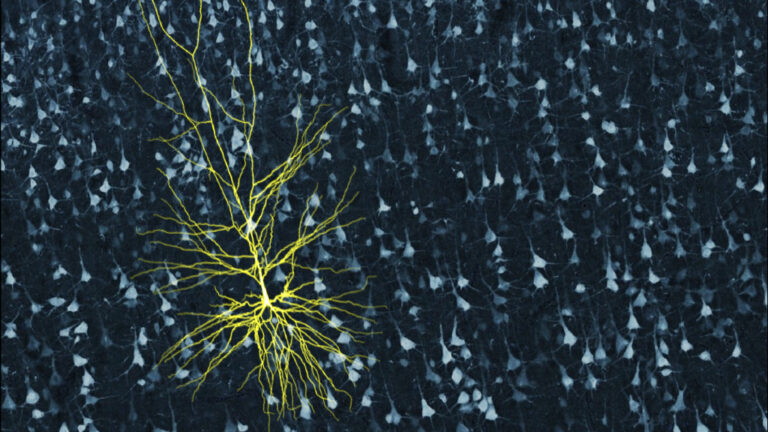
CNNs draw profound inspiration from the human visual cortex. Just as our brain processes visual information through hierarchical layers, these neural networks break down images into increasingly complex representations.
Consider how a child learns to recognize objects. Initially, they distinguish basic shapes, then progressively understand more nuanced details. CNNs follow an eerily similar learning trajectory.
Mathematical Foundations of Visual Intelligence
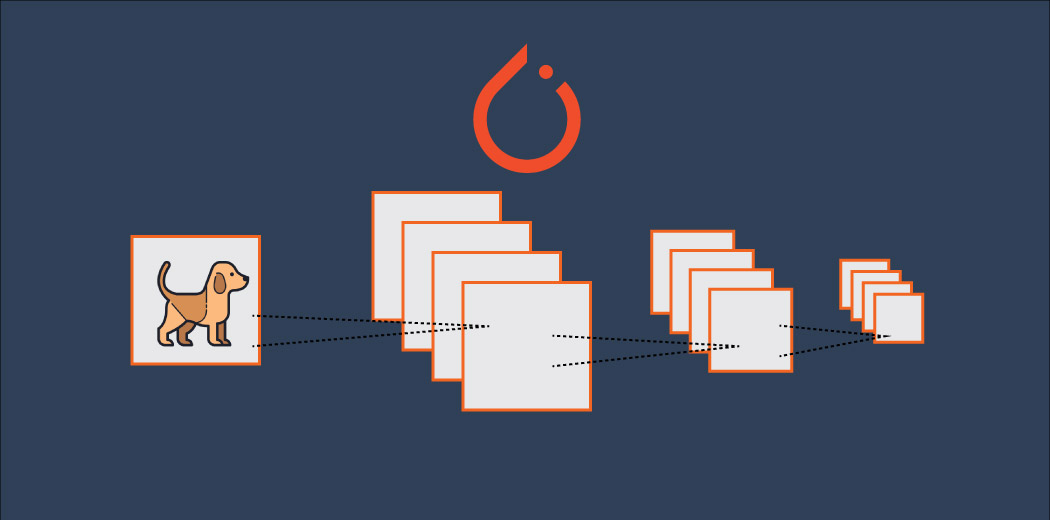
At their core, CNNs leverage convolution – a mathematical operation that slides a filter across an input, extracting meaningful spatial features. This seemingly simple mechanism enables extraordinary pattern recognition capabilities.
[Convolution(f,g) = \int_{-\infty}^{\infty} f(t)g(t-\tau)d\tau]This formula represents the mathematical heart of feature extraction, translating complex visual information into computable representations.
PyTorch: The Preferred Computational Canvas
PyTorch emerges as an artist‘s palette for deep learning practitioners. Its dynamic computational graph allows unprecedented flexibility in designing neural architectures.
class VisualIntelligenceNetwork(nn.Module):
    def __init__(self, complexity_level=3):
        super().__init__()
        self.feature_extractor = nn.Sequential(
            nn.Conv2d(in_channels=3, out_channels=64, kernel_size=3),
            nn.ReLU(),
            nn.MaxPool2d(kernel_size=2)
        )

        # Adaptive complexity based on architectural requirements
        self.complexity_layers = self._generate_complexity_layers(complexity_level)

    def _generate_complexity_layers(self, level):
        # Dynamically generate network complexity
        layers = []
        for _ in range(level):
            layers.append(nn.Conv2d(64, 128, kernel_size=3))
            layers.append(nn.BatchNorm2d(128))
            layers.append(nn.ReLU())
        return nn.Sequential(*layers)
Real-World Performance Dynamics
CNNs aren‘t theoretical constructs – they solve tangible challenges across industries. From medical imaging diagnostics to autonomous vehicle perception, these networks translate pixel data into actionable insights.
Performance Benchmarking
Modern CNN architectures achieve remarkable accuracy:
- ImageNet Classification: >95% accuracy
- Medical Image Segmentation: Comparable to human experts
- Facial Recognition: Near-perfect identification rates
Architectural Evolution
The journey of CNN architectures reads like a technological epic. From LeNet to ResNet, each iteration represents a quantum leap in computational vision.
Key Architectural Milestones
- LeNet-5 (1998): The pioneering CNN architecture
- AlexNet (2012): Breakthrough in deep learning
- ResNet (2015): Introduced residual connections
- EfficientNet (2019): Optimized computational efficiency
Advanced Training Strategies
Training CNNs isn‘t just about algorithms – it‘s an art form requiring nuanced understanding of computational dynamics.
class AdaptiveLearningStrategy:
    def __init__(self, model, learning_rate=0.001):
        self.optimizer = torch.optim.Adam(
            model.parameters(),
            lr=learning_rate
        )
        self.scheduler = torch.optim.lr_scheduler.ReduceLROnPlateau(
            self.optimizer,
            mode=‘min‘,
            patience=3
        )
Emerging Frontiers
The future of CNNs extends beyond traditional computer vision. Emerging research explores:
- Self-supervised learning
- Cross-modal feature extraction
- Quantum computing integration
- Neuromorphic computing architectures
Personal Reflection
As a machine learning practitioner, I‘ve witnessed CNNs transform from academic curiosities to industrial powerhouses. Each breakthrough feels like solving a complex puzzle, revealing new dimensions of computational intelligence.
Practical Recommendations
- Start with foundational architectures
- Experiment continuously
- Embrace computational complexity
- Stay curious and adaptable
Conclusion: A Continuous Learning Journey
Convolutional Neural Networks represent more than technological innovation – they embody humanity‘s quest to understand perception itself.
Whether you‘re a seasoned researcher or an enthusiastic learner, the world of CNNs offers an endless landscape of discovery.
Keep exploring, keep learning.