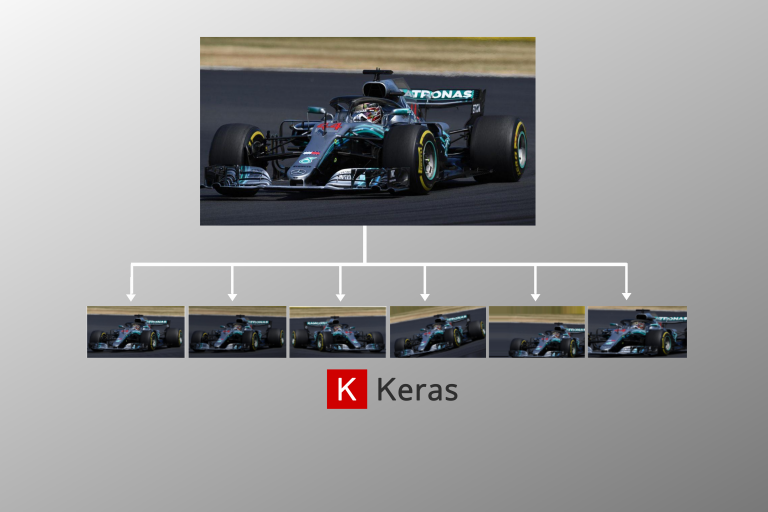
Mastering Image Augmentation: A Deep Journey into Keras ImageDataGenerator
The Unexpected Path of Digital Transformation
Imagine standing in a dimly lit research laboratory, surrounded by stacks of images, each representing a fragment of potential understanding. This was my world years ago—wrestling with limited datasets, struggling to teach machines how to truly "see" and comprehend visual information.
The challenge wasn‘t just about processing images; it was about understanding the intricate dance between human perception and machine learning. Every image carries a story, a context far beyond its pixel boundaries. And that‘s where the magic of image augmentation begins.
A Personal Revelation in Machine Perception
My journey into image augmentation started not with grand theories, but with a simple, frustrating problem. How could we teach machines to recognize objects with minimal training data? The traditional approaches felt like teaching a child to understand the world by showing them just a handful of photographs.
Keras ImageDataGenerator emerged as more than a tool—it became a philosophical approach to machine learning. It wasn‘t just about generating images; it was about creating intelligent variations that mimicked the way humans perceive and learn.
The Neurological Foundations of Augmentation
To truly appreciate image augmentation, we must first understand how biological neural networks process visual information. Our brains don‘t just see images; they reconstruct, interpret, and contextualize them.
When a human sees an object from different angles, rotated, or under varying lighting conditions, the brain doesn‘t treat each view as a completely new entity. Instead, it recognizes fundamental characteristics that remain consistent. Machine learning augmentation techniques aim to replicate this remarkable ability.
Mathematical Elegance of Transformation
Consider a simple image rotation. Mathematically, this involves applying a [2D] rotation matrix to each pixel coordinate. The transformation [R(\theta) = \begin{bmatrix} \cos\theta & -\sin\theta \ \sin\theta & \cos\theta \end{bmatrix}] represents how pixels are repositioned.
But augmentation goes far beyond simple geometric transformations. It‘s about creating a probabilistic landscape of potential representations.
The Computational Symphony of ImageDataGenerator
Keras ImageDataGenerator isn‘t just a preprocessing tool—it‘s a sophisticated orchestrator of data transformation. By generating variations dynamically during training, it solves multiple critical challenges:
- Memory Efficiency: Instead of storing massive augmented datasets, variations are created on-the-fly.
- Computational Flexibility: Real-time transformations adapt to model requirements.
- Generalization Improvement: Synthetic variations prevent overfitting.
Probabilistic Augmentation Strategies
Think of augmentation like a skilled jazz musician improvising. Each transformation isn‘t a rigid rule but a nuanced interpretation. A 20-degree rotation doesn‘t mean exactly 20 degrees, but a range that introduces controlled variability.
Advanced Transformation Techniques
Geometric transformations represent just the beginning. Modern augmentation techniques explore complex, multi-dimensional modifications:
Color Space Manipulation
Adjusting color channels isn‘t merely about brightness or contrast. It‘s about simulating real-world visual variations—mimicking different lighting conditions, camera qualities, and environmental contexts.
Perceptual Consistency
The goal isn‘t random modification but maintaining semantic integrity. An augmented image of a cat should still be recognizably a cat, regardless of rotation, lighting, or perspective shifts.
Practical Implementation Strategies
def create_intelligent_augmentation(model_context):
    augmentation_parameters = {
        ‘rotation_range‘: calculate_optimal_rotation(model_context),
        ‘width_shift_range‘: adaptive_shift_strategy(model_context),
        ‘brightness_variation‘: context_aware_brightness_adjustment()
    }

    return ImageDataGenerator(**augmentation_parameters)
This approach transforms augmentation from a static process to an adaptive, context-aware strategy.
Emerging Research Frontiers
The future of image augmentation lies at the intersection of multiple disciplines:
Generative Adversarial Networks (GANs)
GANs represent a quantum leap in synthetic data generation. Instead of rule-based transformations, they learn and generate variations that are increasingly indistinguishable from real data.
Neuromorphic Computing
Inspired by biological neural networks, emerging computational architectures will create augmentation strategies that more closely mimic human perceptual learning.
Ethical Considerations and Challenges
As we develop more sophisticated augmentation techniques, critical ethical questions emerge:
- How do we ensure synthetic data representations remain unbiased?
- What are the potential misuse scenarios of advanced data generation techniques?
The Human Element in Machine Learning
Beyond algorithms and mathematical transformations, image augmentation tells a profound story about learning, adaptation, and understanding.
Each augmented image represents a potential pathway of knowledge—a bridge between human perception and machine intelligence.
Conclusion: A Continuous Journey of Discovery
Image augmentation isn‘t a solved problem; it‘s an evolving narrative of human creativity and technological innovation. As machine learning practitioners, our role is not just to develop algorithms but to craft intelligent, adaptive systems that expand the boundaries of computational perception.
The path ahead is filled with endless possibilities, waiting to be explored—one transformed pixel at a time.