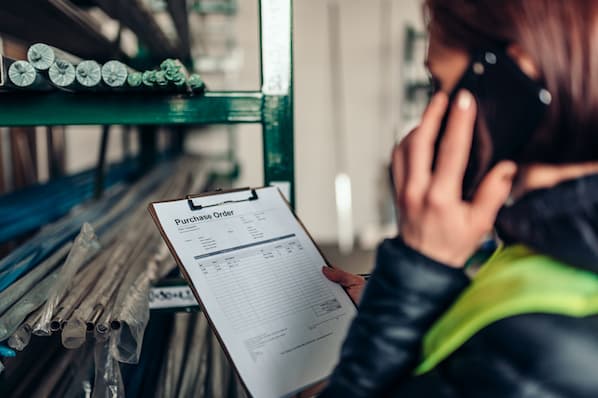
Purchase Orders: The Ultimate Guide to Optimizing Procurement
As a business, obtaining the right goods and services from suppliers at the right price and time is critical to your success. One of the key tools for optimizing this process is the humble purchase order.
Far from being a simple piece of paperwork, a well-crafted purchase order is a powerful strategic asset. It provides clarity and protection for both buyers and sellers, leading to stronger vendor relationships and improved bottom-line results.
In this comprehensive guide, we‘ll walk you through everything you need to know about purchase orders, including:
- What is a purchase order and why is it important?
- The key elements of a purchase order with examples
- Different types of purchase orders and when to use them
- How to create a purchase order process in X steps
- Purchase order best practices and templates
- Benefits of using a digital purchase order system
Whether you‘re a procurement professional, a CFO, or a business owner, this post will give you the insights and tools you need to take your purchase order game to the next level. Let‘s dive in!
What Is a Purchase Order and Why Is It Important?
A purchase order (PO) is a legally binding document created by a buyer and sent to a seller to authorize a purchase. It clearly specifies what goods or services are being procured, in what quantities, at what price, and when they are required to be delivered.
In simpler terms, a PO outlines your exact order and expectations as the buyer. Once a seller accepts the PO, they are contractually obligated to fulfill the order as specified. The PO becomes the proof of what was agreed between the parties.
While purchase orders may seem like just another form to fill out, they actually serve several critical business purposes:
🛡️ Purchase orders clarify communication: By itemizing exactly what is being ordered in writing, POs ensure both the buyer and seller are on the same page, reducing potential for misunderstandings or incorrect shipments.
💰 Purchase orders provide financial control: POs specify authorized spending and help prevent unapproved, fraudulent, or excessive purchases. They provide visibility into committed costs for more accurate budgeting.
🔍 Purchase orders enable tracking: With unique PO numbers, buyers can easily track the status of orders and match them to invoices for payment. This helps with record-keeping and auditing.
📜 Purchase orders reduce risk: As legally binding contracts, POs offer protection for both sides. The buyer has recourse if the wrong items are delivered, while the seller is assured of payment for fulfilling the order.
🤝 Purchase orders improve vendor relationships: Clearly documenting orders and payment terms builds trust, prevents disputes, and lays the foundation for positive long-term supplier partnerships.
In fact, purchase orders are so essential that:
- 70-80% of business transactions include a purchase order (per Procurement Tactics)
- Companies that use POs have 50%+ lower risk of fraud (per Forrest Research)
- Businesses without POs are 3x more likely to experience delays (per APQC)
As you can see, purchase orders aren‘t just a formality – they are a critical tool for controlling spend, ensuring the right goods and services are delivered, and building healthy vendor relationships. Now let‘s look at what goes into a well-crafted PO.
Anatomy of a Purchase Order: The Key Elements and Why They Matter
While the exact components may vary slightly by company and industry, a typical purchase order will contain the following key elements:
| Section | Key Elements | Purpose |
|---|---|---|
| Header | – PO number – PO date – Buyer contact info |
Uniquely identifies PO for easy reference and tracking |
| Vendor Details | – Vendor name – Vendor address – Vendor contact |
Specifies who PO is issued to and where invoice should be sent |
| Ship To | – Delivery address – Contact person – Shipping method |
Tells vendor where to send goods and how to ship them |
| Order Details | – SKUs/item #s – Item descriptions – Quantities – Unit prices – Line totals |
Itemizes exactly what is being purchased, how much of each, and at what price |
| Terms & Totals | – Subtotal – Taxes & fees – Discounts – Grand total – Payment terms |
Summarizes total costs, any discounts, tax, shipping, and payment schedule |
| Approvals | – Buyer signature – Signing date |
Provides official sign-off from buyer and date PO was issued |
Here‘s an example of what that looks like in a standard purchase order:
[Insert example annotated purchase order image]Having all of these elements clearly spelled out in the purchase order ensures that both the buyer and seller have a complete, indisputable record of the agreed transaction.
Some other optional fields you may want to include:
- Currency for international orders
- Packing requirements (palletization, labeling, etc.)
- Certificates of insurance or inspection
- Vendor customer number
- Special terms & conditions
The key is to provide enough detail to make expectations crystal clear while keeping the PO easy to read and process. Clear, complete POs are the foundation for smooth, error-free order fulfillment.
The 4 Types of Purchase Orders and When to Use Them
Purchase orders come in a few different flavors depending on the nature of the purchase. Here are the four main types and what they are used for:
Standard Purchase Order
A standard PO is used for a one-time purchase of specific quantities of goods or services at agreed prices. This is the most common type of PO when the buyer knows exactly what they need to order.
Example: Ordering a set number of raw materials to replenish inventory
Blanket Purchase Order
A blanket PO is used when a buyer wants to purchase a certain amount of goods or services from a vendor over a set period of time, but doesn‘t know the exact quantities or delivery dates up front. The PO covers the total spend amount and terms, with specifics to be provided in subsequent releases against the blanket PO. Blanket POs are often used to secure volume discounts or favorable pricing.
Example: Committing to purchase $100,000 of office supplies over the next year
Contract Purchase Order
A contract PO is used when the buyer and seller have a formal written contract governing their ongoing relationship and terms. The PO references the overarching contract and triggers a specific order under it. Contract POs are common for high-value, long-term purchasing agreements.
Example: Placing an order under a 3-year contract with negotiated pricing
Planned Purchase Order
A planned PO is used to budget for anticipated purchases before the exact details are known. It essentially earmarks funds for future spending. Once the specifics are determined, the planned PO is converted into a standard or blanket PO. Think of planned POs as placeholders.
Example: Creating a PO in advance for budgeting IT expenses for the year
Here‘s a quick comparison chart of the different PO types:
| PO Type | Definition | Purpose | Example |
|---|---|---|---|
| Standard | One-time order for specific items & quantities | Procuring set amount of goods/services | Ordering month‘s office supplies |
| Blanket | Spend commitment over time without exact quantities | Locking in discount/terms for ongoing needs | Contract to purchase $50K of raw materials over year |
| Contract | PO issued under an overarching contract | Placing order governed by separately negotiated terms | Buying against a 3-year pricing agreement |
| Planned | Tentative PO for budgeting future spending | Earmarking funds for anticipated purchases | Creating PO for upcoming IT upgrades |
The type of purchase order you use depends on the specific situation and business needs. Many companies will use a mix of different PO types for various scenarios. The key is to choose the right tool for the job to clarify expectations and protect your interests.
How to Implement a Purchase Order Process in 7 Steps
Now that you understand the different types of POs and their components, let‘s walk through how to actually set up and run an effective purchase order process from end to end.
[Insert process diagram image]Step 1: Identify need and create requisition
The PO process typically begins when an employee or department identifies a need for goods or services. They fill out a purchase requisition (PR) specifying the items, quantities, and requirements like delivery date and vendor.
Step 2: Approve requisition
The completed PR is routed to the appropriate approver, usually a manager or department head. They verify the request is justified and that budget is available. Approval thresholds are set based on spend amount.
Step 3: Create PO
Once the PR is approved, it is routed to the Purchasing department to be turned into an official PO. A purchasing agent will verify the vendor and pricing or put the order out for bid. They then generate the PO with all the necessary details as discussed above.
Step 4: Send PO to vendor
The final approved PO is transmitted to the vendor via email, EDI, postal mail or through a procurement system portal. The buyer may require the vendor to formally acknowledge receipt of the PO.
Step 5: Receive goods/services
On the agreed delivery date, the vendor ships the items to the buyer location specified on the PO. A receipt inspection is performed on arrival to verify accuracy against the PO and check for any defects. Any discrepancies are resolved with the vendor.
Step 6: Three-way match and approve invoice
When the order is delivered, the vendor submits an invoice referencing the PO number. Accounts payable will perform a three-way matching between the PO, receipt confirmation, and invoice to verify the billing is accurate before scheduling payment.
Step 7: Make payment and close PO
Once the invoice is validated, payment is issued according to the PO terms (i.e. net 30). After payment, the PO is closed as complete in the buyer‘s procurement and financial records.
By instituting a formal, step-by-step PO process like this, you create a standardized, auditable workflow for making purchases and processing payments. This will lead to fewer mistakes, better on-time delivery, and improved spend visibility across the organization.
7 Purchase Order Best Practices for Spend Control & Compliance
While having a PO process is a great start, there are a number of best practices you can employ to make it even more effective:
-
Use standard PO templates: Create official, approved PO templates that include your logo, formatting and required data fields. This prevents POs from being issued without proper details and streamlines processing.
-
Require POs for all purchases: Mandate that a PO must be issued for any purchase over a certain dollar threshold to prevent maverick spend. Ensure no invoice will be paid without a valid PO number.
-
Implement clear approval workflows: Define who has authority to approve POs at different spending levels. Use a formal procurement system or process to automatically route POs for approval to guard against fraud and enforce spending policies.
-
Integrate procurement and payables: Connect your PO system to your accounts payable platform so that POs can be automatically matched to invoices for validation and timely payment. This also provides an audit trail.
-
Track PO cycle times: Monitor how long it takes POs to be created, approved, and fulfilled at each stage. Identify any bottlenecks or delays and take corrective action to ensure purchases are made in a timely manner.
-
Leverage PO data for spend analysis: Use the line-level detail on POs to gain visibility into what is being purchased, from whom, and at what prices. Analyze PO data to identify savings opportunities, manage supplier performance, and optimize procurement.
-
Adopt a digital PO solution: Automate your purchase order process with an electronic procurement platform. This will reduce manual effort, improve accuracy, provide an audit trail, and give you greater control over organizational spending.
By putting these purchase order best practices in place, you will enable more efficient, compliant, and cost-effective procurement across the business.
The Benefits of a Digital Purchase Order System
We‘ve mentioned the advantages of using an automated purchase order system a few times now. Let‘s expand on the key benefits you can expect by digitizing your PO processes:
⚡ Increased efficiency: Electronic POs eliminate manual entry, paper passing, and errors. You can create POs with a few clicks, route them automatically for approval, and issue them electronically to vendors. This reduces procurement cycle times by as much as 75%.
🔎 Greater spend visibility: With all POs stored electronically in one place, you get real-time visibility into committed spend. You can easily track the status of POs, monitor budgets vs. actuals, and quickly access PO data for spend analysis to drive more informed buying decisions. Research shows automated PO systems provide up to 50% more spend influence.
✅ Improved compliance: A digital PO system allows you to set up approval workflows and thresholds to ensure all purchases are properly authorized. You can configure the system to prevent POs from being issued that violate spending policies. This reduces procurement fraud risk by 60-80%.
🤝 Better supplier collaboration: Issuing POs electronically allows you to collaborate with vendors more efficiently. You can send and track POs in real-time, enabling vendors to acknowledge receipt, confirm delivery dates, and resolve any issues quickly. This improves on-time fulfilment by 20-30%.
💰 Increased cost savings: An automated PO system helps save money in several ways. It reduces the manual labor costs of paper-based processing, prevents unauthorized purchases, ensures you capture negotiated discounts, and gives you data to identify overpriced or redundant spending. Companies can save 8-12% of annual procurement spend this way.
🌿 Reduced environmental impact: Moving from paper to electronic POs is not only more efficient but also more sustainable. By eliminating the need for printing, copying, mailing, and storing physical POs, you can significantly reduce your carbon footprint and paper waste.
By upgrading to a digital PO platform, you will be able to streamline your procurement function, improve spend management, mitigate risk, and generate more value for the business. It‘s one of the smartest investments you can make in your purchasing operations.
Bringing It All Together
We‘ve covered a lot of ground in this guide to purchase orders – from what they are and why they matter to PO types, components, best practices, and digital systems. By now, hopefully you have a clear understanding of the power of POs and how to wield them for maximum impact.
As a quick recap, here are the key points to remember:
-
Purchase orders are legally binding contracts that specify the goods and services a buyer is purchasing from a vendor, including items, quantities, prices, and terms.
-
POs serve a critical role in spend control, vendor management, and risk mitigation. They provide a formal record of purchases for visibility and auditing.
-
POs should include key data like PO number, vendor details, shipping info, itemized order lines, payment terms, and approvals.
-
There are 4 main types of POs – standard, blanket, contract, and planned – for different purchasing scenarios.
-
Implementing a formal PO process with requisition, approval, and invoicing steps is a procurement best practice.
-
Issuing POs for all purchases, using standard templates, setting clear approval flows, and tracking PO data enable more effective spend management.
-
Moving to a digital purchase order system delivers major benefits including lower costs, higher efficiency, better compliance, and improved supplier collaboration.
If you take one thing away from this post, it should be this – purchase orders are a strategic tool, not just a transactional document. By optimizing your PO processes, enforcing compliance, and leveraging PO automation, you can transform procurement from a reactive back-office function to a proactive, value-generating partner to the business.
So what are you waiting for? It‘s time to level up your purchase order game! Feel free to start with the free PO template provided (add link) and the best practices we‘ve shared.
If you‘re ready to dive into a digital procurement solution, check out our buyer‘s guide (add link) to understand what to look for and how to make the business case.
We‘d love to hear how you‘re using purchase orders strategically in your organization. Share your experiences or questions in the comments below. Here‘s to happy, effective, and impactful procurement!