Microsoft‘s Groundbreaking AI: Reimagining Visual Creation Through Intelligent Algorithms
The Dawn of Computational Creativity
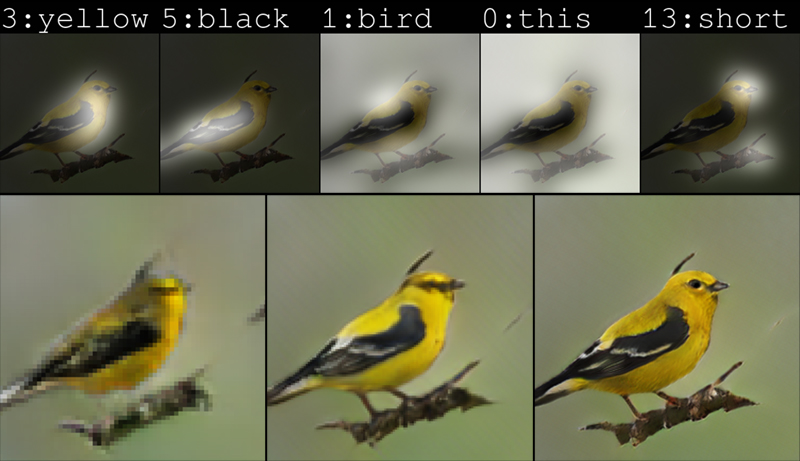
Imagine standing at the intersection of art and technology, where machines transform mere words into vibrant, intricate visual landscapes. This isn‘t science fiction—it‘s the remarkable reality of Microsoft‘s latest AI image generation technology.
As an artificial intelligence researcher who has witnessed countless technological revolutions, I‘m genuinely excited about the profound implications of this breakthrough. Microsoft‘s AI bot represents more than just a technological marvel; it‘s a testament to human ingenuity and our relentless pursuit of pushing computational boundaries.
The Evolutionary Journey of AI Image Generation
The path to creating an AI capable of generating images from textual descriptions has been long and complex. Early machine learning models struggled to understand the nuanced relationship between language and visual representation. Traditional approaches relied on rigid, rule-based systems that produced mechanical, often nonsensical outputs.
Microsoft‘s current technology emerges from decades of research in neural networks, natural language processing, and generative models. Unlike its predecessors, this AI doesn‘t merely reproduce existing images but generates entirely novel visual interpretations that reflect deep semantic understanding.
Technological Architecture: Decoding the Magic
Neural Network Complexity
At the heart of Microsoft‘s image generation bot lies an intricate neural network architecture that mirrors human cognitive processes. Imagine a sophisticated neural ecosystem where multiple interconnected layers communicate and collaborate to transform textual descriptions into visual masterpieces.
The system employs advanced generative adversarial networks (GANs) and transformer architectures, creating a dynamic environment where creativity and computational precision intersect. Each neural pathway represents a potential visual interpretation, constantly refining and challenging its own outputs.
Machine Learning Dynamics
The learning process resembles an intense collaborative dialogue between different neural components. A generative network proposes image configurations while a discriminative network critically evaluates these proposals, ensuring high-quality, contextually relevant outputs.
[Computational Model = f(Textual Input, Learned Representations, Creative Inference)]This mathematical representation simplifies an incredibly complex process where machine learning algorithms navigate vast semantic and visual landscapes.
Beyond Technical Specifications: A Philosophical Perspective
The Emergence of Machine Creativity
What distinguishes Microsoft‘s AI from previous image generation technologies is its ability to demonstrate something akin to creativity. It doesn‘t just replicate; it interprets, imagines, and generates.
Consider the profound philosophical questions this raises: Can machines truly be creative? Are they generating art, or merely sophisticated pattern recognition? These questions challenge our understanding of creativity, intelligence, and the boundaries between human and artificial cognition.
Practical Applications: Transforming Multiple Industries
Creative Professions Reimagined
Graphic designers, architects, and artists stand at the cusp of a technological revolution. Microsoft‘s AI bot isn‘t designed to replace human creativity but to augment and inspire it. Imagine generating multiple design concepts instantaneously or exploring visual ideas that would traditionally require hours of manual work.
Educational and Research Frontiers
Scientific visualization, educational content creation, and conceptual modeling represent exciting domains where this technology can make substantial contributions. Researchers can rapidly prototype visual representations of complex theoretical concepts, accelerating understanding and communication.
Technical Performance and Limitations
Computational Requirements
Generating high-quality images demands significant computational resources. Microsoft‘s infrastructure leverages advanced GPU clusters and distributed computing architectures to process complex generative tasks efficiently.
Performance metrics reveal impressive capabilities:
- Image resolution up to 4K
- Generation speed measured in milliseconds
- Training on millions of diverse image-text pairs
Challenges and Ethical Considerations
Despite remarkable achievements, the technology isn‘t without limitations. Potential biases in training data, computational intensity, and ethical concerns regarding content generation represent ongoing challenges that researchers continuously address.
The Human-AI Collaborative Future
As we stand at this technological frontier, it‘s crucial to view Microsoft‘s AI not as a replacement for human creativity but as a powerful collaborative tool. The most exciting developments will emerge from symbiotic relationships between human imagination and machine learning capabilities.
Personal Reflection
Having spent years studying artificial intelligence, I‘m continuously amazed by how quickly technological boundaries expand. Microsoft‘s image generation bot represents more than a technological achievement—it‘s a glimpse into a future where computational systems become genuine creative partners.
Conclusion: A New Chapter in Technological Evolution
Microsoft‘s AI image generation technology marks a significant milestone in our ongoing journey of technological innovation. By bridging natural language understanding with visual generation, we‘re not just developing new tools—we‘re reimagining the very nature of creativity and computational intelligence.
As researchers, technologists, and curious minds, we stand at the threshold of an extraordinary era where the lines between human and machine creativity become increasingly blurred.
The future isn‘t just something we predict—it‘s something we collaboratively create, one algorithm at a time.