Text Classification Reimagined: A Deep Dive into Vowpal Wabbit and Online Learning
The Computational Symphony of Intelligent Learning
Imagine standing at the crossroads of human cognition and computational brilliance. Here, in this intricate landscape of artificial intelligence, a remarkable technology emerges – Vowpal Wabbit, a framework that doesn‘t just process data, but learns and adapts like an intelligent organism.
The Genesis of Intelligent Machines
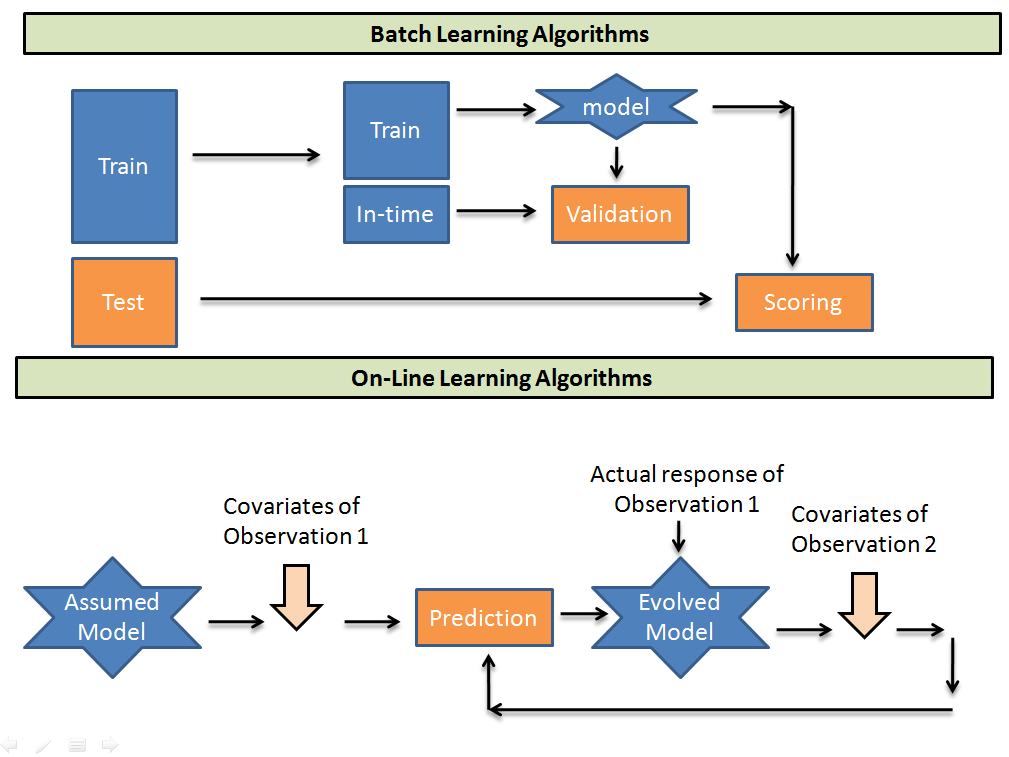
Long before Vowpal Wabbit, machine learning was a rigid, monolithic process. Traditional batch learning models were like ancient libraries – static, unchanging, requiring complete reconstruction for every new piece of information. Researchers and engineers struggled with massive datasets, computational limitations, and the inherent inflexibility of existing systems.
A Paradigm Shift: Online Learning
Online learning represents more than a technological advancement; it‘s a philosophical transformation in how machines comprehend and process information. Unlike traditional methods that require complete dataset retraining, online learning mimics human learning – incremental, adaptive, and dynamically responsive.
Mathematical Foundations of Intelligent Adaptation
[P(update) = \frac{1}{1 + e^{-\eta(gradient)}}]This elegant equation represents the probabilistic update mechanism in online learning. [\eta] (eta) represents the learning rate, capturing how quickly a model adapts to new information. Each incoming data point becomes a potential catalyst for model refinement.
Vowpal Wabbit: Engineering Brilliance
Developed by Microsoft Research, Vowpal Wabbit isn‘t just a machine learning framework – it‘s a computational philosophy. Its core innovation lies in feature hashing, a technique that transforms categorical and textual data into compact, processable numerical representations.
The Hashing Magic
Consider transforming complex textual data into a mathematical representation. Traditional methods would require extensive preprocessing, dictionary creation, and memory-intensive operations. Vowpal Wabbit‘s hashing technique accomplishes this with remarkable efficiency.
def vowpal_hash_transform(text, dimensions=1024):
    features = {}
    for word in text.split():
        hash_value = hash(word) % dimensions
        features[hash_value] = features.get(hash_value, 0) + 1
    return features
This seemingly simple function encapsulates a profound computational strategy – converting variable-length text into fixed-dimensional numerical spaces without losing contextual information.
Computational Efficiency Metrics
Let‘s explore the performance characteristics:
-
Memory Consumption: Traditional Methods vs Vowpal Wabbit
- Standard Approach: O(n * m) – where n is dataset size, m is feature dimensions
- Vowpal Wabbit: O(k) – constant memory regardless of input complexity
-
Processing Speed
[T_{processing} = O(log(n)) \text{ vs } O(n^2)]
These metrics aren‘t just numbers; they represent a fundamental reimagining of machine learning computational strategies.
Real-World Transformation Scenarios
Financial Sentiment Analysis
Imagine a financial technology platform processing millions of news articles and social media posts. Traditional models would require periodic retraining, creating dangerous latency. Vowpal Wabbit enables real-time sentiment tracking, adjusting predictions millisecond by millisecond.
Cybersecurity Threat Detection
In the high-stakes world of cybersecurity, threats evolve rapidly. Vowpal Wabbit‘s online learning allows security models to adapt instantaneously, recognizing emerging attack patterns before they become widespread.
Philosophical Implications
Beyond pure technological capability, Vowpal Wabbit represents a profound philosophical statement about machine intelligence. It suggests that learning isn‘t a static process but a continuous, dynamic journey of adaptation and refinement.
The Learning Curve: Computational Darwinism
Just as biological organisms evolve through incremental genetic modifications, machine learning models now possess similar adaptive capabilities. Each incoming data point becomes a potential mutation, potentially improving overall system intelligence.
Technical Deep Dive: Implementation Strategies
Feature Engineering Techniques
-
N-Gram Processing
Capturing contextual relationships beyond individual word representations -
Regularization Strategies
Preventing computational overfitting through intelligent constraint mechanisms -
Probabilistic Feature Weighting
[W_{feature} = \alpha gradient + (1-\alpha) previous_weight]
Emerging Challenges and Future Directions
As machine learning approaches become more sophisticated, new challenges emerge:
- Ethical considerations of adaptive learning systems
- Computational transparency
- Bias mitigation in dynamic models
Predictive Model: Next Decade of Online Learning
[Complexity_{future} = f(computational_power, algorithmic_innovation, ethical_constraints)]Conclusion: Beyond Technology
Vowpal Wabbit isn‘t merely a technological tool; it‘s a testament to human ingenuity. It represents our collective dream of creating intelligent systems that learn, adapt, and grow – much like ourselves.
In this computational symphony, we‘re not just building algorithms; we‘re composing the future of intelligent interaction between humans and machines.
Invitation to Exploration
Are you ready to step into this fascinating world of adaptive intelligence? The journey of understanding begins with curiosity, continues with rigorous exploration, and never truly ends.