Neural Art: The Extraordinary Convergence of Imagination and Algorithms
A Personal Expedition into Machine Creativity
Picture yourself standing in a dimly lit gallery, surrounded by canvases that seem to breathe with an otherworldly essence. The paintings before you aren‘t crafted by human hands, but emerge from the intricate dance of algorithms and neural networks. Welcome to the mesmerizing world of neural art – where technology transforms into an unexpected maestro of creativity.
The Genesis of Machine Imagination
When we trace the origins of neural art, we‘re not just exploring a technological phenomenon, but witnessing a profound philosophical revolution. Imagine the first moment when a machine didn‘t just process data, but began to interpret and recreate visual poetry.
The journey begins in the laboratories of forward-thinking researchers who saw beyond traditional computational boundaries. These pioneers understood that creativity isn‘t exclusively human – it‘s a complex interplay of pattern recognition, learning, and unexpected synthesis.
The Mathematical Symphony of Style Transfer
Neural art isn‘t magic; it‘s mathematics choreographed with extraordinary precision. At its core lies a remarkable concept: separating an image‘s inherent content from its stylistic essence. This breakthrough emerged from groundbreaking research by Leon Gatys and his colleagues, who demonstrated that neural networks could deconstruct and reconstruct visual experiences.
Consider the mathematical elegance of style transfer. When a neural network analyzes an image, it doesn‘t merely see pixels – it perceives intricate hierarchies of features. [L{content}(p,x)] represents the content preservation, while [L{style}(a,x)] captures the artistic texture and chromatic distribution.
Technological Alchemy: How Neural Networks Paint
Imagine a neural network as an incredibly sophisticated apprentice, studying countless artistic styles and learning their nuanced grammar. Unlike traditional image processing techniques, convolutional neural networks (CNNs) don‘t just manipulate images – they comprehend them.
These networks, inspired by the human visual cortex, process visual information through multiple layers. Each layer extracts increasingly abstract features – from basic edges and shapes to complex textures and compositional elements. It‘s akin to an artist progressively building a masterpiece, starting with rough sketches and gradually adding intricate details.
The Computational Canvas
When a neural network generates art, it‘s performing an extraordinary computational ballet. The process involves:
- Extracting content features from a base image
- Analyzing stylistic characteristics of a reference artwork
- Iteratively optimizing a generated image to balance content preservation and stylistic transformation
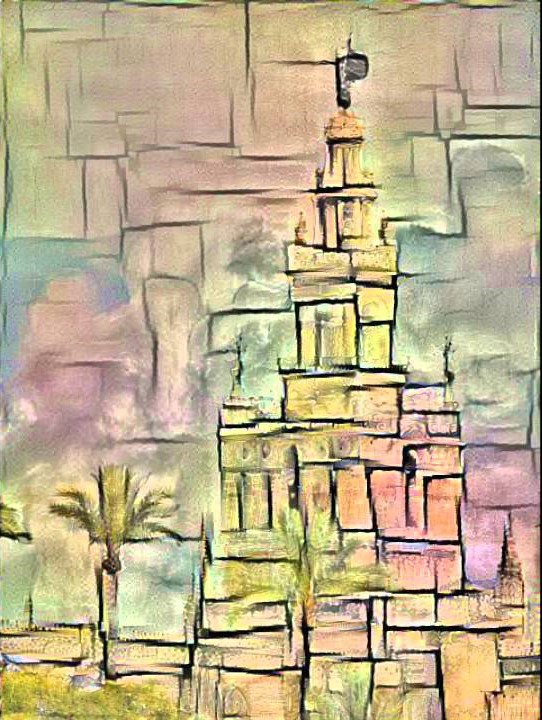
The result? An artwork that seamlessly blends the structural integrity of one image with the aesthetic spirit of another.
Beyond Pixels: The Philosophical Implications
Neural art challenges our fundamental understanding of creativity. Are these machine-generated artworks truly "creative," or are they sophisticated mimicry? This question resonates deeply within artistic and technological communities.
Consider the profound philosophical implications: If a machine can generate art that evokes genuine emotional responses, what does that reveal about the nature of creativity itself? Are we witnessing the emergence of a new form of artistic expression, or merely an advanced computational technique?
Emotional Resonance in Algorithmic Art
Surprisingly, neural-generated art isn‘t cold or mechanical. Many observers report experiencing profound emotional connections with these algorithmic creations. The artworks possess an ethereal quality – familiar yet tantalizingly alien.
Real-World Transformations
Neural art isn‘t confined to academic laboratories. Industries ranging from digital design to film production are integrating these techniques, creating unprecedented visual experiences.
Film studios use neural art for generating unique visual effects. Graphic designers leverage style transfer to explore creative variations rapidly. Even medical imaging researchers apply similar techniques to enhance diagnostic visualizations.
The Technical Landscape: Advanced Implementations
Modern neural art implementations have evolved far beyond simple style transfers. Researchers are developing more sophisticated architectures that understand contextual nuances, generate more coherent compositions, and even predict artistic trends.
Generative Adversarial Networks (GANs), for instance, introduce a competitive dynamic where two neural networks – a generator and a discriminator – continuously challenge each other, producing increasingly refined artistic outputs.
Ethical Frontiers and Challenges
As neural art advances, critical ethical questions emerge. Who owns these algorithmically generated masterpieces? How do we attribute creativity? These conversations become increasingly complex as machine-generated art becomes more sophisticated.
Looking Toward the Horizon
The future of neural art is breathtakingly promising. We‘re not just witnessing technological evolution, but a fundamental reimagining of creative processes. Emerging research suggests neural networks might soon collaborate with human artists, creating hybrid creative experiences that transcend current artistic paradigms.
Conclusion: A New Creative Frontier
Neural art represents more than a technological marvel – it‘s a testament to human ingenuity in expanding the boundaries of creativity. As artificial intelligence continues to evolve, we stand at the threshold of an unprecedented artistic renaissance.
In this extraordinary journey, machines aren‘t replacing human creativity – they‘re offering us new lenses through which to perceive and generate art. The canvas of possibility stretches infinitely before us, painted with algorithms, imagination, and boundless potential.
Recommended Exploration
- Research Publications: arXiv Neural Art Collections
- Open-Source Frameworks: TensorFlow Neural Style Transfer
- Experimental Platforms: DeepArt.io, Prisma
Embrace the future – where mathematics meets imagination, and algorithms dance with creativity.