Neural Networks and Deep Learning: A Journey Through Computational Intelligence
The Genesis of Neural Computation
Imagine standing at the intersection of biology, mathematics, and computer science – this is where neural networks truly come alive. As someone who has spent decades exploring the intricate landscape of artificial intelligence, I‘ve witnessed an extraordinary transformation in how we understand computational learning.
Neural networks aren‘t just algorithms; they‘re sophisticated systems mimicking the remarkable complexity of human brain functioning. Their evolution represents one of the most fascinating technological narratives of our time.
A Personal Perspective on Computational Learning
When I first encountered neural networks in the late 1990s, they were rudimentary constructs with limited capabilities. Today, these systems can recognize complex patterns, generate human-like text, and solve problems that seemed insurmountable decades ago.
Mathematical Foundations: Beyond Simple Computation
The heart of neural networks lies in their mathematical elegance. Unlike traditional computational models, neural networks operate through interconnected nodes that adapt and learn from data. This adaptive capability stems from sophisticated mathematical transformations.
Consider the fundamental neural network equation:
[y = f(W \cdot x + b)]This seemingly simple formula encapsulates profound computational potential. Each variable represents a critical component of learning:
- [y]: Output representation
- [W]: Weight matrix capturing relationship complexities
- [x]: Input features
- [b]: Bias term introducing non-linear adaptability
- [f()]: Activation function enabling complex transformations
Activation Functions: The Neural Network‘s Decision Makers
Activation functions are the neural network‘s cognitive mechanism. They determine whether a neuron should "fire" based on input signals. Popular activation functions include:
- ReLU (Rectified Linear Unit)
- Sigmoid
- Tanh
- Softmax
Each function introduces unique computational characteristics, enabling networks to model increasingly complex relationships.
Python Implementation: Crafting Intelligent Systems
Let me walk you through creating a sophisticated neural network using TensorFlow and Keras. This implementation demonstrates how we transform mathematical concepts into executable code.
import tensorflow as tf
from tensorflow.keras.models import Sequential
from tensorflow.keras.layers import Dense, Dropout
from tensorflow.keras.optimizers import Adam

class NeuralNetworkArchitecture:
    def __init__(self, input_dim, output_dim):
        self.model = self.construct_network(input_dim, output_dim)

    def construct_network(self, input_dim, output_dim):
        model = Sequential([
            Dense(128, activation=‘relu‘, input_shape=(input_dim,)),
            Dropout(0.4),
            Dense(64, activation=‘relu‘),
            Dropout(0.3),
            Dense(output_dim, activation=‘softmax‘)
        ])

        model.compile(
            optimizer=Adam(learning_rate=0.001),
            loss=‘categorical_crossentropy‘,
            metrics=[‘accuracy‘]
        )

        return model

    def train_model(self, X_train, y_train, epochs=50, batch_size=32):
        return self.model.fit(
            X_train,
            y_train,
            validation_split=0.2,
            epochs=epochs,
            batch_size=batch_size
        )
Emerging Computational Paradigms
Neuromorphic Computing: The Next Frontier
Neuromorphic computing represents a revolutionary approach where hardware architectures directly mimic biological neural networks. Unlike traditional von Neumann architectures, neuromorphic systems process information through interconnected, adaptive components.
Quantum Neural Networks: Theoretical Horizons
Quantum neural networks introduce probabilistic computational models that leverage quantum mechanics principles. These networks could potentially solve complex optimization problems exponentially faster than classical systems.
Ethical Considerations in Neural Network Development
As neural networks become increasingly sophisticated, ethical considerations become paramount. We must carefully navigate potential biases, ensure transparency, and develop responsible AI frameworks.
Bias Mitigation Strategies
- Diverse training datasets
- Regular algorithmic audits
- Interdisciplinary development teams
- Transparent model documentation
Real-World Applications
Neural networks have transcended theoretical domains, finding applications across numerous industries:
- Medical diagnostics
- Financial forecasting
- Autonomous vehicle systems
- Natural language processing
- Climate modeling
The Human-AI Symbiosis
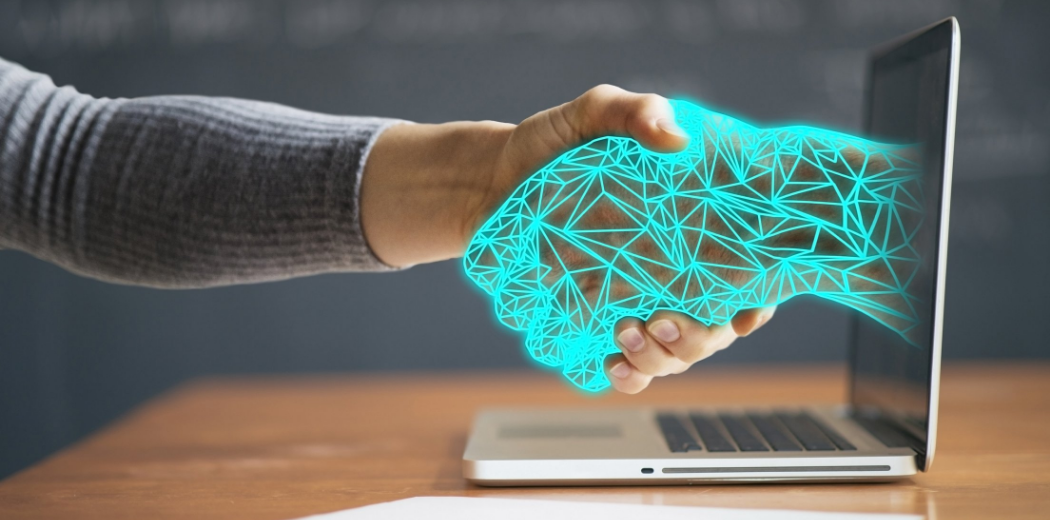
Neural networks aren‘t replacing human intelligence; they‘re augmenting our cognitive capabilities. They represent a collaborative tool that amplifies human potential, solving complex problems through data-driven insights.
Future Trajectories
The future of neural networks lies in their ability to become more interpretable, efficient, and aligned with human cognitive processes. Emerging research focuses on:
- Explainable AI techniques
- Energy-efficient computational models
- Cross-disciplinary integration
- Adaptive learning systems
Conclusion: A Continuous Journey of Discovery
Neural networks represent more than technological innovation – they‘re a testament to human creativity and our relentless pursuit of understanding intelligence itself.
As we continue exploring these computational landscapes, we‘re not just developing algorithms; we‘re uncovering fundamental principles of learning, adaptation, and intelligence.
The journey has only just begun.