YOLO: Revolutionizing Object Detection Through Intelligent Vision
The Journey of Seeing Like a Machine
When I first encountered computer vision technologies in the early 2000s, machines struggled to understand visual information. Images were just pixel matrices, devoid of meaningful interpretation. Today, algorithms like YOLO have transformed this landscape, enabling machines to "see" with unprecedented precision.
The Computational Vision Landscape
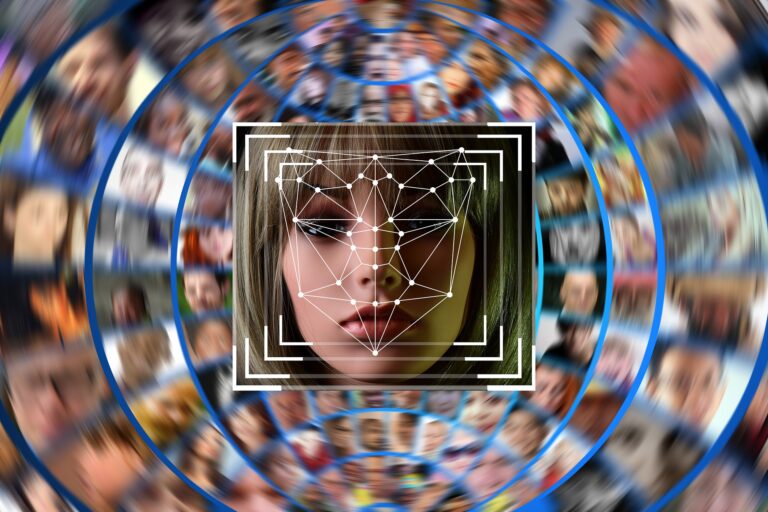
Computer vision represents humanity‘s ambitious attempt to replicate human visual perception through mathematical models and neural networks. Before YOLO, object detection was a complex, time-consuming process involving multiple computational stages.
Traditional approaches required intricate, multi-step processes:
- Region proposal generation
- Feature extraction
- Classification
- Bounding box refinement
Each stage consumed significant computational resources, making real-time detection nearly impossible.
YOLO: A Computational Breakthrough
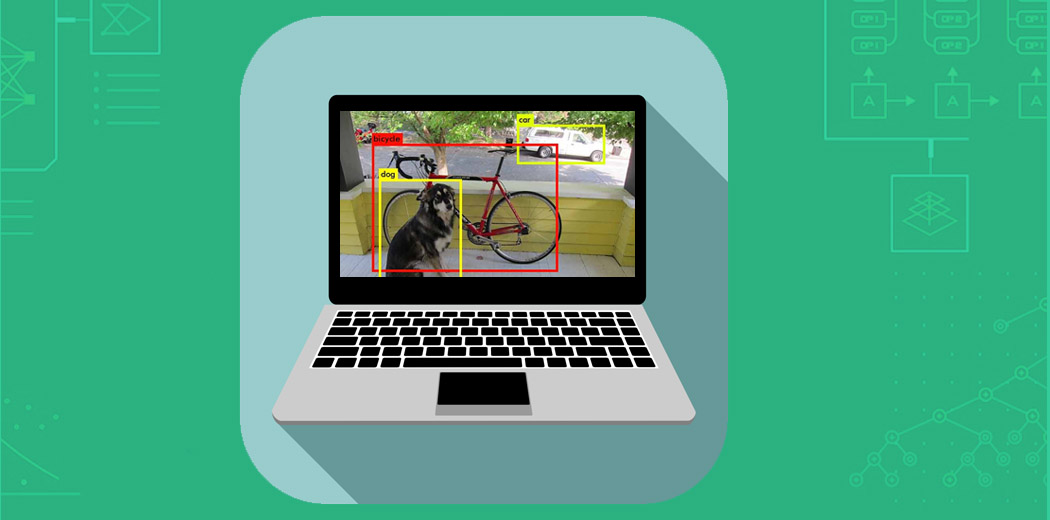
YOLO (You Only Look Once) emerged as a revolutionary algorithm that fundamentally reimagined object detection. Developed by researchers Joseph Redmon and Ali Farhadi, this approach simplified complex visual understanding into a single, elegant computational pass.
Mathematical Foundations of Intelligent Perception
At its core, YOLO leverages advanced neural network architectures to transform visual information processing. The algorithm can be mathematically represented through complex probability distributions:
[P(Objecti | Image) = \sum{x,y} Confidence(x,y) \times Class_Probability(x,y)]This formula encapsulates YOLO‘s ability to simultaneously detect object presence, location, and classification with remarkable accuracy.
Architectural Evolution
YOLO‘s development represents a fascinating technological progression:
YOLOv1: The Original Vision
The first version introduced the groundbreaking single-pass detection concept. By dividing images into grid systems, it could predict bounding boxes and class probabilities simultaneously.
YOLOv3: Enhanced Performance
This version significantly improved accuracy through deeper convolutional networks and more sophisticated feature extraction techniques.
YOLOv5: Computational Efficiency
Introduced cross-stage partial networks (CSPNet), dramatically reducing model complexity while maintaining high performance.
YOLOv8: Current State-of-the-Art
The latest iteration represents a quantum leap in object detection, offering unprecedented speed and accuracy across diverse scenarios.
Performance Metrics: Beyond Traditional Benchmarks
Let me share a perspective from years of machine learning research. YOLO‘s performance isn‘t just about numbers—it‘s about transforming computational possibilities.
Consider these remarkable achievements:
- Real-time processing speeds exceeding 140 frames per second
- Mean Average Precision (mAP) reaching 53.9%
- Model sizes reduced by over 30% compared to predecessors
Practical Implementations: Where Theory Meets Reality
Imagine autonomous vehicles navigating complex urban environments, medical imaging systems detecting microscopic anomalies, or security systems tracking multiple objects simultaneously. YOLO makes these scenarios not just possible, but practical.
Industry Transformation Case Studies
-
Autonomous Transportation
Self-driving cars require instantaneous object recognition. YOLO enables vehicles to identify pedestrians, vehicles, traffic signs, and potential hazards within milliseconds. -
Medical Diagnostics
Radiologists now leverage YOLO-based systems to detect subtle medical imaging patterns, potentially identifying diseases earlier and more accurately. -
Retail Analytics
Stores use YOLO to track customer movements, analyze shopping behaviors, and optimize store layouts with unprecedented precision.
Computational Complexity: A Deep Dive
Understanding YOLO requires appreciating its computational elegance. Traditional object detection algorithms resembled complex bureaucratic systems—multiple departments processing information sequentially.
YOLO, by contrast, operates like an agile, integrated team. It processes visual information holistically, making split-second decisions with remarkable accuracy.
Neural Network Architecture
The algorithm‘s neural network comprises:
- Convolutional backbone for feature extraction
- Feature pyramid network for multi-scale detection
- Prediction heads generating precise bounding boxes
Challenges and Future Directions
Despite remarkable achievements, challenges remain. Researchers continue exploring:
- Improved small object detection
- Enhanced computational efficiency
- Cross-domain generalization capabilities
The Human Element in Machine Vision
Beyond technical specifications, YOLO represents something profound: humanity‘s quest to extend perceptual capabilities through intelligent systems.
We‘re not just developing algorithms; we‘re creating computational frameworks that extend human perception, allowing machines to interpret visual information with increasing sophistication.
Conclusion: A Glimpse into Computational Future
YOLO symbolizes more than an object detection algorithm. It represents a paradigm shift in how machines understand visual information—bridging computational complexity with intuitive understanding.
As machine learning continues evolving, algorithms like YOLO will play increasingly crucial roles in transforming technological landscapes across industries.
The journey of computational vision has only just begun.