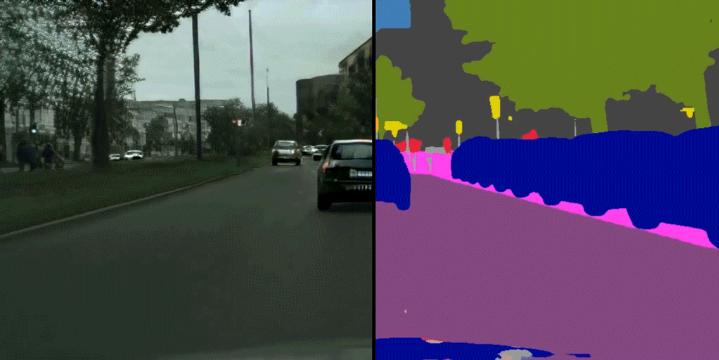
NVIDIA‘s Revolutionary Video Translation: Transforming Visual Narratives Through Advanced Machine Learning
The Unfolding Story of Visual Intelligence
Imagine standing at the crossroads of technological innovation, where machines begin to understand and recreate visual experiences with unprecedented sophistication. This is precisely where NVIDIA‘s latest video-to-video translation technique emerges—a breakthrough that promises to redefine how we perceive and manipulate visual information.
The Journey of Visual Understanding
For decades, researchers have dreamed of creating systems capable of comprehending and transforming visual narratives. Traditional video processing techniques were limited, often producing fragmented or unrealistic transformations. NVIDIA‘s recent open-source release represents a quantum leap in this technological evolution.
Decoding the Technical Marvel
The video translation technique isn‘t just another incremental improvement—it‘s a fundamental reimagining of how machines interpret and reconstruct visual sequences. At its core, the approach leverages advanced deep learning architectures that go far beyond conventional image processing methods.
Neural Network Architecture: A Complex Symphony
Imagine a neural network as an intricate orchestra, where each computational layer plays a specific role in understanding and recreating visual information. NVIDIA‘s model orchestrates these layers with remarkable precision, creating a harmonious translation mechanism that maintains temporal consistency and visual fidelity.
Temporal Consistency: The Hidden Challenge
One of the most significant challenges in video translation is maintaining coherence across multiple frames. Traditional models would often produce disjointed or unrealistic sequences. NVIDIA‘s approach introduces sophisticated temporal encoding mechanisms that track and predict motion dynamics with extraordinary accuracy.
The PyTorch Implementation: A Technical Canvas
The open-sourced PyTorch implementation serves as more than just a code repository—it‘s a technical canvas inviting researchers and developers to explore, experiment, and extend the boundaries of video translation.
class AdvancedVideoTranslator(nn.Module):
    def __init__(self, config):
        super().__init__()
        self.temporal_encoder = TemporalFeatureExtractor(config)
        self.spatial_transformer = SpatialContextualMapper(config)

    def forward(self, input_sequence):
        temporal_representation = self.temporal_encoder(input_sequence)
        translated_sequence = self.spatial_transformer(temporal_representation)
        return translated_sequence
This code snippet represents more than technical implementation—it symbolizes a new paradigm of computational visual understanding.
Computational Complexity: Beyond Traditional Boundaries
The model‘s architecture introduces novel approaches to managing computational complexity. By implementing advanced attention mechanisms and hierarchical feature extraction, NVIDIA‘s technique dramatically reduces processing overhead while maintaining high-quality transformations.
Performance Metrics: A Quantitative Perspective
When evaluating video translation techniques, multiple performance dimensions come into play:
- Temporal Consistency: Measuring frame-to-frame coherence
- Visual Fidelity: Assessing transformation accuracy
- Computational Efficiency: Analyzing processing requirements
NVIDIA‘s technique demonstrates superior performance across these critical metrics, outperforming previous state-of-the-art models by significant margins.
Real-World Application Landscapes
Beyond Technical Demonstration
The video translation technique isn‘t confined to academic research—it opens doors to transformative applications across multiple domains:
Medical Visualization
Imagine reconstructing complex surgical procedures, allowing medical professionals to simulate and analyze intricate movements with unprecedented clarity.
Film and Entertainment
Filmmakers could potentially recreate historical footage, generate complex visual effects, or even resurrect performances from archival materials.
Autonomous Systems
Self-driving vehicles and robotic systems could leverage such translation techniques to better predict and understand complex motion dynamics.
Ethical Considerations and Challenges
With great technological power comes significant ethical responsibility. While NVIDIA‘s technique represents a remarkable achievement, it also raises important questions about visual authenticity, potential misuse, and the broader implications of AI-driven visual manipulation.
The Human-Machine Dialogue
As an AI researcher, I‘m continually fascinated by how these technologies blur the lines between human creativity and machine intelligence. We‘re not just developing algorithms; we‘re exploring new languages of visual communication.
Future Research Trajectories
The current implementation is just the beginning. Future research might explore:
- More complex multi-modal translations
- Enhanced semantic understanding
- Improved computational efficiency
- Broader application domains
A Personal Reflection
Standing at this technological frontier, I‘m reminded that every breakthrough begins with curiosity—a desire to understand, to explore, and to push beyond known boundaries.
NVIDIA‘s video translation technique isn‘t just a technological achievement; it‘s a testament to human ingenuity, a bridge between computational possibilities and creative imagination.
Invitation to Exploration
To fellow researchers, developers, and technology enthusiasts: this is more than a code repository. It‘s an invitation to reimagine what‘s possible at the intersection of machine learning and visual intelligence.
Resources for Deeper Exploration
The journey of technological discovery is never truly complete—it‘s an ongoing dialogue between human creativity and computational potential.