Recommending Similar Images: A Deep Dive into Advanced Image Embedding Techniques
The Fascinating World of Visual Understanding
Imagine walking into a vast museum where every image whispers its story, where machines can understand visual nuances as intricately as human eyes. This isn‘t science fiction—it‘s the remarkable realm of image embedding, a technological marvel transforming how we perceive and interact with visual information.
The Journey of Visual Representation
When computers first encountered images, they saw nothing more than a complex grid of pixels—a meaningless arrangement of colors and intensities. Early computer vision systems struggled to comprehend what humans instinctively understood: that an image represents far more than its raw numerical components.
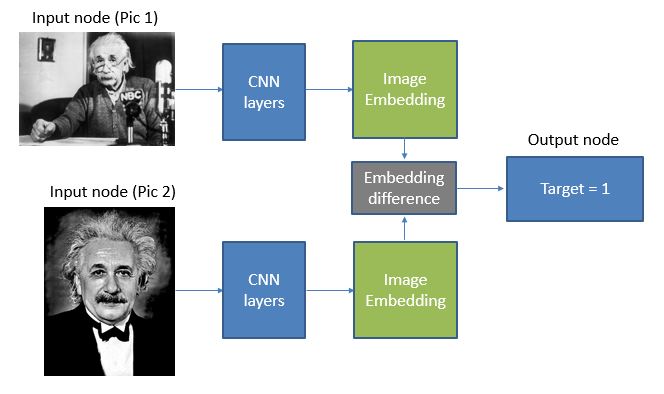
The breakthrough came with neural networks, particularly convolutional architectures that could extract meaningful features from visual data. These networks learned to see beyond individual pixels, recognizing patterns, shapes, and semantic relationships.
Mathematical Magic: From Pixels to Vectors
At the heart of image embedding lies a profound mathematical transformation. Consider an image not as a static picture, but as a dynamic vector existing in a high-dimensional space. Each image becomes a unique point in this complex landscape, with its position determined by intrinsic visual characteristics.
[E = \text{Embedding}(I) : I \rightarrow \mathbb{R}^n]This equation represents the embedding function that maps an input image [I] to a vector space [\mathbb{R}^n], where [n] represents the embedding dimensionality.
Architectural Innovations in Image Embedding
Convolutional Neural Networks: The First Revolution
Convolutional Neural Networks (CNNs) marked a watershed moment in visual understanding. Architectures like ResNet and EfficientNet demonstrated how hierarchical feature extraction could transform raw pixel data into meaningful representations.
By progressively learning more abstract features through multiple layers, these networks could capture increasingly complex visual semantics. The final layers, typically removed from classification tasks, became powerful embedding generators.
Transformer-Based Approaches: A Paradigm Shift
Vision Transformers (ViT) introduced a revolutionary perspective, applying self-attention mechanisms originally developed for natural language processing to image understanding. Unlike traditional CNNs, transformers could capture global image context more effectively.
These models treat images as sequences of patches, allowing sophisticated contextual understanding that transcends local feature extraction.
Practical Implementation: Crafting Intelligent Image Recommenders
Consider a practical scenario: building an image recommendation system for an online art gallery. Here‘s a sophisticated implementation strategy:
import torch
import torchvision.models as models
import torch.nn.functional as F

class AdvancedImageEmbedder(torch.nn.Module):
    def __init__(self, embedding_dimension=512):
        super().__init__()
        # Utilize pre-trained vision transformer
        self.backbone = models.vit_b_16(pretrained=True)
        self.projection_head = torch.nn.Linear(
            self.backbone.hidden_dim,
            embedding_dimension
        )

    def forward(self, images):
        features = self.backbone(images)
        embeddings = self.projection_head(features)
        return F.normalize(embeddings, p=2, dim=1)

    def compute_similarity(self, query_embedding, gallery_embeddings):
        similarities = torch.mm(query_embedding, gallery_embeddings.t())
        return similarities
Beyond Technical Implementation: Philosophical Implications
Image embedding represents more than a technological achievement—it‘s a bridge between human perception and machine interpretation. By transforming visual data into meaningful representations, we‘re essentially teaching machines to "see" with increasing sophistication.
Ethical Considerations in Visual AI
As image embedding technologies advance, critical ethical questions emerge. How do we ensure these systems remain unbiased? What safeguards prevent potential misuse of such powerful visual understanding capabilities?
Responsible development requires ongoing dialogue between technologists, ethicists, and policymakers.
Real-World Applications: Transforming Industries
-
E-commerce Visual Search
Imagine shopping platforms where users can find products by uploading similar images, revolutionizing consumer experiences. -
Medical Diagnostics
Radiologists can leverage embedding techniques to quickly compare medical images, potentially detecting subtle anomalies faster than traditional methods. -
Creative Industries
Designers and artists can use advanced image recommendation systems to discover visual inspirations and explore creative connections.
Future Horizons: Emerging Research Directions
The next frontier of image embedding lies in:
- Self-supervised learning techniques
- Cross-modal embedding approaches
- Interpretable and explainable embedding spaces
- Energy-efficient embedding architectures
Conclusion: A Continuous Journey of Discovery
Image embedding isn‘t just a technological process—it‘s a profound exploration of visual understanding. As machines become increasingly adept at interpreting visual information, we‘re witnessing a remarkable convergence of human creativity and computational intelligence.
The story of image embedding is still being written, with each breakthrough revealing new dimensions of how machines perceive and interact with our visual world.