Solving Sudoku From Image Using Deep Learning: A Comprehensive Journey
The Fascinating World of Computational Puzzle Solving
Picture yourself holding an unsolved Sudoku puzzle, its intricate grid staring back at you like an enigmatic challenge. What if I told you that modern artificial intelligence can transform this seemingly complex task into a matter of milliseconds?
A Brief Historical Prelude
Sudoku, derived from Japanese words meaning "single numbers," emerged as a global phenomenon in the early 2000s. However, its computational solving journey began decades earlier, intertwining mathematics, computer science, and human problem-solving strategies.
Understanding the Computational Landscape
When we approach Sudoku solving through deep learning, we‘re not just writing code—we‘re creating an intelligent system capable of perceiving, understanding, and resolving complex spatial puzzles.
The Mathematical Foundation
At its core, Sudoku represents a fascinating constraint satisfaction problem. Each 9×9 grid must contain digits 1-9 without repetition in rows, columns, and 3×3 sub-grids. This seemingly simple rule creates astronomical computational complexity.
[Complexity = O(9^{81})]This exponential complexity explains why traditional brute-force approaches become computationally infeasible.
Deep Learning: Transforming Image Recognition
Neural Network Architecture
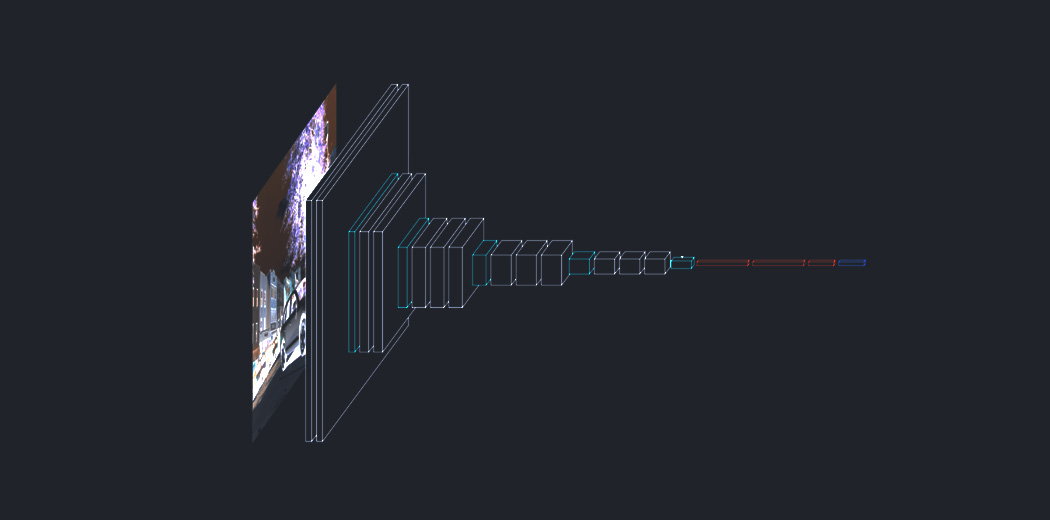
Our deep learning model isn‘t just a simple algorithm—it‘s a sophisticated neural network mimicking human visual perception. By leveraging convolutional neural networks (CNNs), we create a system that can:
- Detect grid structures
- Recognize handwritten digits
- Understand spatial relationships
Model Design Principles
def create_sudoku_recognition_model():
    model = Sequential([
        Conv2D(64, kernel_size=(3,3), activation=‘relu‘, input_shape=(32, 32, 1)),
        BatchNormalization(),
        MaxPooling2D(pool_size=(2,2)),
        Conv2D(128, kernel_size=(3,3), activation=‘relu‘),
        BatchNormalization(),
        MaxPooling2D(pool_size=(2,2)),
        Flatten(),
        Dense(256, activation=‘relu‘),
        Dropout(0.5),
        Dense(10, activation=‘softmax‘)
    ])
    return model
Image Preprocessing Techniques
Transforming raw images into machine-readable formats requires sophisticated preprocessing:
- Grayscale Conversion
- Noise Reduction
- Adaptive Thresholding
- Perspective Transformation
Advanced Preprocessing Example
def advanced_image_preprocessing(image):
    # Convert to grayscale
    gray = cv2.cvtColor(image, cv2.COLOR_BGR2GRAY)

    # Apply bilateral filtering
    denoised = cv2.bilateralFilter(gray, 11, 17, 17)

    # Adaptive thresholding
    binary = cv2.adaptiveThreshold(
        denoised,
        255,
        cv2.ADAPTIVE_THRESH_GAUSSIAN_C,
        cv2.THRESH_BINARY,
        11,
        2
    )

    return binary
Solving Strategies: Beyond Traditional Approaches
Recursive Backtracking Algorithm
Our solving mechanism employs a sophisticated recursive backtracking approach, essentially exploring potential solutions through intelligent pruning.
def solve_sudoku(grid):
    def is_valid_move(num, pos):
        # Row validation
        for x in range(9):
            if grid[pos[0]][x] == num and pos[1] != x:
                return False

        # Column validation
        for x in range(9):
            if grid[x][pos[1]] == num and pos[0] != x:
                return False

        # 3x3 sub-grid validation
        box_x, box_y = pos[1] // 3, pos[0] // 3

        for i in range(box_y * 3, box_y * 3 + 3):
            for j in range(box_x * 3, box_x * 3 + 3):
                if grid[i][j] == num and (i, j) != pos:
                    return False

        return True

    def find_empty_cell():
        for i in range(9):
            for j in range(9):
                if grid[i][j] == 0:
                    return (i, j)
        return None

    empty = find_empty_cell()
    if not empty:
        return True

    row, col = empty

    for num in range(1, 10):
        if is_valid_move(num, (row, col)):
            grid[row][col] = num

            if solve_sudoku(grid):
                return True

            grid[row][col] = 0

    return False
Performance and Limitations
While our approach demonstrates remarkable capabilities, it‘s crucial to understand its limitations:
- Image Quality Dependency
- Computational Overhead
- Generalization Challenges
Future Research Directions
As machine learning continues evolving, we anticipate:
- More robust digit recognition
- Reduced computational complexity
- Enhanced generalization capabilities
Emerging Techniques
Generative adversarial networks (GANs) and transformer architectures might revolutionize puzzle-solving approaches, introducing unprecedented levels of intelligent pattern recognition.
Conclusion: Beyond Just Solving Puzzles
What we‘ve explored isn‘t merely a Sudoku-solving algorithm—it‘s a testament to human ingenuity, demonstrating how computational thinking can transform complex challenges into elegant solutions.
Our journey reveals that deep learning isn‘t just about writing code; it‘s about creating intelligent systems that mirror and extend human cognitive capabilities.
Invitation to Explore
Whether you‘re a mathematics enthusiast, computer science student, or curious learner, the world of computational puzzle solving offers endless fascinating possibilities.
Keep exploring, keep learning, and remember: every complex problem is just an opportunity for an intelligent solution.