StyleGAN: Revolutionizing Image Synthesis Through Advanced Generative Networks
The Fascinating World of Generative Artificial Intelligence
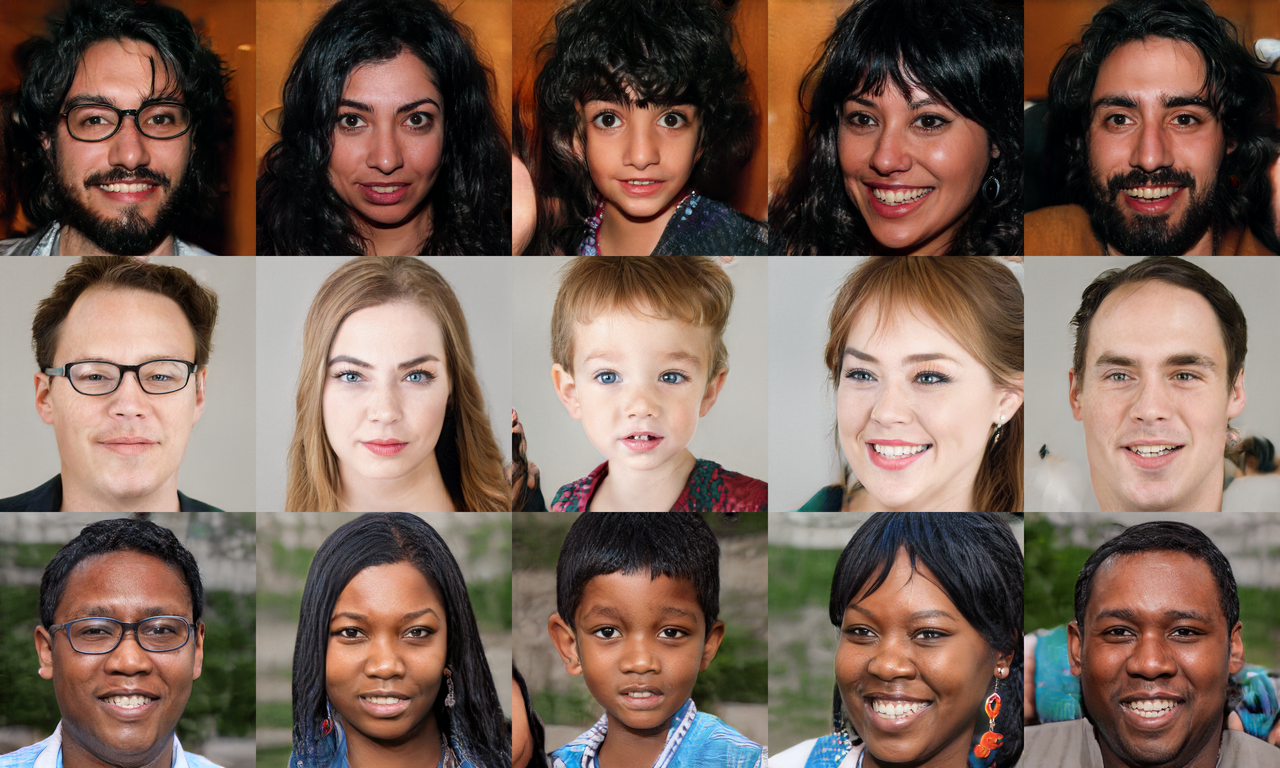
Imagine stepping into a realm where machines can create images so realistic that they challenge our perception of reality. This isn‘t science fiction—it‘s the remarkable world of StyleGAN, a groundbreaking technology that has transformed how we understand image generation.
As an artificial intelligence researcher who has witnessed the evolution of generative networks, I‘m excited to share the intricate journey of StyleGAN—a technology that represents a quantum leap in machine creativity.
The Genesis of Generative Adversarial Networks
Before diving into StyleGAN‘s complexities, let‘s understand its roots. Generative Adversarial Networks (GANs) emerged in 2014 as a revolutionary concept proposed by Ian Goodfellow. These networks operate on a fascinating principle: two neural networks—a generator and a discriminator—engage in a continuous "game" of creation and verification.
Picture two players: one attempting to create increasingly convincing fake images, while the other tries to distinguish between real and synthetic representations. This adversarial process drives continuous improvement, pushing the boundaries of what‘s possible in artificial image generation.
Technical Architecture: Deconstructing StyleGAN‘s Innovative Design
Mapping Network: Reimagining Latent Space Representation
Traditional GANs struggled with direct latent space mapping. StyleGAN introduces a sophisticated mapping network that transforms input vectors through a non-linear transformation. This approach allows unprecedented control over generated image characteristics.
The mathematical representation [f_{mapping}: Z \rightarrow W] might seem abstract, but it represents a profound shift in generative modeling. By creating an intermediate latent space, StyleGAN decouples image generation from traditional linear representations.
Adaptive Instance Normalization: A Game-Changing Mechanism
At the heart of StyleGAN lies Adaptive Instance Normalization (AdaIN), a technique that injects style information dynamically across different network layers. The mathematical formulation:
[AdaIN(x_i, y) = \sigma(y) \cdot \frac{x_i – \mu(x_i)}{\sigma(x_i)} + \mu(y)]Translates into a powerful mechanism for fine-grained style control. Imagine being able to adjust facial features, hair texture, or lighting conditions with surgical precision—that‘s the power of AdaIN.
Noise Injection: Breathing Life into Synthetic Images
One of StyleGAN‘s most fascinating features is its per-pixel noise injection mechanism. This technique adds stochastic variations that make generated images remarkably natural. It‘s akin to an artist adding subtle brushstrokes that transform a mechanical reproduction into a living, breathing image.
Performance and Computational Landscape
Generating high-quality images isn‘t just about algorithms—it‘s about understanding computational constraints and pushing technological boundaries.
StyleGAN demands significant computational resources. A high-end NVIDIA Tesla V100 GPU with at least 16GB memory becomes your canvas, with training potentially spanning days or weeks. This isn‘t just computation; it‘s a testament to the complexity of mimicking human-like creativity.
Benchmarking Excellence
Performance metrics like Fréchet Inception Distance (FID) reveal StyleGAN‘s superiority. Lower FID values indicate higher image quality, and StyleGAN consistently outperforms predecessor architectures.
Practical Applications: Beyond Theoretical Boundaries
Creative Industries Transformation
Imagine fashion designers generating infinite clothing variations, game developers populating virtual worlds with unique characters, or filmmakers creating digital extras with unprecedented realism. StyleGAN isn‘t just a technology—it‘s a creative multiplier.
Research and Simulation Frontiers
Medical image synthesis, data anonymization, and scientific visualization represent just the tip of the potential iceberg. By generating synthetic yet realistic datasets, researchers can explore scenarios previously constrained by data limitations.
Ethical Considerations: Navigating Technological Responsibility
With great technological power comes significant ethical responsibility. StyleGAN‘s capability to generate hyper-realistic images raises critical questions about digital authenticity, privacy, and potential misuse.
Developing robust watermarking techniques, establishing ethical guidelines, and creating detection mechanisms become as crucial as the technological innovation itself.
Future Research Horizons
The journey of StyleGAN is far from complete. Emerging research directions include:
- Enhanced latent space disentanglement
- Cross-domain style transfer
- More computationally efficient training methodologies
- Improved interpretability of generative models
Personal Reflection: The Human Behind the Machine
As a researcher who has spent years exploring generative networks, StyleGAN represents more than a technological achievement. It‘s a bridge between human creativity and machine learning, challenging our understanding of artificial intelligence.
Each generated image tells a story—not just of pixels and algorithms, but of our collective imagination‘s potential.
Concluding Thoughts: A New Creative Frontier
StyleGAN isn‘t just about generating images; it‘s about expanding the boundaries of what machines can create. It represents a profound intersection of mathematics, computer science, and artistic expression.
As we stand at this technological crossroads, one thing becomes clear: the future of creativity is collaborative, with humans and machines working together to explore uncharted imaginative territories.
The story of StyleGAN is still being written, and you—yes, you—are part of this extraordinary narrative.