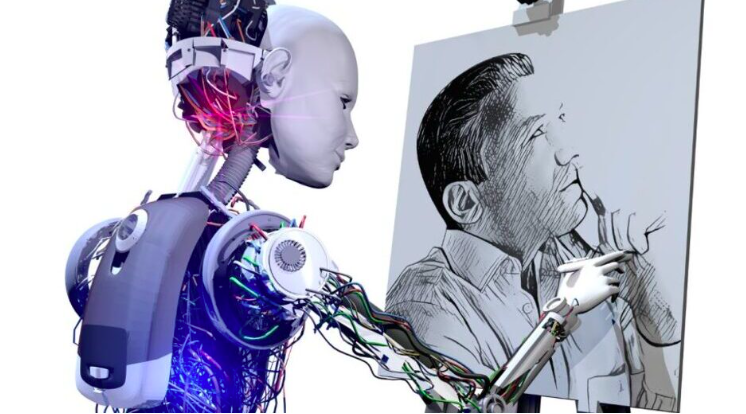
Synthetic Image Generation: A Journey Through Technological Imagination
The Magical Realm of Computational Creativity
Imagine standing at the intersection of art and technology, where mere words transform into vivid, breathtaking visual landscapes. This is the extraordinary world of synthetic image generation – a technological marvel that bridges human imagination with computational creativity.
The Genesis of Visual Synthesis
The story of synthetic image generation isn‘t just a technological narrative; it‘s a human adventure of pushing boundaries. Picture early computer scientists dreaming of machines that could translate textual descriptions into visual representations – a concept that seemed like pure science fiction just decades ago.
Computational Evolution: From Pixels to Perception
In the early days of computational imaging, generating even basic images was an immense challenge. Researchers worked tirelessly, developing increasingly sophisticated neural network architectures that could understand and recreate visual information.
The breakthrough came with generative models that could do more than simply reproduce existing images. These advanced systems began to comprehend semantic relationships, learning to interpret complex textual descriptions and transform them into coherent visual representations.
The Mathematical Symphony of Image Generation
At the heart of synthetic image generation lies a complex mathematical orchestra. Generative models like Generative Adversarial Networks (GANs) and Variational Autoencoders (VAEs) represent sophisticated mathematical frameworks that enable machines to "imagine" visual content.
Understanding Latent Space: The Neural Network‘s Imagination
Think of latent space as a computational dreamscape where abstract representations of visual concepts reside. When a neural network processes a text prompt, it navigates this multidimensional space, selecting and combining visual elements to create something entirely new.
[Latent Representation = f(Text Input, Learned Semantic Mapping)]This equation might seem abstract, but it represents the magical translation of human language into visual information. Each variable represents a complex computational process that transforms words into pixels.
Technological Architectures: Building Blocks of Visual Synthesis
Generative Adversarial Networks (GANs)
GANs represent a revolutionary approach to image generation. Imagine two neural networks engaged in an intricate dance – one creating images, the other critiquing them. This competitive process drives continuous improvement in image quality and semantic accuracy.
The generator network learns to create increasingly sophisticated images, while the discriminator network becomes more discerning in detecting artificial versus real imagery. It‘s a perpetual cycle of learning and refinement.
Diffusion Models: Gradual Image Revelation
Recent advancements in diffusion models have transformed synthetic image generation. These models work by progressively refining images, starting from pure noise and gradually introducing semantic details based on textual guidance.
Picture a sculptor slowly chiseling a statue from a rough block of marble – diffusion models operate similarly, meticulously crafting visual representations through iterative refinement.
Real-World Applications: Beyond Artistic Expression
Synthetic image generation extends far beyond creative endeavors. Industries ranging from medical imaging to architectural design are leveraging these technologies to solve complex visualization challenges.
Scientific Visualization
In scientific research, synthetic image generation enables researchers to visualize complex molecular structures, astronomical phenomena, and microscopic biological processes that traditional imaging techniques cannot capture.
Design and Prototyping
Product designers now use text-to-image generation to rapidly prototype concepts, transforming abstract ideas into visual representations within seconds. This dramatically accelerates innovation cycles across multiple industries.
Ethical Considerations and Challenges
While the technology offers immense potential, it also presents significant ethical considerations. The ability to generate hyper-realistic images raises important questions about authenticity, intellectual property, and potential misuse.
Bias and Representation
Neural networks learn from existing datasets, which can perpetuate societal biases. Researchers are continuously working to develop more inclusive and representative generative models that minimize discriminatory representations.
The Human-Machine Creative Partnership
Synthetic image generation isn‘t about replacing human creativity but augmenting it. These technologies serve as powerful collaborative tools, expanding the boundaries of what‘s visually possible.
Computational Creativity
Consider these systems not as replacements for human imagination but as sophisticated creative assistants. They offer unprecedented capabilities for visual exploration and conceptualization.
Future Horizons: Where Technology Meets Imagination
As computational power increases and machine learning algorithms become more sophisticated, we can anticipate even more remarkable developments in synthetic image generation.
Emerging technologies like multimodal AI systems will likely blur the lines between different sensory inputs, creating even more immersive and contextually rich generative experiences.
Conclusion: A New Frontier of Visual Expression
Synthetic image generation represents more than a technological achievement – it‘s a testament to human ingenuity and our relentless pursuit of creative expression.
As we continue to push the boundaries of what‘s possible, these technologies will undoubtedly reshape our understanding of creativity, perception, and the relationship between human imagination and computational potential.
The journey of synthetic image generation is just beginning, and the most exciting chapters are yet to be written.