The Fascinating World of Single-Source Deepfakes: A Journey Through Synthetic Media Technology
Unraveling the Magic of AI-Powered Video Transformation
Imagine holding a single photograph and magically transforming it into a living, breathing video where the subject speaks and moves naturally. This isn‘t science fiction—it‘s the remarkable reality of modern deepfake technology.
The Genesis of Synthetic Media
When I first encountered deepfake technology, it felt like witnessing a technological miracle. As an artificial intelligence researcher, I‘ve watched this field evolve from rudimentary image manipulations to sophisticated neural network architectures capable of generating hyper-realistic synthetic media.
A Personal Perspective on Technological Evolution
Deepfake technology isn‘t just about creating convincing videos; it‘s a testament to human creativity and computational innovation. The journey from early digital image manipulation to current AI-driven synthetic media represents a quantum leap in our understanding of machine learning.
The Neural Network Symphony
At its core, single-source deepfake generation is like conducting an intricate orchestra of algorithms. Each neural network plays a specific role, working in perfect harmony to reconstruct human expressions, voices, and movements from minimal source material.
Computational Alchemy: Transforming Pixels into Narratives
Modern deepfake systems leverage advanced generative models that go beyond simple image replacement. These sophisticated algorithms understand contextual nuances, facial dynamics, and speech patterns with unprecedented precision.
Technical Architecture: Beyond Simple Mimicry
Imagine a neural network as a master artist, meticulously studying every pixel, every facial movement, and vocal subtlety. The process involves multiple sophisticated stages:
-
Feature Extraction
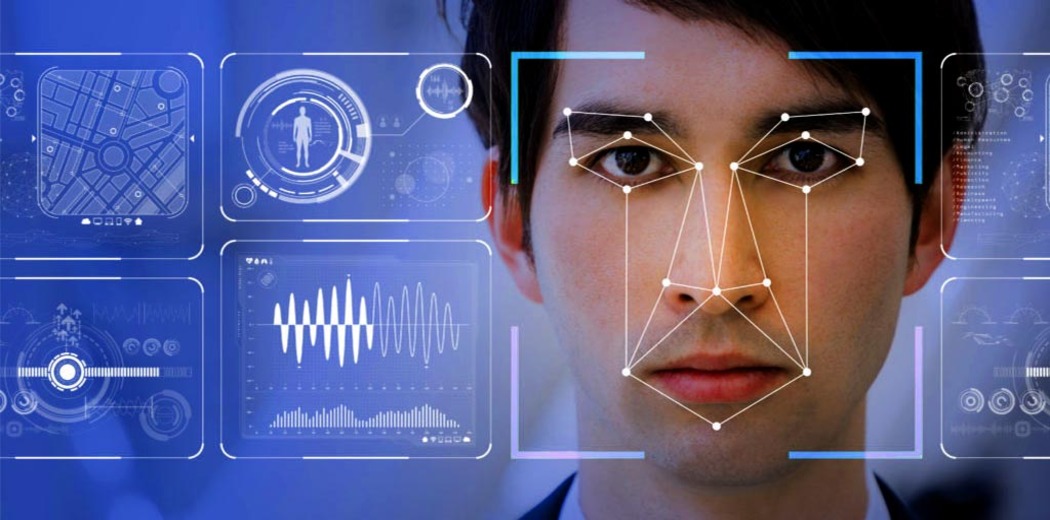
The initial phase involves comprehensive analysis of the source video. Advanced convolutional neural networks map facial landmarks, extract texture information, and create high-dimensional representations of the subject‘s unique characteristics. -
Embedding Generation
Machine learning models transform raw visual and audio data into compact, meaningful representations. These embeddings capture the essence of a person‘s appearance and vocal signature, allowing for precise synthetic reproduction. -
Generative Reconstruction
Using generative adversarial networks (GANs), the system reconstructs facial movements and speech patterns. The generator creates synthetic content while the discriminator continuously evaluates its authenticity, creating a feedback loop of improvement.
The Mathematical Symphony of AI
[P(Synthetic | Source) = \int_{Embedding} G(x, \theta) * D(x, \phi)]This complex equation represents the probability of generating an authentic synthetic video given a source input, where G represents the generator network and D represents the discriminator network.
Ethical Considerations and Technological Responsibility
While the technology is fascinating, it carries profound ethical implications. As researchers and technologists, we must approach synthetic media development with rigorous ethical frameworks and a commitment to responsible innovation.
Navigating the Ethical Landscape
Deepfake technology isn‘t inherently problematic—it‘s a tool whose impact depends entirely on human intention. Creative applications in entertainment, education, and historical preservation demonstrate its potential for positive transformation.
Computational Challenges and Breakthrough Strategies
Generating high-quality synthetic media from a single source video requires overcoming significant computational challenges:
- Maintaining temporal coherence
- Preserving facial expression nuances
- Generating natural lip synchronization
- Handling varied lighting and angle conditions
Innovative Solution Strategies
Researchers have developed sophisticated techniques like:
- Landmark-based motion transfer
- Probabilistic feature mapping
- Advanced regularization techniques
The Human-AI Collaboration
Deepfake technology represents more than a technical achievement—it‘s a profound exploration of human creativity augmented by computational intelligence. We‘re not replacing human creativity but expanding its boundaries.
Looking Toward the Horizon
As machine learning continues evolving, we can anticipate even more remarkable synthetic media capabilities. The future isn‘t about creating perfect replicas but about understanding and representing human expression in increasingly nuanced ways.
Practical Implications Across Industries
-
Entertainment and Media
Filmmakers could resurrect historical figures or create personalized content with unprecedented ease. -
Education and Training
Synthetic media could provide immersive, personalized learning experiences. -
Accessibility Technologies
Individuals with speech or movement impairments could benefit from advanced synthetic communication tools.
Conclusion: A Technological Frontier
Single-source deepfake technology represents a remarkable convergence of artificial intelligence, computer vision, and human creativity. As we continue exploring this fascinating domain, we‘re not just developing technology—we‘re expanding the very definition of human expression.
Recommended Exploration Resources
- IEEE Computer Society Publications
- arXiv Machine Learning Research Papers
- ACM Digital Library
Remember, in the world of AI, today‘s impossible becomes tomorrow‘s ordinary. The journey of technological discovery is limitless.