Building Autoencoders: A Profound Journey into Representation Learning
The Genesis of Intelligent Representation
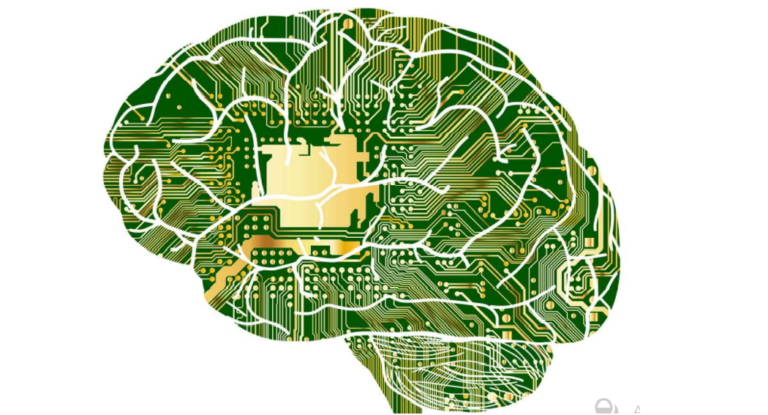
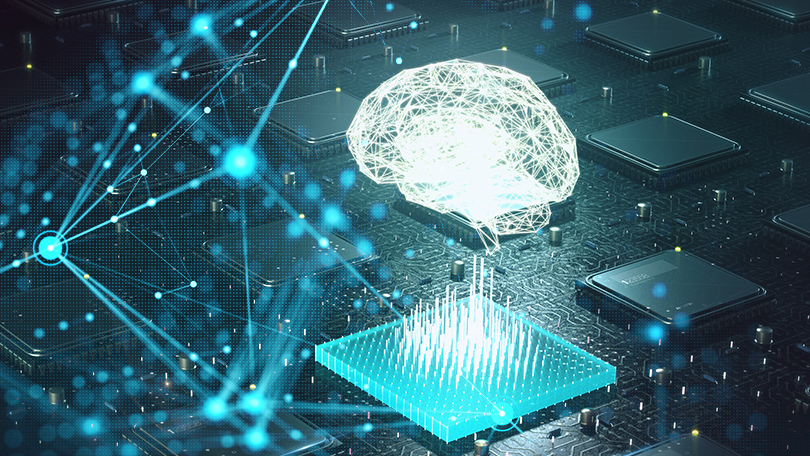
Imagine standing at the intersection of human cognition and computational intelligence, where machines begin to understand data not just as numbers, but as meaningful representations. This is the fascinating world of autoencoders – neural network architectures that mirror our brain‘s remarkable ability to compress, understand, and reconstruct complex information.
A Personal Reflection on Learning
As an artificial intelligence researcher, I‘ve always been captivated by how humans and machines learn. Our brains don‘t simply store information; they transform, compress, and reconstruct experiences. Autoencoders do precisely this – they‘re not just algorithms, but computational metaphors of human learning.
The Architectural Symphony of Autoencoders
Autoencoders represent a sophisticated dance between compression and reconstruction. Picture them as intelligent translators, taking complex, high-dimensional data and distilling it into a compact, meaningful language that captures the essence of information.
Mathematical Elegance: Beyond Simple Computation
The mathematical foundation of autoencoders transcends traditional computational approaches. Let‘s explore their intricate architecture:
[f{encoder}: X \rightarrow Z] [f{decoder}: Z \rightarrow X]Where [X] represents the original data space, and [Z] represents the compressed latent representation. The goal? Minimize the reconstruction error while maintaining meaningful representation.
Evolutionary Perspectives of Representation Learning
Autoencoders didn‘t emerge in isolation. They‘re part of a broader evolutionary computational landscape, drawing inspiration from biological learning mechanisms. Just as organisms adapt and compress sensory information for survival, autoencoders learn to extract critical features from complex datasets.
Neurological Parallels
Consider how our brain processes sensory information. When you see a familiar face, your brain doesn‘t store every pixel but creates a compact representation. Autoencoders function similarly, learning to capture the most salient features while discarding redundant information.
Variational Autoencoders: A Probabilistic Renaissance
Variational Autoencoders (VAEs) represent a quantum leap in representation learning. Unlike traditional autoencoders, VAEs introduce probabilistic sampling, creating smoother, more continuous latent spaces.
The Probabilistic Dance
The VAE loss function elegantly balances reconstruction accuracy with latent space regularity:
[L{VAE} = L{reconstruction} + \beta \cdot L_{KL-divergence}]This formulation ensures that the learned representations are not just accurate but also meaningful and generalizable.
Practical Implementation: Bridging Theory and Practice
Implementing an autoencoder isn‘t just about writing code; it‘s about crafting an intelligent system that understands data‘s intrinsic structure. Here‘s a comprehensive PyTorch implementation that captures this philosophy:
class AdvancedAutoencoder(nn.Module):
    def __init__(self, input_dim, latent_dim):
        super().__init__()
        self.encoder = nn.Sequential(
            nn.Linear(input_dim, 256),
            nn.ReLU(),
            nn.Linear(256, 128),
            nn.ReLU(),
            nn.Linear(128, latent_dim)
        )
        self.decoder = nn.Sequential(
            nn.Linear(latent_dim, 128),
            nn.ReLU(),
            nn.Linear(128, 256),
            nn.ReLU(),
            nn.Linear(256, input_dim),
            nn.Sigmoid()
        )

    def forward(self, x):
        z = self.encoder(x)
        reconstructed = self.decoder(z)
        return reconstructed
Ethical Considerations in Representation Learning
As we develop more sophisticated representation learning techniques, we must consider their broader implications. Autoencoders aren‘t just technical artifacts; they‘re windows into understanding how intelligence – artificial and biological – processes information.
Responsible AI Development
The power of representation learning comes with significant responsibility. We‘re not just creating algorithms; we‘re developing systems that can potentially understand and interpret complex data in ways previously unimaginable.
Research Frontiers and Emerging Horizons
The future of autoencoders lies in their ability to transcend current computational boundaries. Emerging research explores:
- Quantum-inspired representation learning
- Neuromorphic computing architectures
- Cross-modal representation transfer
- Self-supervised learning paradigms
The Human Touch in Machine Learning
Despite all technological advancements, the most profound machine learning models remain those that capture the nuanced, contextual understanding inherent in human cognition.
A Researcher‘s Perspective
As someone who has spent years studying these fascinating systems, I‘m continually amazed by how autoencoders mirror our cognitive processes. They‘re not just tools; they‘re computational philosophers, constantly seeking to understand the underlying structure of information.
Conclusion: An Ongoing Journey of Discovery
Autoencoders represent more than a technical achievement. They‘re a testament to human creativity, our relentless pursuit of understanding, and our ability to create systems that can learn, adapt, and represent complex realities.
The journey of representation learning is far from over. Each breakthrough brings us closer to understanding the fundamental nature of intelligence – both artificial and human.
Invitation to Explore
To the curious mind reading this: your exploration of autoencoders is just beginning. Embrace the complexity, challenge the assumptions, and continue pushing the boundaries of what‘s possible in representation learning.
The most exciting discoveries await those willing to look beyond the code and see the profound philosophical and cognitive implications of these remarkable systems.