The Profound Journey of Deep Learning: A Comprehensive Exploration
Unraveling the Intricate Tapestry of Artificial Intelligence
Imagine standing at the crossroads of technological revolution, where mathematics, computer science, and human imagination converge to create something extraordinary. Deep learning represents precisely such a transformative frontier—a realm where machines begin to understand, learn, and adapt in ways previously confined to human cognition.
The Genesis of Neural Networks: A Historical Perspective
The story of deep learning isn‘t merely a technological narrative; it‘s a human saga of persistent curiosity and relentless innovation. Long before sophisticated algorithms and powerful GPUs, pioneers like Warren McCulloch and Walter Pitts conceptualized artificial neural networks in the 1940s, drawing inspiration from biological neural structures.
These early visionaries recognized that computational systems could potentially mimic the brain‘s intricate information processing capabilities. Their groundbreaking work laid the philosophical and mathematical foundations for what would eventually become deep learning.
Mathematical Foundations: Beyond Simple Computation
At its core, deep learning transcends traditional computational approaches. Unlike conventional programming paradigms that rely on explicit instructions, neural networks learn through experience—much like a craftsman honing skills through repeated practice.
The mathematical elegance underlying neural networks involves complex mathematical transformations. [f(x) = \sigma(Wx + b)], where [σ] represents activation functions, [W] signifies weight matrices, and [b] represents bias terms, encapsulates the fundamental mechanism of neural information processing.
Architectural Evolution: From Simple Perceptrons to Complex Networks
Consider the journey from single-layer perceptrons to today‘s sophisticated architectures as analogous to transitioning from basic woodworking tools to advanced robotic manufacturing systems. Each evolutionary step represents exponential increases in complexity and capability.
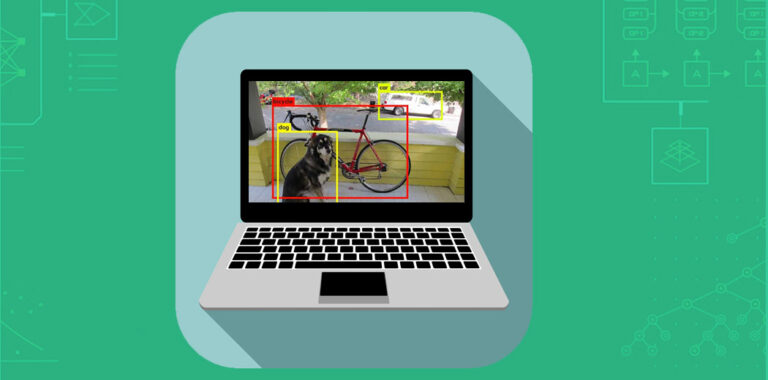
Convolutional Neural Networks (CNNs), for instance, revolutionized image recognition by introducing hierarchical feature extraction mechanisms. Imagine teaching a machine to recognize patterns similar to how a human artist discerns subtle variations in visual composition—layer by intricate layer.
Transformative Applications Across Industries
Deep learning isn‘t confined to academic laboratories; it‘s actively reshaping industries:
In healthcare, neural networks analyze medical imaging with unprecedented precision, detecting subtle pathological changes invisible to human observers. Radiologists now collaborate with AI systems, transforming diagnostic accuracy.
Financial institutions leverage deep learning algorithms for sophisticated fraud detection, analyzing complex transactional patterns in milliseconds—a task inconceivable through traditional rule-based systems.
The Human Element in Technological Advancement
While algorithms and mathematical models drive deep learning‘s progress, human creativity remains the fundamental catalyst. Every breakthrough represents a delicate dance between computational power and human intuition.
Researchers like Geoffrey Hinton, Yann LeCun, and Yoshua Bengio didn‘t just develop algorithms; they reimagined computational possibilities. Their work exemplifies how individual passion can transform technological landscapes.
Navigating Complexity: Training Neural Networks
Training a neural network resembles mentoring an apprentice. Initial attempts are imprecise, but consistent feedback and adjustment gradually refine performance. Techniques like backpropagation enable networks to learn from their mistakes, adjusting internal parameters to minimize prediction errors.
Emerging Frontiers and Ethical Considerations
As deep learning capabilities expand, profound ethical questions emerge. How do we ensure algorithmic fairness? Can we prevent unintended biases from infiltrating AI systems? These challenges demand interdisciplinary collaboration between technologists, ethicists, and policymakers.
The Road Ahead: Predictions and Possibilities
Looking forward, deep learning will likely transcend current limitations. Quantum computing, neuromorphic engineering, and advanced machine learning paradigms promise unprecedented computational capabilities.
Imagine neural networks that can comprehend context, generate creative content, and solve complex interdisciplinary problems—not through brute-force computation, but through nuanced understanding.
Practical Guidance for Aspiring Practitioners
For those embarking on a deep learning journey, remember that mastery requires patience, curiosity, and persistent practice. Start with foundational mathematics, develop programming skills, and continuously experiment.
Platforms like Coursera, edX, and specialized deep learning repositories offer comprehensive learning resources. However, theoretical knowledge must be complemented by hands-on project experience.
Conclusion: A Continuous Learning Odyssey
Deep learning represents more than a technological domain—it‘s a testament to human ingenuity. Each algorithm, each neural network architecture tells a story of relentless human curiosity and our collective desire to expand computational boundaries.
As you navigate this fascinating landscape, embrace complexity, remain humble, and never cease wondering about the extraordinary potential residing at the intersection of mathematics, computation, and human creativity.
The journey of deep learning has only just begun, and you—yes, you—are part of this remarkable narrative.