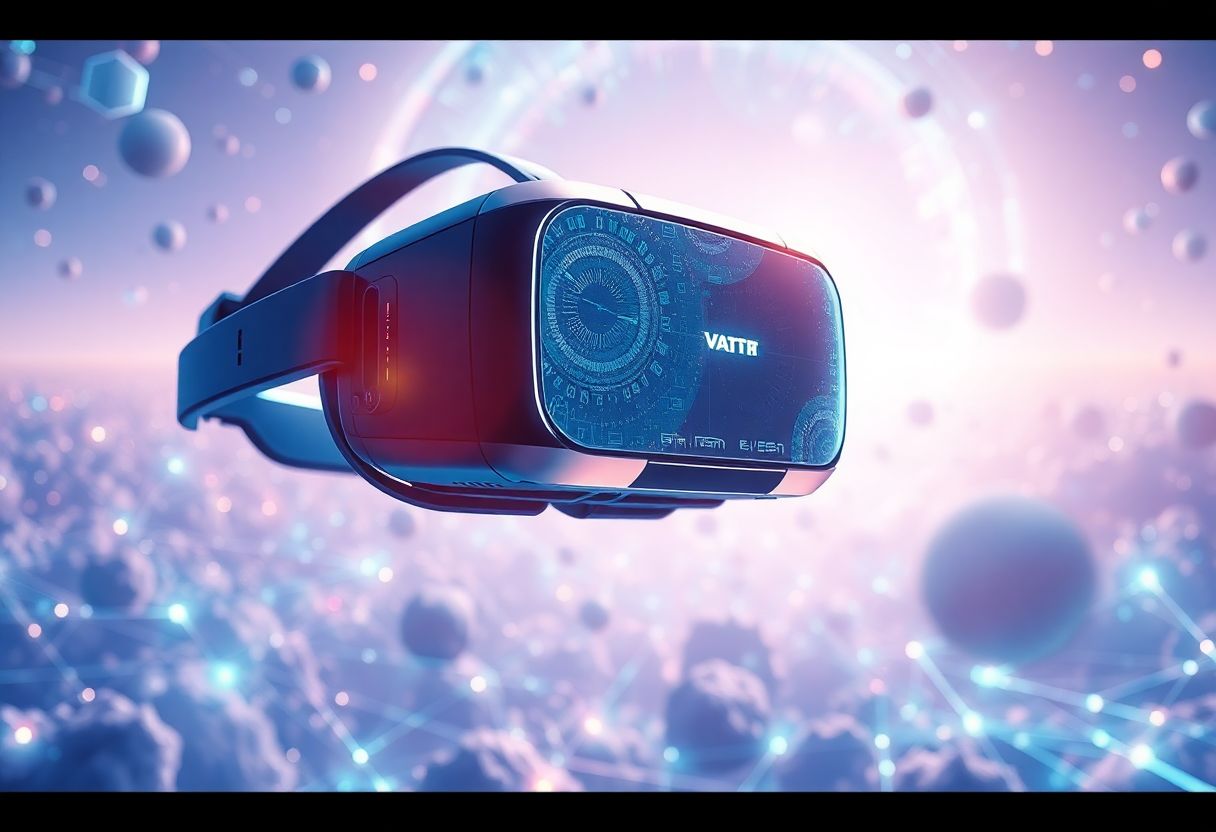
Exploring the Frontiers of Virtual Reality: A Deep Dive into the Digital Realm
Virtual reality (VR) has long captured our collective imagination, promising to transport us to extraordinary digital worlds and revolutionize our interaction with technology. This immersive medium has evolved from science fiction to tangible reality, offering unprecedented experiences that blur the lines between the physical and digital realms. In this comprehensive exploration, we'll delve into the intricacies of virtual reality, examining its core principles, technological underpinnings, diverse applications, and the exciting future that lies ahead.
Understanding Virtual Reality: More Than Just a Digital Illusion
At its essence, virtual reality is a computer-generated simulation of a three-dimensional environment that users can interact with in a seemingly real or physical manner. Unlike traditional media, VR aims to create a profound sense of presence – the feeling of actually being present in another place or reality. This technology goes beyond mere visual representation, engaging multiple senses to create a truly immersive experience.
To truly grasp the concept of virtual reality, we must consider its key characteristics:
Believability: The Cornerstone of Immersion
The most effective VR experiences generate a realistic sense of reality that convinces the user's brain that what they're experiencing is, in fact, real. This believability is achieved through a combination of high-fidelity graphics, accurate physics simulations, and responsive interactivity. Research conducted by Slater and Sanchez-Vives (2016) demonstrates that the level of presence experienced in VR is directly correlated with the believability of the virtual environment.
Interactivity: Responsive Virtual Worlds
A hallmark of VR is its ability to respond to a user's actions in real-time. This interactivity is crucial for maintaining the illusion of presence and allowing users to engage with the virtual environment naturally. Advanced VR systems can track not only head and hand movements but also eye gaze and even facial expressions, creating a more nuanced and realistic interaction paradigm.
Cutting-Edge Computation: The Engine Behind the Experience
Virtual reality experiences are powered by high-performance computers and sophisticated graphics processing units (GPUs). These systems must render complex 3D environments at high frame rates (typically 90 frames per second or higher) to maintain a smooth and comfortable experience. The computational demands of VR have driven significant advancements in real-time rendering techniques and hardware acceleration.
Exploration: Freedom in Virtual Spaces
One of the most compelling aspects of VR is the ability to freely explore virtual environments. Whether it's examining intricate details up close or navigating vast digital landscapes, VR offers a level of spatial exploration that is unmatched by traditional media. This freedom of movement and perspective contributes significantly to the sense of presence and engagement in virtual experiences.
Multi-Sensory Immersion: Beyond Visual Realism
While visual fidelity is often the most noticeable aspect of VR, truly immersive experiences engage multiple senses. Advanced VR systems incorporate spatial audio, haptic feedback, and even olfactory stimuli to create a more complete sensory experience. Research by Dinh et al. (1999) has shown that multi-sensory cues can significantly enhance the sense of presence in virtual environments.
The Technological Tapestry of Virtual Reality
Creating compelling virtual reality experiences requires a sophisticated interplay of various technologies. Let's examine the key components that work in concert to bring virtual worlds to life:
Head-Mounted Displays (HMDs): Windows to Virtual Worlds
The head-mounted display is the most recognizable component of a VR system. Modern HMDs, such as the Oculus Quest 2 or Valve Index, use high-resolution OLED or LCD displays to present stereoscopic 3D images directly to the user's eyes. These displays typically offer resolutions of 1832×1920 pixels per eye or higher, with refresh rates of 90Hz or more to ensure smooth motion and reduce the risk of motion sickness.
Motion Tracking: Bridging Physical and Virtual Movement
Precise motion tracking is essential for maintaining the illusion of presence in VR. Current systems employ a variety of tracking technologies:
- Inertial Measurement Units (IMUs): These sensors detect rotational movement and acceleration, allowing for accurate head tracking.
- Inside-out tracking: Cameras on the headset track the environment and the user's position within it, eliminating the need for external sensors.
- Outside-in tracking: External cameras or base stations track the position of the headset and controllers, offering high precision but requiring a more complex setup.
Input Devices: Intuitive Interaction
VR input devices have evolved significantly, from simple handheld controllers to more advanced options:
- Motion controllers: Devices like the Oculus Touch or Valve Knuckles track hand movements and gestures, allowing for natural interaction with virtual objects.
- Haptic gloves: Products such as the HaptX Gloves provide detailed tactile feedback, simulating the sensation of touching virtual objects.
- Full-body tracking: Systems like the Vive Tracker allow for tracking of individual body parts, enabling more immersive experiences and applications in fields like motion capture and sports training.
Computational Power: The Backbone of VR
Virtual reality demands significant computational resources to render complex 3D environments in real-time. High-end VR experiences typically require:
- Powerful GPUs: Graphics cards like the NVIDIA RTX 3080 or AMD Radeon RX 6800 XT are commonly used for VR rendering.
- Fast CPUs: Processors with high single-thread performance and multiple cores, such as Intel's Core i7 or AMD's Ryzen 7 series, are essential for handling VR workloads.
- Ample memory: At least 16GB of RAM is recommended for smooth VR performance.
Software: Bringing Virtual Worlds to Life
The software ecosystem for VR development has matured significantly, with powerful tools available to creators:
- Game engines: Platforms like Unity and Unreal Engine offer robust VR development capabilities.
- VR-specific SDKs: OpenVR, Oculus SDK, and others provide low-level access to VR hardware features.
- Content creation tools: Software like Medium and Tilt Brush allow for intuitive 3D modeling and design within VR itself.
The Inner Workings of Virtual Reality: A Technical Perspective
Understanding how VR creates its immersive experiences requires a closer look at the underlying processes:
Visual Rendering: Crafting Believable Worlds
VR systems create two slightly different images – one for each eye – to produce a stereoscopic 3D effect. This process, known as stereo rendering, involves:
- Calculating the position and orientation of each virtual camera based on the user's head position.
- Rendering the scene from each camera's perspective.
- Applying distortion correction to compensate for lens characteristics.
- Displaying the final images on the HMD's screens.
Advanced rendering techniques like foveated rendering, which reduces detail in peripheral vision to save computational resources, are becoming increasingly common in VR applications.
Head Tracking: Maintaining the Illusion
As users move their heads, sensors in the headset detect this movement and adjust the displayed images accordingly. This process occurs at extremely low latencies (typically less than 20 milliseconds) to maintain the illusion of a stable virtual environment. Sophisticated algorithms, such as predictive tracking and sensor fusion, are employed to minimize latency and improve tracking accuracy.
Motion Tracking: From Physical to Virtual Movement
Full-body motion tracking in VR often employs a combination of technologies:
- Optical tracking: Using cameras to detect markers or patterns on the body.
- Inertial tracking: Utilizing IMUs attached to various body parts.
- Skeletal tracking: Inferring body position from limited data points using inverse kinematics algorithms.
These tracking data are then used to update the position and orientation of virtual avatars or objects in real-time.
Spatial Audio: Sound in Three Dimensions
VR systems use 3D audio techniques to enhance immersion, making sounds appear to come from specific directions within the virtual space. This involves:
- Head-related transfer functions (HRTFs): Mathematical models that simulate how sound waves interact with the human head and ears.
- Ambisonics: A full-sphere surround sound technique that allows for realistic spatial audio reproduction.
- Real-time audio processing: Adjusting sound characteristics based on the virtual environment's acoustics and the user's position.
Haptic Feedback: The Sense of Touch in VR
Haptic technology in VR aims to simulate tactile sensations, adding another layer of realism to virtual interactions. Current haptic systems employ various methods:
- Vibrotactile feedback: Using small motors to create vibrations that simulate touch or impact.
- Force feedback: Devices that can apply varying levels of resistance or force to simulate weight and texture.
- Thermal feedback: Systems that can produce localized heating or cooling effects to simulate temperature changes.
The Multifaceted Applications of Virtual Reality
Virtual reality's potential extends far beyond entertainment, finding applications across numerous industries and fields:
Education and Training: Learning by Doing
VR offers immersive, hands-on learning experiences that would be difficult, dangerous, or impossible in the real world. For example:
-
Medical Training: Platforms like OssoVR allow surgeons to practice complex procedures in a risk-free environment. Studies have shown that VR training can improve surgical performance by up to 230% compared to traditional methods (Logishetty et al., 2019).
-
Military Simulations: The U.S. Army uses VR systems like the Synthetic Training Environment (STE) to provide realistic combat training scenarios, improving soldier readiness while reducing costs and risks associated with live training exercises.
-
Industrial Skills Training: Companies like PIXO VR develop VR training modules for hazardous industries, allowing workers to practice safety procedures and emergency responses in a safe, controlled environment.
Healthcare: Revolutionizing Patient Care
Beyond training, VR is finding innovative uses in patient care:
-
Pain Management: Research by Hoffman et al. (2011) demonstrated that VR can be an effective tool for pain distraction, reducing pain intensity by up to 35-50% in burn patients undergoing wound care.
-
Mental Health Treatment: Platforms like Oxford VR are using VR-based cognitive behavioral therapy to treat conditions such as anxiety disorders and psychosis, with clinical trials showing significant reductions in anxiety symptoms (Freeman et al., 2018).
-
Physical Rehabilitation: Systems like MindMaze's MindMotion use gamified VR exercises to aid in stroke recovery, improving motor function and engagement in rehabilitation programs.
Design and Engineering: Visualizing the Future
VR allows for intuitive 3D modeling and visualization, transforming design processes:
-
Architectural Visualization: Firms like Gensler use VR to create immersive walkthroughs of building designs, allowing clients to experience spaces before construction begins and reducing costly design changes.
-
Automotive Design: Companies like Ford and BMW use VR in their design processes, allowing engineers and designers to evaluate and refine vehicle designs in a virtual environment, significantly reducing the need for physical prototypes.
-
Engineering Simulations: VR platforms like SimScale enable engineers to simulate and visualize complex systems, from fluid dynamics to structural analysis, in an immersive 3D environment.
Entertainment and Gaming: Immersive Experiences
The entertainment industry continues to push the boundaries of VR technology:
-
Gaming: Titles like "Half-Life: Alyx" showcase the potential for deeply immersive VR gaming experiences, with physics-based interactions and narrative design tailored for the medium.
-
Virtual Events: Platforms like Wave have hosted virtual concerts attracting millions of viewers, offering new ways for artists to connect with fans in immersive digital environments.
-
Cinematic VR: Productions like Baobab Studios' "Baba Yaga" demonstrate the potential for interactive, narrative-driven VR experiences that blend animation and user agency.
Business and Remote Collaboration: Redefining the Workplace
VR is changing how we work and communicate in an increasingly digital world:
-
Virtual Meetings: Platforms like Spatial and Glue allow teams to collaborate in shared virtual spaces, offering a more engaging alternative to traditional video conferencing.
-
Virtual Trade Shows: Companies like HTC have hosted virtual product launches and trade shows in VR, reaching global audiences without the need for physical travel.
-
Training and Onboarding: Walmart has implemented VR training programs for employees, improving retention rates and performance in areas like customer service and compliance.
The Evolutionary Journey of Virtual Reality Technology
The concept of virtual reality has a rich history, evolving from early experiments to the sophisticated systems we see today:
Pioneering Days: Laying the Foundations
-
1960s: Ivan Sutherland creates the "Sword of Damocles," the first head-mounted display system, paving the way for future VR development.
-
1970s-1980s: NASA's Virtual Environment Workstation and the military's SIMNET project explore VR for training and simulation purposes.
The First VR Wave: Promise and Limitations
-
1990s: Companies like VPL Research and Virtuality bring VR to arcades and research labs, but limitations in computing power and display technology prevent widespread adoption.
-
1995: Nintendo releases the Virtual Boy, an early attempt at consumer VR that fails due to technical limitations and ergonomic issues.
The Modern VR Renaissance: Technology Catches Up
-
2012: Oculus launches a Kickstarter campaign for the Rift, reigniting interest in consumer VR.
-
2014: Facebook acquires Oculus for $2 billion, signaling major industry investment in VR technology.
-
2016: Major tech companies including Sony (PlayStation VR), HTC (Vive), and Oculus (Rift) release consumer VR headsets, marking the beginning of the modern VR era.
-
2019: Standalone VR headsets like the Oculus Quest remove the need for external computers or sensors, greatly increasing accessibility.
Navigating the Challenges of Current VR Technology
Despite rapid progress, VR still faces several hurdles that researchers and developers are actively working to overcome:
Motion Sickness: The Vestibular Challenge
Some users experience nausea or disorientation in VR, especially with prolonged use. This issue, often called "cybersickness," is primarily caused by conflicts between visual and vestibular cues. Researchers are exploring several solutions:
- Higher refresh rates and lower latency to reduce visual-vestibular mismatch.
- Artificial locomotion techniques like teleportation to minimize sensory conflicts.
- Adaptation protocols to help users acclimate to VR environments over time.
Hardware Limitations: Balancing Power and Accessibility
High-end VR systems are still relatively expensive and often require powerful computers. Ongoing research focuses on:
- Foveated rendering and other optimization techniques to reduce computational requirements.
- Advancements in display technology, such as micro-LED and holographic displays, to improve visual quality and reduce form factor.
- Edge computing and 5G integration to offload processing to cloud infrastructure.
Content Creation: Streamlining the Development Process
Developing high-quality VR content remains time-consuming and expensive. The industry is addressing this through:
- Improved development tools and engines specifically tailored for VR content creation.
- Machine learning algorithms to assist in generating VR environments and interactions.
- Standardization efforts to improve cross-platform compatibility and reduce development overhead.
Physical Space Requirements: VR in Confined Spaces
Many VR experiences require a dedicated play area, which isn't feasible for all users. Solutions being explored include:
- Improved inside-out tracking for more accurate roomscale experiences in smaller spaces.
- Haptic feedback suits and omnidirectional treadmills to simulate movement in confined areas.
- Mixed reality technologies that blend virtual elements with the user's physical environment.
Social Isolation: Bridging the Virtual and Physical Worlds
Immersive VR can be a solitary experience, potentially leading to concerns about social isolation. Developers are addressing this through:
- Social VR platforms that allow multiple users to interact in shared virtual spaces.
- Mixed reality features that allow users to maintain awareness of their physical surroundings.
- Integration of VR with existing social networks and communication platforms.
The Horizon of Virtual Reality: Glimpsing the Future
As technology continues to advance, the future of VR holds exciting possibilities:
Lightweight, High-Performance Headsets
Future VR devices may be as unobtrusive as a pair of glasses, thanks to advancements in display technology and miniaturization. Companies like Facebook Reality Labs are working on holographic optics that could dramatically reduce the size and weight of VR headsets while improving visual quality.
Advanced Haptic Systems
More sophisticated touch feedback will enhance the sense of presence in virtual worlds. Researchers at Carnegie Mellon University have developed a haptic feedback system that can simulate the sensation of walls and other solid objects using ultrasound waves, potentially allowing for more realistic physical interactions in VR.
Brain-Computer Interfaces
Direct neural interfaces could allow for more intuitive control and even more immersive experiences. Neuralink, founded by Elon Musk, is developing brain-computer interface technology that could potentially be applied to VR, allowing users to control virtual environments with their thoughts.
Photorealistic Graphics
As computing power increases, virtual environments will become increasingly indistinguishable from reality. Technologies like NVIDIA's RTX ray tracing are already pushing the boundaries of real-time photorealistic rendering, and future advancements promise even more lifelike virtual worlds.
5G and Cloud VR
High-speed, low-latency networks could enable streaming of high-quality VR content, reducing hardware requirements for end-users. Companies like Google (with its Stadia platform) and NVIDIA (GeForce Now) are already exploring cloud gaming technologies that could be applied to V