Illuminating the Science of Sunlight: A Deep Dive into Pyranometers
The sun, our celestial powerhouse, bathes our planet in an ever-changing tapestry of light and energy. But how do we accurately measure this cosmic gift? Enter the pyranometer, an ingenious device that quantifies the sun's radiant offering with remarkable precision. In this comprehensive exploration, we'll unravel the inner workings of these fascinating instruments and discover their crucial role in fields ranging from climate science to renewable energy.
The Essence of Pyranometers: Capturing Solar Secrets
At its core, a pyranometer is a specialized sensor designed to measure solar irradiance – the power per unit area received from the sun in the form of electromagnetic radiation. The term "pyranometer" itself is a linguistic fusion of Greek origins: "pyr" (fire), "ano" (above), and "meter" (measurement). In essence, it's a sophisticated tool for measuring "fire from above."
These instruments are capable of detecting a broad spectrum of solar radiation, typically ranging from 280 to 2800 nanometers. This range encompasses ultraviolet, visible light, and near-infrared radiation, providing a comprehensive picture of the sun's energetic output reaching Earth's surface.
The Crucial Role of Solar Radiation Measurement
Understanding the intricacies of solar radiation is far more than an academic pursuit. It forms the bedrock of numerous scientific and practical applications:
Climate Research: Solar radiation is a primary driver of Earth's climate system. Long-term measurements help scientists track changes in energy input and understand complex climate dynamics.
Meteorology: Daily and seasonal variations in solar radiation influence temperature patterns, evaporation rates, and atmospheric circulation, making pyranometer data invaluable for weather forecasting.
Renewable Energy: The solar power industry relies heavily on accurate irradiance data to optimize the placement and efficiency of photovoltaic installations.
Agriculture: Crop yields and growing patterns are intimately tied to sunlight exposure. Pyranometer data helps farmers make informed decisions about planting times and irrigation needs.
Architecture: Building designers use solar radiation data to create energy-efficient structures, maximizing natural lighting while minimizing heat gain.
Environmental Studies: Ecologists use pyranometer data to study how varying light levels impact ecosystems, from forest canopies to coral reefs.
Unveiling the Two Primary Types of Pyranometers
Pyranometers come in two main varieties, each with its own strengths and ideal applications:
1. Thermopile Pyranometers: The Gold Standard
Thermopile pyranometers are the most accurate and widely respected instruments for measuring solar radiation. Their design is based on the thermoelectric effect, where temperature differences are converted into electrical signals.
How They Work:
- Solar radiation strikes a black absorbing surface within the pyranometer.
- This surface heats up in proportion to the incoming radiation.
- A thermopile (a series of connected thermocouples) detects the temperature difference between the black surface and a cooler reference point.
- This temperature difference generates a small voltage.
- The voltage is amplified and calibrated to provide a precise measurement of solar irradiance.
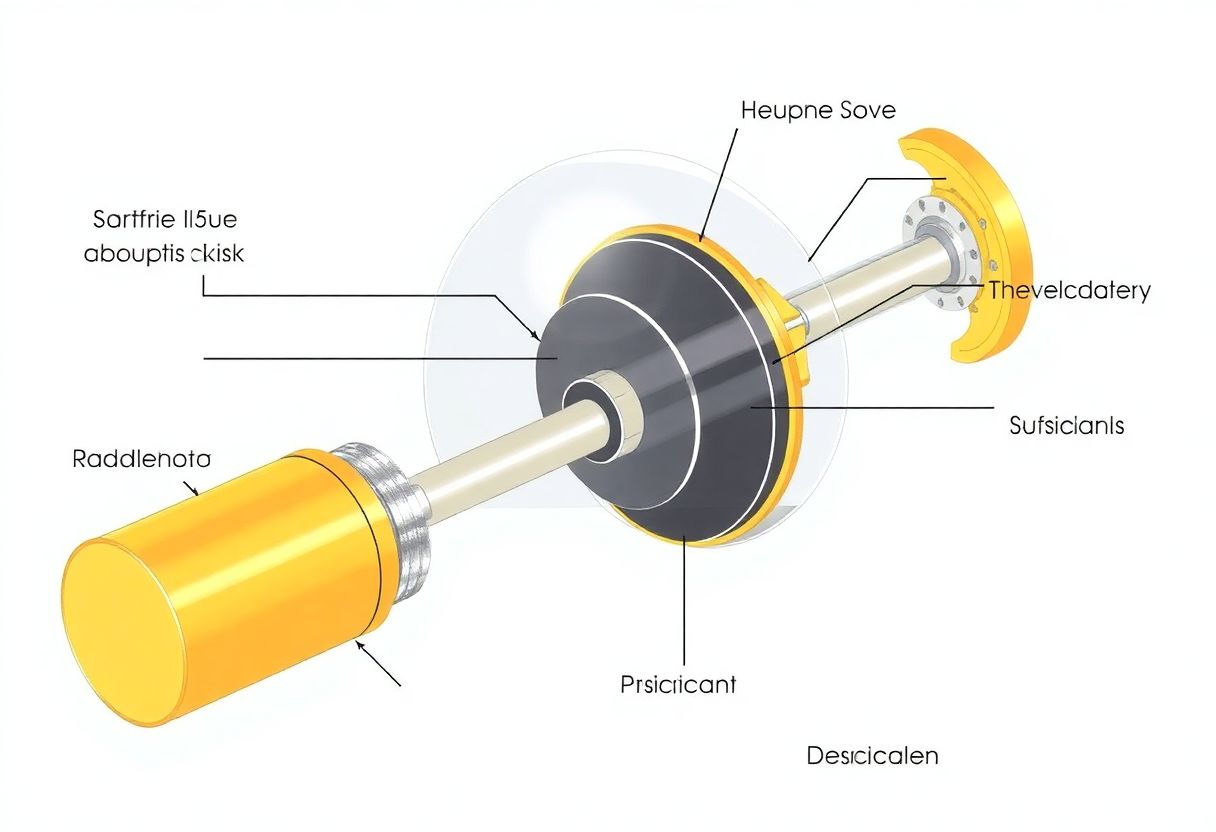
Key Components:
-
Double Glass Dome: High-quality thermopile pyranometers often feature a double glass dome. This design provides superior thermal insulation and protects the internal sensor from convection currents.
-
Black Absorbing Disk: Typically made of carbon-based material, this disk is engineered to absorb radiation across the entire solar spectrum with minimal selectivity.
-
Thermopile Sensor: A sophisticated arrangement of thermocouples that can detect minute temperature differences with extreme sensitivity.
-
Desiccant: A small capsule of moisture-absorbing material (often silica gel) prevents internal condensation, ensuring long-term stability.
-
Precision Spirit Level: Allows for exact horizontal positioning, crucial for accurate measurements.
Advantages:
- Exceptional accuracy (typically ±2% or better for daily totals)
- Wide spectral response (280-2800 nm)
- Excellent long-term stability
- Minimal temperature dependence
Limitations:
- Higher cost
- Slower response time (typically 5-30 seconds)
- Requires more frequent maintenance
2. Silicon Photodiode Pyranometers: Affordable Alternatives
Silicon photodiode pyranometers, also known as silicon-cell pyranometers, offer a more cost-effective option for measuring solar radiation. They operate on photovoltaic principles, similar to solar panels.
How They Work:
- Sunlight falls on a silicon photodiode.
- Photons excite electrons in the semiconductor material.
- This generates an electrical current proportional to the incoming radiation.
- The current is converted to a voltage and calibrated to provide a solar irradiance measurement.
Key Components:
- Silicon Photodiode: The light-sensitive element that converts photons into electrical current.
- Diffuser: A translucent cover that ensures uniform light distribution across the sensor.
- Amplifier Circuit: Boosts the small electrical signal for more accurate measurement.
- Spectral Filters: Some models include filters to adjust the spectral response.
Advantages:
- Lower cost
- Fast response time (typically < 1 second)
- Compact size
- Low maintenance requirements
Limitations:
- Narrower spectral response (typically 400-1100 nm)
- Temperature sensitivity
- Potential for long-term drift due to UV exposure
The Science Behind Pyranometer Accuracy
Achieving high precision in solar radiation measurement is no small feat. Several factors contribute to a pyranometer's accuracy:
Cosine Response: An ideal pyranometer should follow the cosine law, where its sensitivity varies with the angle of incoming radiation. This mimics how a flat surface receives sunlight throughout the day.
Spectral Sensitivity: The instrument should respond uniformly across the entire solar spectrum. Thermopile pyranometers excel in this regard, while silicon-based sensors have a more limited spectral range.
Thermal Stability: Changes in ambient temperature shouldn't significantly affect the measurement. High-end thermopile pyranometers often include temperature compensation mechanisms.
Linearity: The instrument's output should be directly proportional to the incoming radiation across its entire measurement range.
Time Response: The speed at which a pyranometer can detect changes in radiation levels is crucial for capturing rapid fluctuations, such as those caused by passing clouds.
Advanced Features in Modern Pyranometers
As technology progresses, pyranometers are becoming increasingly sophisticated:
Heating and Ventilation: Some models include built-in heaters to prevent dew, frost, and snow accumulation. Ventilation systems can help maintain a consistent sensor temperature.
Digital Outputs: Many modern pyranometers offer direct digital outputs, simplifying data logging and reducing potential sources of error.
Self-Diagnostics: Advanced instruments can perform internal checks to ensure proper functioning and alert users to potential issues.
Integrated Sensors: Some pyranometers now include additional sensors for measuring parameters like temperature, humidity, or precipitation, providing a more comprehensive environmental picture.
Smart Connectivity: Wireless communication capabilities and integration with IoT platforms are becoming more common, allowing for real-time data access and remote monitoring.
Applications Across Diverse Fields
The versatility of pyranometers makes them indispensable in numerous disciplines:
Solar Energy: Pyranometers are crucial for site assessment, system design, and ongoing performance monitoring of solar power installations. They help determine the optimal tilt angle for solar panels and track energy conversion efficiency.
Climate Science: Long-term solar radiation data from networks of pyranometers contribute to our understanding of global energy balance, cloud effects, and climate change trends.
Agriculture: Precision farming techniques use pyranometer data to optimize crop selection, planting schedules, and irrigation systems. This data can also inform greenhouse management strategies.
Atmospheric Research: Scientists use pyranometers in conjunction with other instruments to study aerosols, ozone depletion, and the impact of pollution on incoming solar radiation.
Building Science: Architects and engineers rely on pyranometer data to design energy-efficient buildings, considering factors like natural lighting, heat gain, and the potential for rooftop solar installations.
Ecology: Researchers use pyranometers to study how varying light levels affect plant growth, animal behavior, and ecosystem dynamics in environments ranging from tropical rainforests to polar regions.
Installation and Maintenance: Ensuring Optimal Performance
Proper installation and regular maintenance are crucial for obtaining accurate, reliable data from pyranometers:
Site Selection: Choose a location with an unobstructed view of the sky dome. Avoid shadows from buildings, trees, or other structures.
Leveling: Use the built-in spirit level and adjustable feet to ensure the pyranometer is perfectly horizontal. Even slight tilts can introduce measurement errors.
Orientation: Some pyranometers have markers for aligning with true North. This is particularly important for tilted installations or when comparing data from multiple sites.
Cleaning: Regularly clean the glass dome with distilled water and a soft cloth. Avoid abrasive materials or harsh chemicals that could damage the surface.
Desiccant Replacement: For thermopile pyranometers, check the desiccant indicator regularly and replace when necessary to prevent internal moisture buildup.
Calibration: Follow manufacturer recommendations for recalibration intervals. This typically involves comparing the instrument to a higher-standard reference pyranometer under controlled conditions.
Data Verification: Regularly compare readings with nearby stations or secondary instruments to identify potential drift or malfunctions.
The Future of Pyranometry: Innovations on the Horizon
As our need for precise solar radiation data grows, pyranometer technology continues to evolve:
Miniaturization: Researchers are developing smaller, more energy-efficient sensors that could be integrated into a wide range of devices and structures.
Multi-Spectral Measurements: Future pyranometers may be able to simultaneously measure different parts of the solar spectrum with high precision, providing more detailed information about incoming radiation.
Self-Calibrating Systems: Advanced algorithms and machine learning techniques could enable pyranometers to perform continuous self-calibration, reducing the need for manual intervention.
Distributed Networks: Large-scale deployment of low-cost, networked pyranometers could provide unprecedented spatial resolution for solar radiation mapping.
Integration with Satellite Data: Combining ground-based pyranometer measurements with satellite observations could lead to more accurate global solar radiation models.
Conclusion: Illuminating Our Understanding of Solar Energy
Pyranometers, from the high-precision thermopile models to the more accessible silicon-based sensors, play an indispensable role in our quest to understand and harness solar energy. These remarkable instruments allow us to quantify the ever-changing flow of radiant energy from our nearest star, providing crucial data for fields ranging from climate science to renewable energy development.
As we face the challenges of climate change and the transition to sustainable energy sources, the humble pyranometer stands as a testament to human ingenuity. It allows us to measure, with extraordinary precision, the very force that drives life on our planet. Whether perched atop a weather station, monitoring a solar farm, or aiding researchers in remote field sites, pyranometers continue to illuminate our understanding of the sun's influence on Earth.
The next time you glimpse one of these curious glass-domed devices basking in the sunlight, remember the vital role it plays in our scientific endeavors. In its silent vigil, the pyranometer captures the cosmic rhythm of our solar dance, helping us to better comprehend, predict, and harness the awesome power of our home star.