Fire Sprinklers: The Silent Guardians of Building Safety
In the realm of fire safety, few innovations have proven as effective and enduring as the humble fire sprinkler. These unassuming devices, often overlooked as we go about our daily lives, stand ready to spring into action at a moment's notice, protecting lives and property from the ravages of fire. This comprehensive guide will delve into the fascinating world of fire sprinklers, exploring their history, mechanics, and the crucial role they play in modern fire safety.
The Science Behind Fire Suppression
To truly appreciate the genius of fire sprinklers, we must first understand the nature of fire itself. At its core, fire is a rapid oxidation process that requires three key elements to sustain itself: heat, oxygen, and fuel. This trio is commonly referred to as the "fire triangle." Remove any one of these elements, and the fire will be extinguished.
Water, the primary agent used in most fire sprinkler systems, is particularly effective at combating fires due to its unique properties. When water comes into contact with fire, it performs two critical functions:
- It absorbs a significant amount of heat, cooling the burning material.
- It creates steam that displaces oxygen, further smothering the fire.
Water's effectiveness as a fire suppressant is largely due to its high specific heat capacity. This property allows water to absorb a substantial amount of heat energy before its temperature rises significantly. To put this into perspective, it takes about 4,180 joules of energy to raise the temperature of one kilogram of water by just one degree Celsius. This remarkable heat absorption capacity is what makes water such a potent weapon against fire.
The Anatomy of a Fire Sprinkler
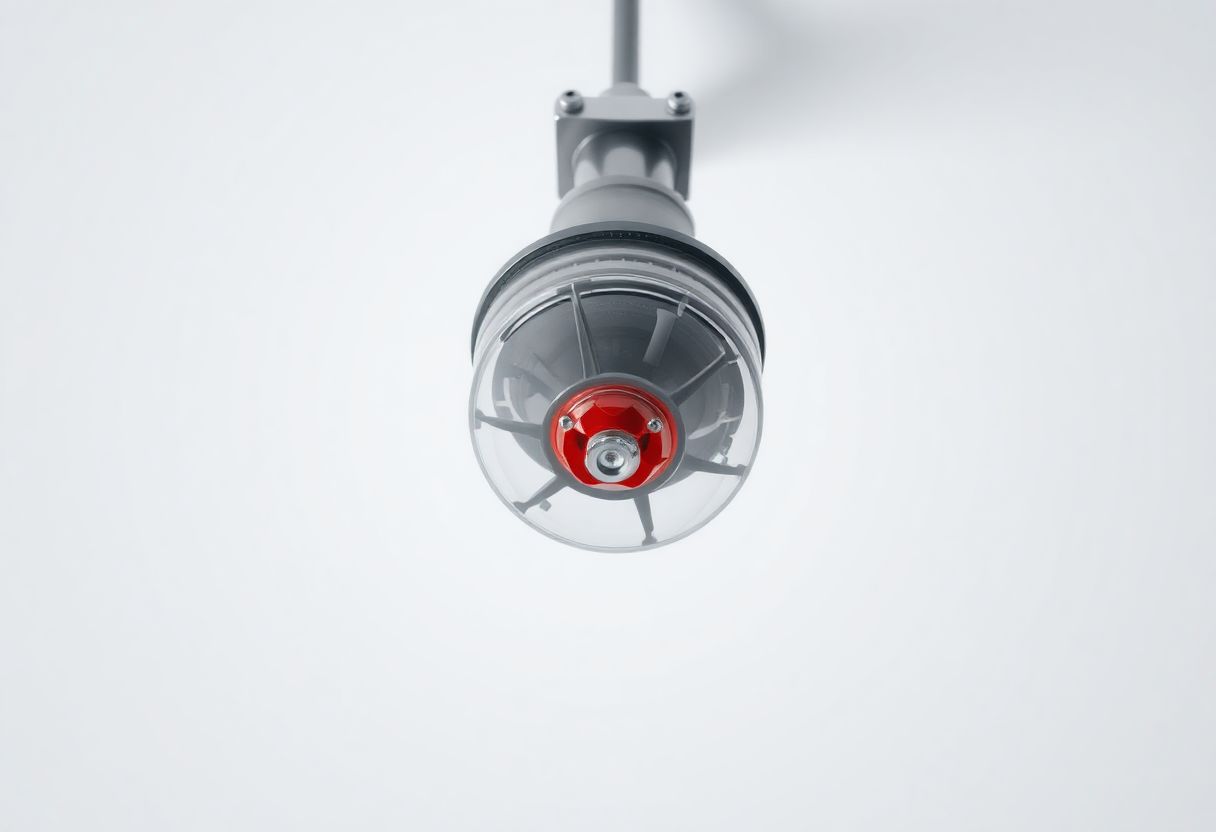
At first glance, a fire sprinkler might seem like a simple device, but its design is the result of over a century of engineering refinement. Let's examine the key components that make up a typical fire sprinkler:
-
Water Supply Pipe: This is the main conduit that carries pressurized water to the sprinkler head. In most systems, these pipes are constantly filled with water, ready to deploy at a moment's notice.
-
Sprinkler Head: This is the visible part of the system, usually protruding from the ceiling. It houses several crucial components, including the plug and the heat-sensitive element.
-
Plug: A small but vital component that keeps the water in the pipes until it's needed. When the sprinkler activates, this plug is released, allowing water to flow.
-
Heat-Sensitive Element: This is the key to the sprinkler's automatic operation. It's typically either a glass bulb filled with a heat-sensitive liquid or a metal link held together by a heat-sensitive alloy.
-
Deflector: A specially shaped piece of metal that spreads the water into an effective spray pattern, ensuring optimal coverage of the affected area.
The Ingenious Mechanism of Fire Sprinklers
The operation of a fire sprinkler is a testament to elegant engineering. Under normal conditions, the system remains dormant, with the sprinkler heads sealed by the plug, which is held in place by the heat-sensitive element. When a fire breaks out, it generates heat that rises to the ceiling. As the air near the ceiling heats up, it also heats the sprinkler head.
When the temperature reaches approximately 155°F (68°C) to 165°F (74°C), the heat-sensitive element activates. In the case of a glass bulb, it shatters; for a metal link, it melts. This releases the plug, allowing the pressurized water in the pipes to flow out of the sprinkler head.
As the water exits the sprinkler head, it hits the deflector, which spreads it into a carefully engineered spray pattern designed to effectively cover the area below. This spray not only cools the burning materials but also creates steam, attacking two sides of the fire triangle simultaneously.
It's crucial to note that in most cases, only the sprinkler heads directly above the fire will activate. This targeted response helps minimize water damage to areas unaffected by the fire, a fact that contradicts the common myth that all sprinklers activate simultaneously.
Types of Fire Sprinkler Systems
While the basic principle remains consistent, there are several types of fire sprinkler systems designed for different environments and needs:
-
Wet Pipe Systems: These are the most common type, where the pipes are always filled with pressurized water, ready to deploy instantly when a sprinkler head activates.
-
Dry Pipe Systems: In these systems, the pipes are filled with pressurized air or nitrogen. When a sprinkler head activates, this pressure is released, allowing water to enter the pipes and deploy through the open sprinkler head. These are typically used in areas where pipes might freeze.
-
Pre-Action Systems: Similar to dry pipe systems, but they require both a separate detection system to release water into the pipes and heat to activate the sprinkler heads. These are often used in water-sensitive areas like libraries or data centers.
-
Deluge Systems: In these systems, all sprinkler heads are open, and water is held back by a single valve. When triggered, all sprinklers activate simultaneously. These are used in high-hazard areas where rapid fire spread is a concern.
The Evolution of Fire Sprinklers: A Historical Perspective
The concept of automatic fire suppression has a rich history dating back to the 18th century. In 1723, Ambrose Godfrey patented the first fire suppression system, which used gunpowder to disperse an extinguishing solution. While ingenious, this system was far from the automatic, water-based systems we know today.
A significant step forward came in 1812 when William Congreve designed a manual perforated pipe system for the Theatre Royal, Drury Lane in London. This system, while not automatic, laid the groundwork for future innovations.
The first truly automatic sprinkler system was patented in the United States by Philip W. Pratt in 1872. However, it was Henry S. Parmelee who made significant improvements to Pratt's design in 1874, creating a sprinkler head that's recognizably similar to modern designs.
The real breakthrough came in 1890 when Frederick Grinnell introduced the glass disc sprinkler. This design became the template for modern sprinkler heads and marked the beginning of widespread adoption of automatic fire sprinkler systems.
The Remarkable Effectiveness of Fire Sprinklers
The effectiveness of fire sprinklers in protecting lives and property is nothing short of remarkable. According to data from the National Fire Protection Association (NFPA), the presence of sprinklers reduces the risk of dying in a fire by approximately 80%. This statistic alone underscores the critical role these systems play in building safety.
Moreover, the NFPA reports that the average property loss per fire is reduced by about 70% when sprinklers are present. This significant reduction in damage is due to the sprinklers' ability to control or extinguish fires in their early stages, often before the fire department even arrives on the scene.
To put these numbers into perspective, let's consider a hypothetical scenario. In a building without sprinklers, a fire might cause $1,000,000 in damage and potentially result in loss of life. In contrast, the same fire in a building equipped with sprinklers might cause only $300,000 in damage, with a significantly reduced risk of fatalities.
Debunking Common Myths About Fire Sprinklers
Despite their proven effectiveness, several persistent myths surround fire sprinklers. Let's address some of the most common misconceptions:
Myth 1: All sprinklers activate at once.
Reality: In most cases, only the sprinkler(s) closest to the fire will activate. This targeted response minimizes water damage while effectively combating the fire.
Myth 2: Sprinklers can be activated by smoke.
Reality: Sprinklers are heat-activated, not smoke-activated. This design prevents false alarms and unnecessary water damage.
Myth 3: Water damage from sprinklers is worse than fire damage.
Reality: Sprinklers use much less water than fire hoses and can extinguish fires quickly, minimizing overall damage. A typical sprinkler head discharges about 20-40 gallons of water per minute, compared to a fire hose that can release 150-250 gallons per minute.
Myth 4: Sprinklers are prone to accidental activation.
Reality: Accidental activations are extremely rare, occurring in about 1 in 16 million sprinklers per year. Modern sprinkler systems are designed with multiple safeguards to prevent unintended activation.
Maintenance and Testing: Ensuring Reliability
For fire sprinklers to function correctly when needed, regular maintenance and testing are crucial. The NFPA provides detailed guidelines for sprinkler system maintenance, which typically include:
-
Visual inspections should be conducted regularly to check for obvious issues like painted sprinklers or physical damage.
-
Water flow tests should be performed annually to ensure the system can deliver adequate water volume and pressure.
-
Internal pipe inspections are recommended every five years to check for corrosion or sediment buildup.
-
Sprinkler heads should be replaced or tested by sampling after 50 years, and every 10 years thereafter.
These maintenance procedures are essential not only for the system's effectiveness but also for compliance with building codes and insurance requirements.
The Future of Fire Sprinkler Technology
While the basic principle of fire sprinklers hasn't changed significantly in over a century, ongoing innovations are enhancing their capabilities:
-
Smart Sprinklers: These systems use advanced sensors and algorithms to detect fires more quickly and accurately. Some can even differentiate between different types of fires and adjust their response accordingly.
-
Mist Systems: These use a fine mist instead of larger water droplets, which can be more effective in certain situations and cause less water damage. The tiny water droplets create a larger surface area for heat absorption and steam generation.
-
Environmental Considerations: New systems are being developed to use less water and be more energy-efficient. Some systems recycle water or use environmentally friendly fire suppressants.
-
Integration with Building Management Systems: Modern sprinkler systems can be integrated with other building systems for more comprehensive fire protection and faster emergency response.
Conclusion: The Unsung Heroes of Fire Safety
Fire sprinklers are a triumph of simple, effective engineering. By automatically detecting and suppressing fires, they've saved countless lives and billions of dollars in property. As building codes increasingly require their installation, and as the technology continues to advance, fire sprinklers will undoubtedly play an even more significant role in fire safety in the future.
It's important to remember that while fire sprinklers are incredibly effective, they're just one part of a comprehensive fire safety strategy. Smoke detectors, fire extinguishers, and well-planned evacuation routes are all crucial components of keeping buildings and their occupants safe from fire.
The next time you look up and see those small, unobtrusive sprinkler heads on the ceiling, take a moment to appreciate the complex engineering and rich history behind them. These silent guardians stand ready, 24/7, to protect us from one of humanity's oldest threats. In the world of fire safety, fire sprinklers truly are the unsung heroes, working tirelessly behind the scenes to keep us safe.