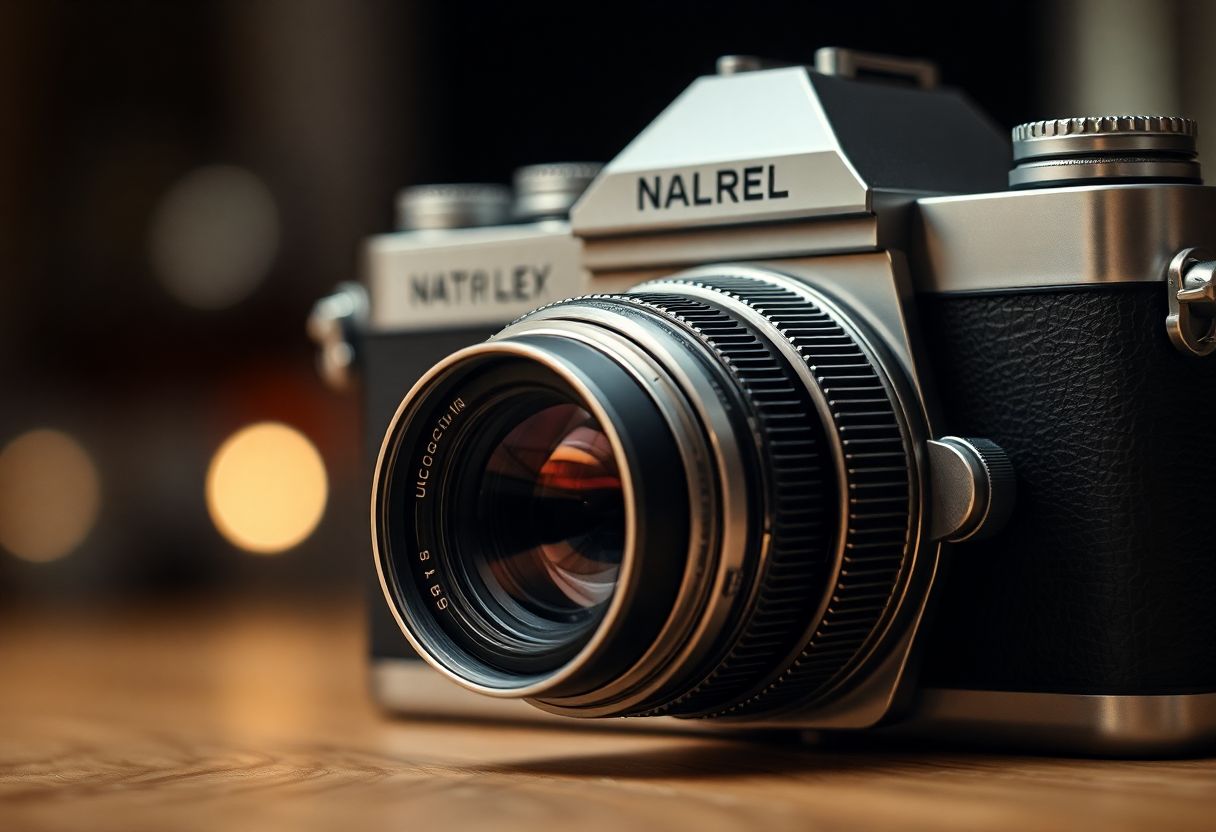
The Art and Science of Film Photography: How Film Cameras Capture Moments in Time
Film photography, once the pinnacle of image capture technology, continues to captivate enthusiasts and artists alike with its unique blend of science, artistry, and tangible results. In this comprehensive exploration, we'll delve into the intricate workings of film cameras, unraveling the physics, chemistry, and engineering that come together to create lasting memories on celluloid.
The Foundations of Film Photography
The Camera Obscura: Where It All Began
The story of film photography begins with a simple yet profound concept: the camera obscura. This ancient optical device, whose name literally means "dark chamber" in Latin, laid the groundwork for all modern cameras. Picture a darkened room with a small hole in one wall. As light passes through this aperture, it projects an inverted image of the outside world onto the opposite surface. This phenomenon, first described by Aristotle in the 4th century BCE, forms the core principle behind every camera ever made.
The camera obscura's ability to project real-time images fascinated artists and scientists for centuries. Renaissance painters like Leonardo da Vinci used it as a drawing aid, while astronomers employed it to safely observe solar eclipses. However, it wasn't until the invention of light-sensitive materials that the camera obscura evolved from a viewing device into a tool for creating permanent images.
The Birth of Photography
The leap from projection to permanent capture came in the early 19th century. In 1826, Joseph Nicéphore Niépce created what is considered the world's first photograph using a process he called heliography. This groundbreaking image, "View from the Window at Le Gras," required an exposure time of about 8 hours.
Shortly after, Louis Daguerre introduced the daguerreotype in 1839, significantly reducing exposure times to mere minutes. This process produced detailed, one-of-a-kind images on silver-plated copper sheets. Concurrently, William Henry Fox Talbot developed the calotype process, which created paper negatives from which multiple positive prints could be made – a crucial step towards modern photography.
These early innovations set the stage for the development of film photography as we know it today.
The Anatomy of a Film Camera
To truly understand how a film camera works, we must first familiarize ourselves with its key components. Each element plays a crucial role in the image-making process, working in harmony to capture light and transform it into a tangible photograph.
The Light-Tight Body
At its core, a film camera is essentially a light-tight box. This seemingly simple feature is crucial, as it protects the light-sensitive film from premature exposure. The body also houses all other components and provides a stable platform for image capture.
The Lens: The Eye of the Camera
The lens is perhaps the most critical component of any camera. It performs several vital functions:
- It gathers and focuses light onto the film plane.
- It allows for control over the depth of field through aperture adjustments.
- It enables magnification or wide-angle views, depending on its focal length.
Modern camera lenses are marvels of optical engineering, often containing multiple glass elements arranged in groups. These elements work together to minimize aberrations and distortions, ensuring sharp, clear images across the frame.
The Aperture: Controlling Light and Depth
Within the lens assembly lies the aperture, a variable opening that controls the amount of light entering the camera. The aperture is typically formed by an iris diaphragm, a series of overlapping blades that can open and close to change the size of the opening.
Aperture size is measured in f-stops, with smaller numbers indicating larger openings. For example, f/2.8 allows more light than f/16. Interestingly, each f-stop represents a halving or doubling of the light entering the camera. This logarithmic scale provides photographers with precise control over exposure.
The aperture also affects depth of field – the range of distances in a scene that appear acceptably sharp. A wide aperture (low f-number) results in a shallow depth of field, ideal for portraits where you want to isolate the subject from the background. Conversely, a narrow aperture (high f-number) increases depth of field, useful for landscape photography where you want everything from the foreground to the horizon in focus.
The Shutter: Timing is Everything
While the aperture controls the amount of light, the shutter determines how long that light falls on the film. The shutter is a mechanical device that opens and closes for a precise duration, typically fractions of a second.
There are two main types of shutters in film cameras:
- Leaf Shutters: Located within the lens assembly, these consist of overlapping blades that open from the center outwards.
- Focal Plane Shutters: Positioned directly in front of the film plane, these use a traveling curtain with a slit that moves across the frame.
Shutter speeds are typically expressed as fractions of a second (e.g., 1/125, 1/250, 1/500), with each step representing a halving or doubling of exposure time. This allows photographers to freeze fast action with quick shutter speeds or create motion blur with slower speeds.
The Film: Where Chemistry Meets Light
At the heart of film photography lies the film itself – a strip of plastic coated with light-sensitive emulsion. This emulsion contains tiny crystals of silver halide compounds suspended in gelatin. When exposed to light, these crystals undergo a chemical change, forming a latent image that becomes visible after development.
Different types of film offer varying characteristics:
- Black and White Film: Sensitive only to light intensity, producing images in shades of gray.
- Color Film: Contains multiple layers sensitive to different colors of light, typically cyan, magenta, and yellow.
- Slide Film: Produces positive images directly on the film, ideal for projection.
Film speed, measured in ISO (International Organization for Standardization) ratings, indicates the film's sensitivity to light. Lower ISO numbers (e.g., ISO 100) are less sensitive, requiring more light but producing finer grain. Higher ISO films (e.g., ISO 800) are more sensitive, suitable for low-light conditions but with more noticeable grain.
The Physics of Image Formation
The process of forming an image in a film camera is a testament to the elegant interplay of optics and chemistry. Let's break down this process step by step.
Light's Journey Through the Camera
When you press the shutter button, a complex sequence of events unfolds in a fraction of a second:
- Light reflects off the subject and enters the camera through the lens.
- The lens elements bend and focus the light rays.
- The aperture controls the amount of light passing through.
- The shutter opens for a precise duration, allowing light to reach the film.
- Light strikes the film, causing a chemical reaction in the emulsion.
- The shutter closes, ending the exposure.
This process creates a latent image on the film – an invisible record of the light pattern that will become visible during development.
The Inverse Square Law and Exposure
The inverse square law plays a crucial role in photography. It states that the intensity of light falling on a surface is inversely proportional to the square of the distance from the light source. In practical terms, this means that doubling the distance between a light source and the subject reduces the light intensity to one-quarter of its original value.
This principle is vital for understanding how to properly expose photographs, especially when using artificial lighting or calculating natural light fall-off in a scene.
The Chemistry of Film
The magic of film photography lies in its ability to transform light into a tangible image through chemical processes. This alchemy of light and chemistry is what gives film its unique characteristics and enduring appeal.
Silver Halide Crystals: The Light Catchers
The light-sensitive emulsion coating film contains microscopic crystals of silver halide compounds, typically silver bromide. These crystals are the key to image formation. When exposed to light, some of the silver ions in these crystals are reduced to metallic silver atoms, creating a subtle change in the crystal structure. This forms the latent image – invisible to the naked eye but ready to be revealed through development.
The Development Process
Developing film is where the latent image becomes visible. The process involves several steps:
-
Development: The film is immersed in a developer solution containing reducing agents. These chemicals complete the conversion of exposed silver halide crystals to metallic silver, darkening these areas of the film.
-
Stop Bath: An acidic solution that neutralizes the developer, halting the development process.
-
Fixing: A "fixer" solution dissolves any remaining unexposed silver halide crystals, leaving behind only the developed silver image.
-
Washing: The film is thoroughly rinsed to remove any residual chemicals.
-
Drying: The final step before the negative can be handled and printed.
This process results in a negative image, where light areas of the original scene appear dark and vice versa. To create a positive print, light is projected through this negative onto photosensitive paper, reversing the tones once again.
Advanced Features and Techniques
While the basic principles of film photography remain constant, advanced cameras offer additional features that expand creative possibilities and improve usability.
Single Lens Reflex (SLR) Mechanisms
SLR cameras revolutionized photography by allowing photographers to see exactly what the lens sees. This is achieved through a clever system of mirrors and prisms:
- A mirror behind the lens reflects the image up into a focusing screen.
- A prism or mirror system then reflects this image into the viewfinder.
- When the shutter is released, the mirror quickly flips up, allowing light to reach the film.
This system ensures accurate framing and focusing, especially crucial when using interchangeable lenses.
Metering Systems
Advanced film cameras incorporate light metering systems to help achieve correct exposure. These systems measure the light in the scene and suggest appropriate aperture and shutter speed combinations. Common metering modes include:
- Center-weighted: Emphasizes the central area of the frame.
- Spot metering: Measures a very small area, usually the center.
- Matrix metering: Takes readings from multiple points across the frame.
Auto-Exposure and Auto-Focus
Later film cameras introduced automatic exposure systems, which adjust aperture and shutter speed based on the camera's light meter readings. Auto-focus systems, using phase detection or contrast detection methods, allow for quick and accurate focusing, especially in fast-moving situations.
The Enduring Appeal of Film Photography
Despite the ubiquity of digital cameras, film photography continues to thrive among enthusiasts and professionals alike. Several factors contribute to its enduring appeal:
Unique Aesthetic Qualities
Film has a distinctive look characterized by its grain structure, color rendition, and dynamic range. Each film type has its own "personality," offering photographers a wide palette of visual styles to choose from.
Tactile Process and Delayed Gratification
The physical nature of film – loading it, advancing frames, and later developing it – creates a more hands-on, deliberate approach to photography. The delay between capturing an image and seeing the result fosters a sense of anticipation and encourages more thoughtful composition.
Historical Significance
Film photography connects modern photographers to the medium's rich history. Using techniques and equipment that have evolved over nearly two centuries provides a sense of continuity and tradition.
Archival Stability
Properly processed and stored film negatives can last for decades or even centuries, offering a level of permanence that digital files, with their reliance on evolving storage technologies, may struggle to match.
Conclusion: Bridging Past and Present
Film cameras represent a fascinating intersection of art, science, and engineering. By capturing light on a chemically treated surface, they transformed the way we record and remember the world around us. While digital technology has largely supplanted film in everyday use, the principles behind film photography continue to influence modern imaging techniques.
Understanding how film cameras work not only provides insight into the history of photography but also deepens our appreciation for the art form. It reminds us that at its core, photography is about capturing light – whether that light falls on silver halide crystals or a digital sensor.
As we continue to push the boundaries of imaging technology, the legacy of film cameras serves as a foundation and inspiration. Their elegant simplicity, the chemistry of film, and the physicality of the process continue to captivate photographers worldwide, ensuring that the art of film photography will endure well into the future.