The Fascinating World of Electric Motors: How They Work and Shape Our Future
Electric motors are the unsung heroes of our modern world, silently powering countless devices and machines that we rely on every day. From the gentle hum of your refrigerator to the powerful thrust of an electric vehicle, these ingenious devices convert electrical energy into mechanical motion with remarkable efficiency. In this comprehensive guide, we'll explore the inner workings of electric motors, their various types, and the exciting developments shaping their future.
The Foundations of Electric Motor Technology
At the heart of every electric motor lies the principle of electromagnetism, a fundamental force of nature that has revolutionized our understanding of physics and engineering. The relationship between electricity and magnetism, first discovered in the early 19th century, forms the backbone of electric motor technology.
When an electric current flows through a wire, it generates a magnetic field around that wire. This field interacts with other magnetic fields, such as those produced by permanent magnets, creating forces that can cause motion. This simple yet profound principle is the key to understanding how electric motors function.
Fleming's Left-Hand Rule: A Guiding Principle
To predict the direction of motion in an electric motor, engineers and physicists use Fleming's Left-Hand Rule. This mnemonic device helps visualize the relationship between the current, magnetic field, and resulting motion. By holding out your left hand with your thumb, first finger, and second finger at right angles to each other, you can easily determine these directions:
- First finger points in the direction of the magnetic field (from North to South)
- Second finger indicates the direction of current flow (from positive to negative)
- Thumb shows the direction of the resulting motion
This rule is crucial for understanding how electric motors generate rotational motion from electrical energy, and it continues to be an essential tool for students and professionals in the field of electromagnetism.
The Anatomy of an Electric Motor
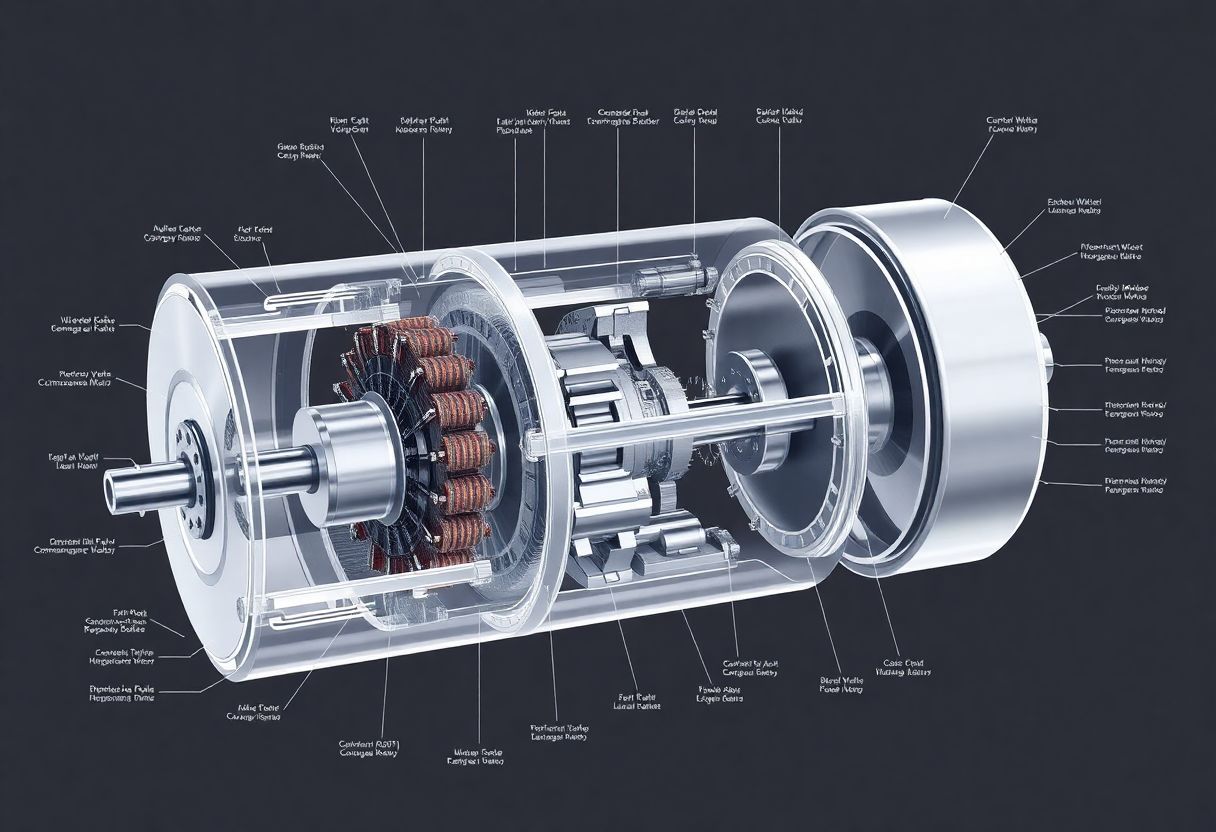
To truly appreciate the genius of electric motors, we need to examine their basic structure. While there are many variations, most electric motors share several key components:
- Stator: The stationary part of the motor, typically containing permanent magnets or electromagnets.
- Rotor: The rotating part of the motor, usually a coil of wire (also called an armature).
- Commutator: A split ring that reverses the current direction in the rotor.
- Brushes: Stationary contacts that supply electricity to the rotating commutator.
- Axle: The shaft that the rotor spins around, transferring mechanical energy to the outside world.
Understanding how these components work together is crucial to grasping the operation of an electric motor.
The Electric Motor in Action: A Step-by-Step Breakdown
Let's walk through the operation of a basic DC (Direct Current) electric motor to see how these components interact:
-
When electrical current is supplied to the motor, it flows through the brushes to the commutator and into the rotor coil.
-
The current in the rotor coil creates a magnetic field that interacts with the magnetic field of the stator (typically provided by permanent magnets).
-
According to Fleming's Left-Hand Rule, this interaction produces a force that causes the rotor to rotate.
-
As the rotor turns, the commutator switches the direction of current flow in the coil at precisely the right moment.
-
This switching ensures that the magnetic fields always interact in a way that produces rotation in the same direction.
-
The rotating axle can now be connected to various devices, converting electrical energy into useful mechanical work.
This elegant process happens countless times per second in a working motor, resulting in smooth, continuous rotation.
The Diverse World of Electric Motors
While we've focused on a simple DC motor so far, it's important to note that there are several types of electric motors, each with its own characteristics and applications. Let's explore some of the most common types:
DC Motors
DC motors are further divided into two main categories:
-
Brushed DC Motors: These are the type we've primarily discussed, using brushes and a commutator. They're simple and inexpensive but require maintenance due to brush wear.
-
Brushless DC Motors: More efficient and longer-lasting, these motors use electronic commutation instead of mechanical brushes. They're commonly found in computer hard drives and high-performance applications.
AC Motors
AC motors are designed to work with alternating current and come in two main types:
-
Induction Motors: Widely used in industrial applications, these motors use alternating current to create a rotating magnetic field. They're known for their reliability and low maintenance requirements.
-
Synchronous Motors: These motors rotate at a speed synchronized with the AC supply frequency. They're often used in applications requiring precise speed control.
Universal Motors
These versatile motors can operate on both AC and DC power, making them ideal for portable tools and appliances.
Stepper Motors
Stepper motors rotate in precise increments, making them perfect for applications requiring exact positioning, such as 3D printers and CNC machines.
Linear Motors
Unlike traditional rotary motors, linear motors produce direct linear force and motion. They're used in various applications, from maglev trains to advanced manufacturing equipment.
Electric Motors in the Real World
The applications of electric motors are virtually limitless. Here are just a few examples of where you might find them in everyday life:
-
Transportation: Electric cars, trains, and even some aircraft use powerful electric motors for propulsion. For instance, the Tesla Model S uses AC induction motors that can produce up to 1,020 horsepower.
-
Home Appliances: From the drum motor in your washing machine to the compressor motor in your refrigerator, electric motors are the workhorses of household appliances.
-
Industrial Machinery: Factory automation, conveyor belts, and robotic systems often rely on precise control of electric motors. The automotive industry alone uses millions of electric motors in its production lines.
-
Computer Hardware: Hard disk drives use tiny brushless DC motors to spin the platters at speeds of up to 15,000 RPM, while cooling fans keep your system from overheating.
-
Medical Devices: Electric motors power everything from dental drills to advanced surgical robots, enabling precise control in life-saving procedures.
The Efficiency Revolution: Electric Motors Leading the Way
One of the most compelling aspects of electric motors is their exceptional efficiency in converting electrical energy into mechanical energy. Modern electric motors can achieve efficiency ratings of over 90%, far surpassing internal combustion engines, which typically operate at 20-40% efficiency.
This high efficiency has significant implications for energy conservation and environmental protection. For example, the widespread adoption of electric vehicles could dramatically reduce greenhouse gas emissions and dependence on fossil fuels.
Several factors influence electric motor efficiency:
- Motor design and construction quality
- The type of motor (e.g., brushless DC motors are generally more efficient than brushed DC motors)
- The load on the motor
- Operating temperature
- Power supply quality
Engineers and researchers continually work to improve these factors, pushing the boundaries of what's possible in electric motor technology.
Cutting-Edge Advancements in Electric Motor Technology
The field of electric motor technology is far from stagnant. Researchers and engineers are constantly seeking ways to improve efficiency, power density, and control. Some exciting areas of development include:
-
Superconducting Motors: These motors use superconducting materials to achieve extremely high efficiencies and power densities. While still in the experimental stage, they hold promise for applications like ship propulsion and wind power generation.
-
Axial Flux Motors: This innovative design can provide high torque in a compact package, making it ideal for electric vehicles. Companies like YASA are pioneering this technology, with their motors being used in high-performance electric cars.
-
Smart Motors: The integration of sensors and advanced control systems allows for improved performance and predictive maintenance. These motors can adjust their operation in real-time based on load conditions and can even predict when they'll need servicing.
-
3D-Printed Motors: Additive manufacturing techniques are enabling the production of complex motor designs that were previously impossible to manufacture. This opens up new possibilities for optimizing motor geometry and performance.
-
Soft Magnetic Composite Materials: These advanced materials can reduce energy losses in electric motors, leading to higher efficiencies and power densities.
The Environmental Impact of Electric Motors
As the world grapples with the challenges of climate change and environmental degradation, electric motors are playing a crucial role in the transition to more sustainable technologies. They offer several significant environmental benefits:
-
Energy Efficiency: The high efficiency of electric motors means less energy is wasted as heat, reducing overall energy consumption.
-
Zero Direct Emissions: Unlike internal combustion engines, electric motors produce no exhaust emissions during operation, contributing to better air quality in urban areas.
-
Noise Reduction: Electric motors are generally much quieter than their combustion counterparts, helping to reduce noise pollution.
-
Renewable Energy Compatibility: Electric motors can be powered by clean, renewable electricity sources like solar and wind power, further reducing their environmental impact.
However, it's important to consider the full lifecycle of electric motors, including the environmental impact of their production and disposal. The mining of rare earth elements for permanent magnets and the proper recycling of motor components are areas that require ongoing attention and improvement.
Maintaining and Troubleshooting Electric Motors
To ensure long life and optimal performance, electric motors require proper maintenance. Here are some key points to consider:
- Regular inspection for wear and tear, especially on brushes and bearings
- Keeping the motor clean and free from debris
- Proper lubrication of moving parts
- Ensuring adequate cooling and ventilation
- Monitoring for unusual noises or vibrations
Common issues with electric motors include:
- Overheating
- Excessive noise or vibration
- Loss of power or efficiency
- Failure to start or irregular operation
Many of these issues can be diagnosed and resolved with proper troubleshooting techniques. For example, overheating might be caused by excessive load, poor ventilation, or electrical problems, while unusual noises could indicate bearing wear or misalignment.
The Future of Electric Motors: Trends and Predictions
As we look to the future, electric motors are set to play an even more significant role in our lives. From the ongoing electrification of transportation to the development of more efficient industrial processes, these devices will continue to shape the world around us.
Emerging trends in electric motor technology include:
-
Integration with AI and IoT: Smart motors that can self-diagnose and optimize their performance are becoming increasingly common. These motors can communicate with other systems, enabling predictive maintenance and improved energy management.
-
Improved Materials: New magnetic materials and advanced composites are being developed to enhance motor performance. For example, researchers are exploring the use of graphene and carbon nanotubes to create lighter, more efficient motors.
-
Miniaturization: As nanotechnology advances, we're seeing the development of ever-smaller motors for use in medical devices and microelectromechanical systems (MEMS).
-
Increased Power Density: Engineers are constantly working to produce motors that can generate more power in smaller, lighter packages. This is particularly important for applications like electric aircraft, where weight is a critical factor.
-
Sustainability Focus: Future motor designs will likely place even greater emphasis on recyclability and the use of sustainable materials, aligning with global efforts to create a circular economy.
Conclusion: The Ongoing Electric Motor Revolution
Electric motors are a testament to human ingenuity, harnessing the fundamental forces of nature to perform useful work. From the simplest DC motor to the most advanced synchronous machines, these devices have revolutionized nearly every aspect of modern life.
As we've explored in this guide, understanding how electric motors work involves a fascinating blend of physics, engineering, and practical application. Whether you're a student, hobbyist, or professional, deepening your knowledge of electric motors opens up a world of possibilities for innovation and problem-solving.
As technology continues to advance, electric motors will undoubtedly evolve, becoming more efficient, powerful, and versatile. By grasping the principles behind these amazing machines, we're better equipped to appreciate their impact and contribute to their future development.
Remember, every time you flip a switch or start an appliance, you're witnessing the magic of electric motors in action – a silent revolution that continues to shape our world. As we face the challenges of the 21st century, from climate change to resource scarcity, electric motors will play a crucial role in creating a more sustainable and efficient future for all.