The Fascinating World of Robot Locomotion: How Do Robots Move?
Introduction
In the ever-evolving landscape of technology, robots have emerged as one of the most captivating and transformative innovations. These mechanical marvels, capable of performing tasks with precision and efficiency, have become integral to various industries and are increasingly finding their way into our daily lives. But have you ever wondered how these complex machines actually move? The science behind robot locomotion is a fascinating blend of engineering, physics, and biomimicry that continues to push the boundaries of what's possible in the realm of artificial movement.
The Fundamental Components of Robot Movement
At its core, robot movement is orchestrated by three essential components working in harmony: actuators, sensors, and controllers. This triumvirate forms the foundation upon which all robot locomotion is built, creating a sophisticated feedback loop that allows robots to navigate and interact with their environment.
Actuators: The Robotic Muscles
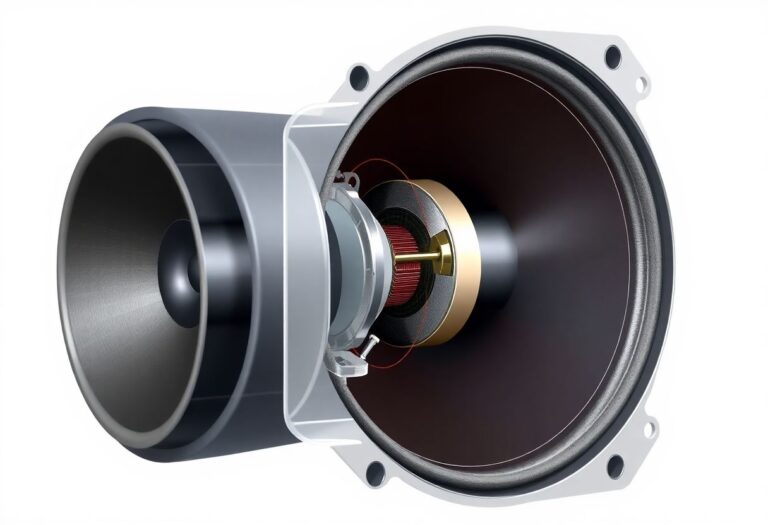
Actuators serve as the muscles of a robot, converting energy into physical motion. The most common type of actuator in robotics is the electric motor, prized for its precision, efficiency, and ease of control. Electric motors come in various forms, each suited to different applications. DC motors offer simple speed control and are often used in wheeled robots. Stepper motors provide precise positioning capabilities, making them ideal for 3D printers and CNC machines. Servo motors, with their ability to maintain a specific angular position, are frequently employed in robotic arms and legs.
However, electric motors are not the only players in the actuator game. Hydraulic actuators, which use pressurized fluid to generate force, are the go-to choice for applications requiring immense power, such as in large industrial robots or heavy machinery. Pneumatic actuators, powered by compressed air, offer a lightweight alternative and are often used in settings where cleanliness is paramount, like in food processing plants.
An emerging technology in the field of actuators is the use of shape memory alloys (SMAs). These fascinating materials can "remember" and return to a predetermined shape when heated. While still in the early stages of robotic application, SMAs show promise for creating small, precise movements in compact designs.
Sensors: The Robot's Senses
For a robot to move effectively, it needs to understand its position in space and its surrounding environment. This is where sensors come into play, acting as the robot's eyes, ears, and sense of touch. The variety of sensors used in robotics is vast, each type providing crucial data for navigation and interaction.
Encoders are fundamental to precise movement, measuring the rotation of motors and wheels to track the robot's position and speed. Inertial Measurement Units (IMUs), containing accelerometers and gyroscopes, provide data on acceleration and orientation, crucial for maintaining balance in bipedal robots or stabilizing flying drones.
For outdoor navigation, GPS sensors offer absolute position data, allowing robots to traverse large areas with accuracy. However, in indoor or GPS-denied environments, robots often rely on visual navigation systems. Cameras, coupled with sophisticated computer vision algorithms, enable robots to recognize objects, avoid obstacles, and even create maps of their surroundings through a process called Simultaneous Localization and Mapping (SLAM).
Lidar (Light Detection and Ranging) sensors have become increasingly popular, especially in the development of autonomous vehicles. By emitting laser pulses and measuring their reflections, Lidar creates detailed 3D maps of the environment, allowing for precise navigation even in complex terrains.
Proximity sensors, including infrared, ultrasonic, and capacitive types, provide robots with a sense of touch, allowing them to detect nearby objects and avoid collisions. This is particularly important in collaborative robots designed to work alongside humans in shared spaces.
Controllers: The Robot's Brain
The controller acts as the robot's brain, processing sensor data and coordinating actuator movements to achieve desired outcomes. Modern robot control systems are marvels of computing power, running complex algorithms to plan and execute movements in real-time.
Motion planning algorithms are at the heart of robot movement, calculating optimal paths that consider obstacles, energy efficiency, and task requirements. These algorithms must often solve complex problems in fractions of a second, balancing multiple objectives to produce smooth, efficient motion.
Kinematics, the mathematical description of robot motion, plays a crucial role in control systems. Forward kinematics calculates the position of a robot's end effector (like a hand or tool) based on the angles of its joints. Inverse kinematics, a more complex problem, determines the joint angles required to achieve a desired end effector position. These calculations are fundamental to precise robotic manipulation and movement.
Feedback control systems continuously adjust the robot's movements based on sensor data, ensuring accuracy and stability. The PID (Proportional-Integral-Derivative) control algorithm is widely used in robotics for its simplicity and effectiveness, though more advanced control methods are often employed for complex, non-linear systems.
Increasingly, machine learning techniques are being integrated into robot control systems. This allows robots to improve their movement strategies through experience, adapting to new environments or tasks without explicit reprogramming. Reinforcement learning, in particular, has shown promising results in teaching robots complex behaviors, from walking gaits to dexterous manipulation.
Types of Robot Locomotion
The diversity of robot locomotion methods is a testament to the creativity of roboticists and the varied environments in which robots operate. Each type of locomotion offers unique advantages and challenges, suited to different applications and terrains.
Wheeled Robots: Efficiency on Smooth Surfaces
Wheeled robots are the workhorses of indoor and flat-terrain robotics. Their simplicity and efficiency make them ideal for a wide range of applications, from household cleaning robots like the Roomba to the Mars rovers exploring the Red Planet.
The design of wheeled robots varies based on their intended use. A common configuration is the differential drive, where two independently driven wheels provide both propulsion and steering. This simple setup allows for tight turns and even rotation in place. Car-like configurations, with steered front wheels and driven rear wheels, are often used for robots that need to operate at higher speeds or carry heavier loads.
An exciting development in wheeled robotics is the use of omnidirectional wheels. These specialized wheels, equipped with smaller rollers around their circumference, allow a robot to move in any direction without changing its orientation. This capability is particularly useful in crowded or confined spaces, such as factory floors or warehouses.
Tracked Robots: Conquering Rough Terrain
When the going gets tough, tracked robots shine. By distributing their weight over a larger surface area, tracks provide excellent traction and stability on challenging terrains. This makes them the preferred choice for military robots, construction equipment, and search and rescue operations in disaster zones.
The design of tracked robots often involves a compromise between maneuverability and obstacle-climbing ability. Wider tracks offer more stability and better weight distribution but can limit the robot's ability to turn in tight spaces. Some advanced designs incorporate articulated tracks or additional sets of smaller tracks that can be deployed to climb stairs or overcome large obstacles.
Legged Robots: Versatility Through Complexity
Legged robots represent the cutting edge of robot locomotion, mimicking the gait patterns of animals and humans to navigate extremely difficult terrain. While mechanically complex and computationally demanding, legged robots offer unparalleled versatility in movement.
Bipedal robots, walking on two legs like humans, face significant challenges in balance and stability. Companies like Boston Dynamics and research institutions worldwide have made significant strides in this area, producing humanoid robots capable of walking, running, and even performing acrobatic maneuvers. These advancements are driven by sophisticated control algorithms that constantly adjust joint positions to maintain balance, even when subjected to external forces.
Quadrupedal robots, inspired by four-legged animals, offer a more stable platform while still maintaining high mobility. Boston Dynamics' Spot robot has gained significant attention for its ability to navigate rough terrain, climb stairs, and even open doors. These robots use a variety of gait patterns, from a slow, stable walk to a dynamic trot or gallop, adapting their movement to the terrain and task at hand.
Hexapodal (six-legged) robots draw inspiration from insects, offering even greater stability. With six legs, these robots can maintain a stable tripod gait, always keeping at least three legs on the ground while moving. This design is particularly useful for robots operating in extremely unstable or unpredictable environments.
Flying Robots: Mastering the Third Dimension
The development of flying robots, often referred to as drones or Unmanned Aerial Vehicles (UAVs), has revolutionized fields ranging from photography and surveying to search and rescue operations. These robots must overcome the significant challenge of controlled flight, balancing thrust, lift, and stability in three-dimensional space.
Quadcopters, with their four rotors, have become the most common configuration for small flying robots. Their ability to hover in place, change direction quickly, and operate in confined spaces makes them incredibly versatile. More complex designs, such as hexacopters and octocopters, offer increased lifting capacity and redundancy at the cost of increased power consumption and complexity.
Fixed-wing drones, resembling small airplanes, offer greater efficiency for long-distance flight but lack the ability to hover or take off vertically. Some advanced designs combine elements of both, with rotors that can tilt to provide vertical takeoff and landing capabilities while still allowing for efficient forward flight.
Swimming Robots: Exploring the Aquatic Realm
Aquatic environments present unique challenges for robot locomotion, including water pressure, corrosion, and the need for waterproof designs. Swimming robots, or Autonomous Underwater Vehicles (AUVs), have found applications in oceanography, underwater archaeology, and maintenance of offshore structures.
Propeller-driven designs are common, often mimicking the shape of torpedoes or submarines for hydrodynamic efficiency. More biomimetic approaches include robots that swim like fish, using flexible fins or undulating bodies to move through water with remarkable efficiency.
Some of the most innovative designs in this field include soft robotic fish, which use compliant materials to achieve complex movements with simple actuation. These robots can navigate tight spaces and interact safely with delicate marine environments, opening up new possibilities for underwater exploration and research.
Biomimicry in Robot Locomotion
Nature, through millions of years of evolution, has developed incredibly efficient and adaptable locomotion strategies. It's no surprise, then, that roboticists often look to the natural world for inspiration in designing new movement systems.
Boston Dynamics' quadruped robots, like Spot, draw heavily from observations of how dogs and other four-legged animals move. By mimicking the gait patterns and dynamic balance strategies of animals, these robots achieve a level of agility and adaptability that was previously unattainable with wheeled or tracked designs.
Snake-like robots, with their ability to navigate extremely tight and complex spaces, have found applications in search and rescue operations and minimally invasive surgery. These robots use a variety of locomotion strategies inspired by real snakes, including lateral undulation, rectilinear movement, and even "sidewinding" for traversing loose sandy terrain.
In the realm of flying robots, insect-inspired designs have led to the development of incredibly small and agile drones. For example, researchers have created robotic bees that use high-frequency wing beats to achieve stable flight at very small scales. These micro-drones could potentially be used for tasks like pollination in agriculture or environmental monitoring in hard-to-reach areas.
Underwater, robot designs often take cues from fish and marine mammals. Soft robotic fish, mentioned earlier, mimic the undulating movements of real fish to achieve efficient propulsion. Other designs have replicated the jet propulsion of squid or the unique locomotion of rays, each offering advantages in different aquatic environments.
Challenges and Future Directions in Robot Locomotion
As impressive as current robot locomotion capabilities are, significant challenges remain. Energy efficiency is a perennial concern, particularly for mobile robots that rely on batteries. Researchers are exploring ways to optimize movement patterns to conserve energy, as well as developing more efficient power sources and energy harvesting techniques.
Stability and adaptability in diverse environments continue to be major focus areas, especially for legged robots. While great strides have been made, creating robots that can match the agility and robustness of animals in complex, unpredictable environments remains an ongoing challenge.
Safety is paramount as robots increasingly share spaces with humans. This necessitates the development of sophisticated collision detection and avoidance systems, as well as compliant actuators and structures that can interact safely with people.
Looking to the future, several exciting trends are emerging in the field of robot locomotion:
-
Soft Robotics: By using flexible, compliant materials, soft robots can achieve complex movements with simple actuation. This approach offers potential benefits in safety, adaptability, and the ability to interact with delicate objects or environments.
-
Modular Robots: These robots can reconfigure themselves to adapt to different tasks or environments. Imagine a robot that can change from a wheeled configuration for efficient travel to a legged design for navigating stairs.
-
Nanorobots: As robotics moves to the microscopic scale, entirely new approaches to locomotion are being explored. From swimming through bloodstreams to navigating cell structures, nanorobots present unique challenges and opportunities in movement strategies.
-
Advanced AI and Learning: The integration of more sophisticated artificial intelligence and machine learning techniques promises to create robots that can adapt their locomotion strategies on the fly, learning to navigate new environments or recover from damage without explicit programming.
Conclusion
The science of how robots move is a rich and rapidly evolving field, blending insights from biology, physics, materials science, and computer science. From the precise articulations of industrial arms to the agile leaps of quadruped robots, the diversity of robot locomotion reflects the ingenuity of human engineers and the endless possibilities of mechanical design.
As robots become increasingly integrated into our daily lives, understanding their movement capabilities and limitations will be crucial for designers, engineers, and users alike. The future of robotics is quite literally in motion, promising exciting developments that will continue to push the boundaries of what's possible in artificial locomotion.
Whether it's robots exploring distant planets, assisting in delicate surgeries, or simply helping around the home, the way these machines move will play a critical role in their effectiveness and our interaction with them. As we stand on the brink of a new era in robotics, one thing is clear: the journey of understanding and improving how robots move is far from over, and the most exciting developments may yet lie ahead.