The Jackhammer: Engineering Marvel and Construction Workhorse
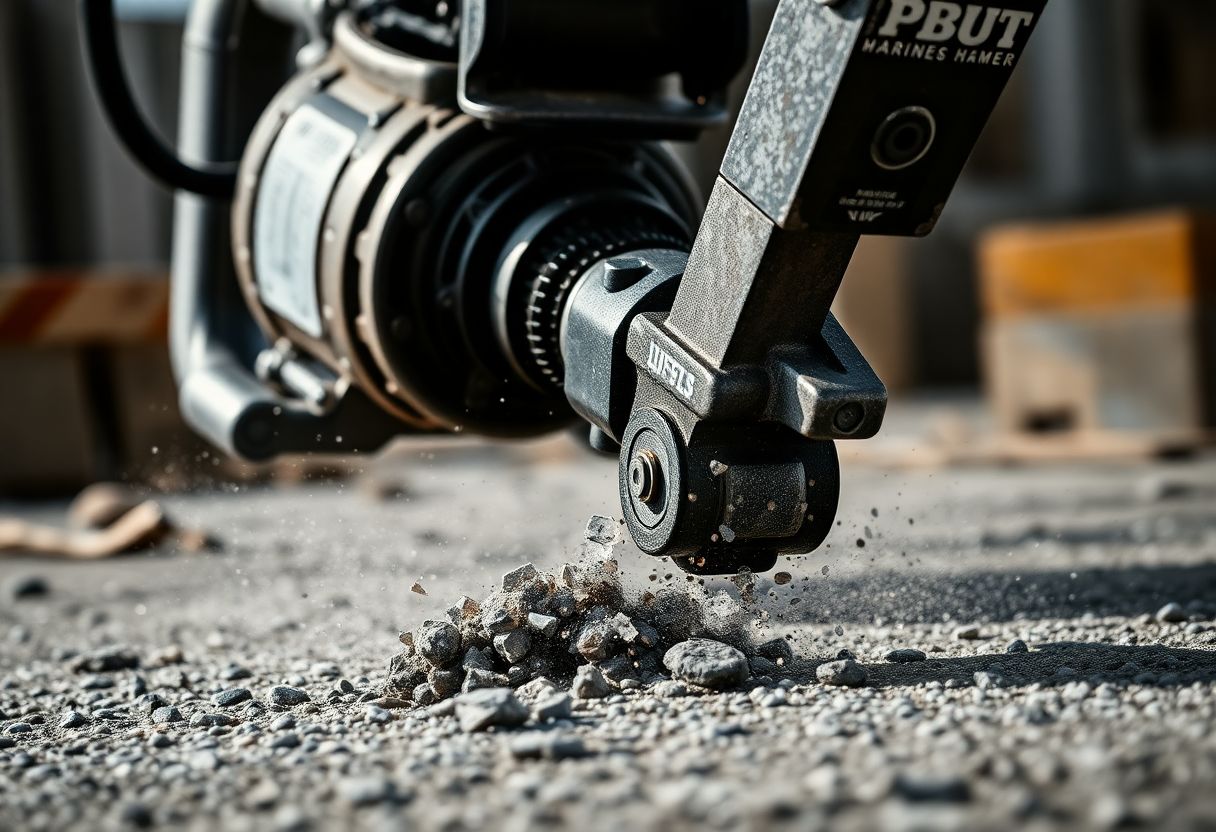
Picture yourself walking down a busy city street. The rhythmic pounding reverberates through the air, and you feel vibrations coursing through the concrete beneath your feet. As you round the corner, you spot a construction worker skillfully maneuvering a large, thunderous tool that's steadily breaking apart the sidewalk. What you're witnessing is a jackhammer in action – a powerful pneumatic drill that has revolutionized construction, demolition, and excavation work for over a century.
In this comprehensive guide, we'll take a deep dive into the fascinating world of jackhammers. We'll explore their rich history, complex mechanics, diverse applications, and the fundamental scientific principles that make them tick. Whether you're a curious observer, an aspiring engineer, or a professional considering using one for a project, this article will provide you with a thorough understanding of these impressive machines that have shaped our modern urban landscape.
From Antlers to Air Power: The Evolution of Excavation
To truly appreciate the technological marvel that is the jackhammer, we must first step back in time and examine the evolution of excavation tools. Archeological evidence suggests that as far back as 20,000 years ago, our ancient ancestors were using sharpened deer antlers as rudimentary digging implements to break up rough ground. This ingenious use of natural materials marked humanity's first steps towards developing specialized tools for working the earth.
As civilizations advanced, so did their tools. By the 19th century, the pickaxe had become the primary tool for manual excavation. This deceptively simple implement – consisting of a wooden handle and a metal head with a pointed end – allowed workers to chip away at hard surfaces with significantly more force than their bare hands or primitive tools. However, the pickaxe was still limited by human muscle power and endurance.
The late 19th and early 20th centuries saw a quantum leap in excavation technology with the invention of the pneumatic jackhammer. This development was nothing short of revolutionary. To put it in perspective, consider this: a strong worker wielding a pickaxe might be able to deliver around 10 powerful strikes per minute. In contrast, a pneumatic jackhammer can deliver an astounding 1500 blows in the same timeframe. This 150-fold increase in speed and efficiency transformed construction, mining, and road work, ushering in a new era of rapid urban development and infrastructure expansion.
Harnessing the Power of Air: The Science of Pneumatics
At the heart of the traditional jackhammer lies the principle of pneumatics – the use of pressurized air to perform mechanical work. To fully grasp how jackhammers function, it's crucial to understand the key concepts of pneumatic systems:
-
Air Pressure: Air, like all gases, is composed of molecules in constant, random motion. When confined within a container, these molecules collide with the walls, exerting pressure. At sea level, atmospheric pressure is approximately 14.7 pounds per square inch (psi) or 101.325 kilopascals (kPa).
-
Compressed Air: Using a mechanical compressor, air can be squeezed into a smaller volume, dramatically increasing its pressure. Industrial air compressors used for jackhammers typically produce pressures ranging from 70 to 125 psi (483 to 862 kPa).
-
Energy Storage: Compressed air acts as an energy storage medium. The work done to compress the air is stored as potential energy, which can later be released to perform useful work.
-
Power Transmission: One of the key advantages of pneumatic systems is that high-pressure air can be easily transported through hoses to power tools at a distance from the compressor. This allows for flexibility in tool placement and operation.
The principles of pneumatics extend far beyond construction sites. In fact, you encounter pneumatic technology in various forms in everyday life. Bicycle and car tires rely on compressed air to maintain their shape and cushion the ride. Blowpipes and dart guns use a burst of compressed air to propel projectiles. Some stores and hospitals still use pneumatic tube systems to quickly transport small items. Even vacuum cleaners operate on pneumatic principles, albeit using negative air pressure (suction) rather than positive pressure.
The Inner Workings of a Jackhammer: A Mechanical Symphony
Now that we've established the foundational principles, let's examine the intricate inner workings of a pneumatic jackhammer. The process involves several key components working in harmony:
-
Air Supply: The system begins with an external air compressor, which pumps high-pressure air (typically around 90 psi or 620 kPa) through a thick, reinforced hose into the jackhammer.
-
Internal Air Circuit: Inside the tool, a network of precisely engineered tubes and valves directs the flow of compressed air.
-
The Piledriver: This is a heavy metal component, typically weighing between 4 to 8 pounds (1.8 to 3.6 kg), that moves up and down inside the jackhammer's body.
-
Drill Bit: The removable tip of the jackhammer that makes direct contact with the surface being broken. Different bit shapes are used for various tasks.
-
Valve System: A clever reciprocating valve mechanism alternates the direction of airflow, driving the piledriver's cyclical motion.
The operational cycle of a jackhammer occurs as follows:
-
High-pressure air enters the tool and pushes the piledriver downward, forcing the drill bit into the target surface.
-
The valve system rapidly switches, reversing the airflow.
-
The redirected air pressure drives the piledriver back up, lifting the drill bit.
-
The valve flips again, and the cycle repeats.
This process happens at an incredibly rapid rate – typically about 25 times per second, or 1500 times per minute. The exact frequency can vary depending on the specific model and application, with some jackhammers operating at up to 2000 blows per minute.
The speed and power of this mechanical action allow jackhammers to break through materials that would be extremely time-consuming or practically impossible to tackle with manual tools. The rapid, high-force impacts prevent the material from absorbing the energy gradually, leading to efficient fracturing and breakage.
Anatomy of a Jackhammer: Key Components
To further our understanding, let's examine the main components of a typical pneumatic jackhammer:
-
Handle: Ergonomically designed grips allow the operator to control the tool. Many modern jackhammers feature vibration-dampening materials in the handles to reduce operator fatigue.
-
Trigger: This control activates the air flow and starts the hammering action. Some models have a safety lock to prevent accidental activation.
-
Body: The main housing that encloses the internal mechanisms. It's typically made of durable metals like steel or aluminum alloys to withstand the intense forces and vibrations.
-
Air Inlet: The connection point for the compressed air hose. This often includes a quick-release coupling for easy attachment and detachment.
-
Piledriver: Also known as the hammer or striker, this heavy internal component delivers the force to the drill bit. It's precisely machined to minimize friction and maximize energy transfer.
-
Chuck: This mechanism holds the interchangeable drill bits securely in place while allowing for quick bit changes.
-
Drill Bit: Various shapes are available for different tasks. Common types include:
- Chisel point: For general breaking and chipping
- Moil point: A conical tip for concentrated force, good for breaking hard materials
- Spade: A wide, flat tip for breaking up asphalt or clay
- Bushing tool: Multiple points for surface texturing of concrete or stone
Jackhammers in Action: Diverse Applications
The versatility of jackhammers has led to their adoption across a wide range of industries and applications:
-
Construction: In the building sector, jackhammers are indispensable for tasks such as breaking up old concrete foundations, removing damaged sections of structures for renovation, and creating openings in walls or floors for new installations. They're also crucial in the early stages of many projects, helping to prepare sites by breaking up rocks or compacted soil.
-
Road Work: Highway and street maintenance crews rely heavily on jackhammers. They're used to break up old asphalt or concrete road surfaces prior to resurfacing, create expansion joints in concrete highways, and repair potholes.
-
Mining: In both surface and underground mining operations, jackhammers play a vital role. They're used to break apart rock faces, create blast holes for explosives, and in some cases, for the actual extraction of minerals from ore veins.
-
Utility Work: When utility companies need to access or install underground pipes and cables, jackhammers are often the first tool employed. They can quickly break through pavement or hard soil to create access points for repairs or new installations.
-
Landscaping: In the realm of hardscaping, jackhammers are used to break up large rocks, prepare hard ground for planting or water features, and create holes for fence posts in rocky soil.
-
Demolition: While larger equipment like wrecking balls or explosives might be used for full building demolition, jackhammers are essential for more precise, controlled demolition work. They're particularly useful for interior demolition where space is limited and careful removal of specific elements is required.
-
Sculpture: Some artists have embraced the jackhammer as a sculpting tool, using smaller, more controllable models to carve intricate designs in stone. This unconventional application showcases the tool's versatility beyond its industrial roots.
The Birth of the Jackhammer: A Tale of Innovation
The development of the jackhammer is a fascinating story of engineering ingenuity, driven by the demands of industrialization and urban growth. Here's a brief timeline of its evolution:
1849: Jonathan J. Couch patents a steam-powered drill, which, while not a true jackhammer, laid important groundwork for future percussion drill designs.
1861: Charles Burleigh invents a more practical pneumatic drill specifically for mining applications. This design, while still quite different from modern jackhammers, represented a significant step forward in mechanized rock breaking.
1892: Charles Brady King files a patent for what is widely considered the first true jackhammer design. His invention incorporated many of the key elements found in modern jackhammers, including the use of compressed air and a reciprocating piston.
1897: John George Leyner develops the hammer drill, an important innovation that combined rotary motion with percussion. This design greatly improved drilling efficiency, especially in mining applications.
Early 1900s: Various engineers and companies, including Sullivan Machinery Company and Ingersoll-Rand, introduce refinements and improvements to jackhammer designs. These developments lead to tools that closely resemble modern pneumatic jackhammers.
1940s-1950s: The introduction of hydraulic jackhammers, particularly for use with excavators and other heavy machinery, expands the tool's capabilities for larger demolition projects.
1960s onward: Ongoing improvements in materials, ergonomics, and power systems continue to enhance jackhammer performance and operator safety.
Beyond Pneumatics: Alternative Jackhammer Technologies
While pneumatic jackhammers remain the most common type, other technologies have been developed to suit various needs and working conditions:
-
Electric Jackhammers: Powered by an electric motor rather than compressed air, these tools offer several advantages:
- Increased portability, as they don't require a separate air compressor
- Generally quieter operation compared to pneumatic models
- Better suited for indoor work or in areas with limited ventilation
However, they typically deliver less power than their pneumatic counterparts and are mainly used for lighter-duty applications.
-
Hydraulic Jackhammers: These tools use pressurized fluid instead of air to deliver their striking force. Key features include:
- Extremely high power output, often exceeding that of pneumatic models
- Commonly mounted on excavators or other heavy equipment for large-scale demolition
- Widely used in mining and heavy construction projects
The main drawbacks are their size, cost, and the need for specialized hydraulic power systems.
-
Gas-powered Jackhammers: Equipped with small internal combustion engines, these jackhammers offer complete portability:
- No need for external power sources or compressors
- Ideal for remote locations or sites without reliable electricity
- Less common than other types, primarily used in specific niche applications
Their limitations include higher maintenance requirements, fuel costs, and emissions concerns.
Breaking It Down: The Physics of Jackhammer Operation
Understanding how jackhammers break through tough materials involves some fascinating physics concepts:
-
Force Concentration: The narrow tip of the drill bit focuses the hammer's considerable force on a very small area. This concentration of force allows the jackhammer to exert enormous pressure at the point of contact. For example, a 40-pound (18 kg) jackhammer delivering 1500 blows per minute can generate a peak force of several tons at the tip of the bit.
-
Stress Wave Propagation: Each impact of the jackhammer sends a stress wave through the target material. These waves travel at the speed of sound in the material (typically several kilometers per second in rock or concrete) and can cause fracturing when they encounter boundaries or imperfections.
-
Rapid Impacts: The high-frequency blows delivered by a jackhammer prevent the material from absorbing the energy gradually. This rapid succession of impacts causes localized stress concentrations that exceed the material's strength, leading to fracture.
-
Vibration: The hammering action sets up vibrations within the target material. These vibrations can help propagate cracks and weaken the material's structure over time.
-
Material Fatigue: Repeated loading and unloading of the material, even at forces below its normal breaking point, can lead to fatigue failure. This principle allows jackhammers to break materials that might withstand a single, larger impact.
-
Compression and Tension: As the drill bit enters the material, it creates both compressive forces (pushing the material together) and tensile forces (pulling it apart). Most materials, especially brittle ones like concrete and rock, are weaker in tension than in compression. Jackhammers exploit this property, creating tensile stresses that lead to cracking and fracture.
Safety First: Best Practices for Jackhammer Operation
Operating a jackhammer can be physically demanding and potentially dangerous if proper precautions aren't taken. Here are some key safety considerations:
Personal Protective Equipment (PPE): Essential gear for jackhammer operators includes:
- Hard hat to protect against falling debris
- Safety glasses or a face shield to guard against flying particles
- Ear protection, as jackhammers can produce noise levels exceeding 130 decibels
- Steel-toed boots to protect feet from the heavy tool and broken materials
- Heavy-duty gloves to reduce vibration exposure and improve grip
Training: Proper instruction on use, maintenance, and safety procedures is essential for all operators. This should include guidance on correct posture, tool handling, and recognition of potential hazards.
Ergonomics: Using correct posture and taking regular breaks are crucial to prevent fatigue and reduce the risk of long-term injuries. Many modern jackhammers incorporate vibration-dampening technologies to reduce operator strain.
Site Safety: Operators must be aware of their surroundings, including the location of underground utilities, potential fall hazards, and the stability of the surface being worked on.
Maintenance: Regular equipment checks and maintenance are vital for safe operation. This includes inspecting air hoses for pneumatic models, checking electrical cords on electric jackhammers, and ensuring all safety features are functioning correctly.
Environmental and Health Considerations
While jackhammers are invaluable tools in construction and demolition, their use does raise some environmental and health concerns:
-
Noise Pollution: The extreme noise produced by jackhammers can be disruptive in urban areas and potentially harmful to both operators and bystanders. Many cities have regulations limiting the hours during which jackhammers can be used to minimize disturbance.
-
Vibration Exposure: Long-term exposure to the intense vibrations produced by jackhammers can lead to hand-arm vibration syndrome (HAVS), a potentially debilitating condition affecting blood vessels, nerves, and joints.
-
Dust Generation: Breaking concrete, stone, or asphalt generates significant amounts of dust, including harmful silica particles. Proper dust suppression methods and respiratory protection are crucial to protect worker health.
-
Fuel Consumption: The compressors used to power pneumatic jackhammers consume significant amounts of fuel, contributing to air pollution and carbon emissions.
-
Water Usage: Some dust suppression methods involve spraying water, which can lead to increased water consumption on construction sites.
Innovations on the Horizon: The Future of Jackhammer Technology
Engineers and researchers are continuously working to improve jackhammer technology, addressing many of the concerns mentioned above:
Noise Reduction: Development of quieter mechanisms, improved sound insulation, and advanced muffler designs aim to reduce the noise impact of jackhammers. Some prototypes have achieved noise reductions of up to 20 decibels compared to traditional models.
Vibration Dampening: New designs incorporate advanced shock absorption systems and materials to reduce the transmission of vibrations to the operator. These improvements not only enhance comfort but also significantly reduce the risk of long-term health issues.
Dust Suppression: Integrated water spray systems and vacuum attachments are being refined to capture and suppress dust at the source, improving both environmental impact and worker safety.
Energy Efficiency: Research into more efficient compressor designs and the potential for hybrid pneumatic-electric systems could reduce the fuel consumption and emissions associated with jackhammer operation.
Smart Technology Integration: Some manufacturers are exploring the integration