The Magic of Remote Controls: Harnessing Waves to Command Our Digital World
In our increasingly connected world, remote controls have become ubiquitous tools that seamlessly bridge the gap between us and our electronic devices. These small yet powerful gadgets rely on the invisible power of electromagnetic waves to transmit signals and information over short distances, allowing us to effortlessly control everything from our televisions to our smart home systems. Let's embark on a fascinating journey into the science and technology behind remote controls, exploring how they work and the impact they've had on our daily lives.
The Fundamentals of Remote Control Technology
At its core, a remote control is a device that utilizes electromagnetic waves to send commands to another device without a physical connection. These waves, part of the vast electromagnetic spectrum, come in various forms, each with its own unique properties and applications. In the realm of remote controls, two primary types of waves dominate the landscape: infrared (IR) and radio frequency (RF).
Infrared (IR) Remote Controls: The Silent Light Commanders
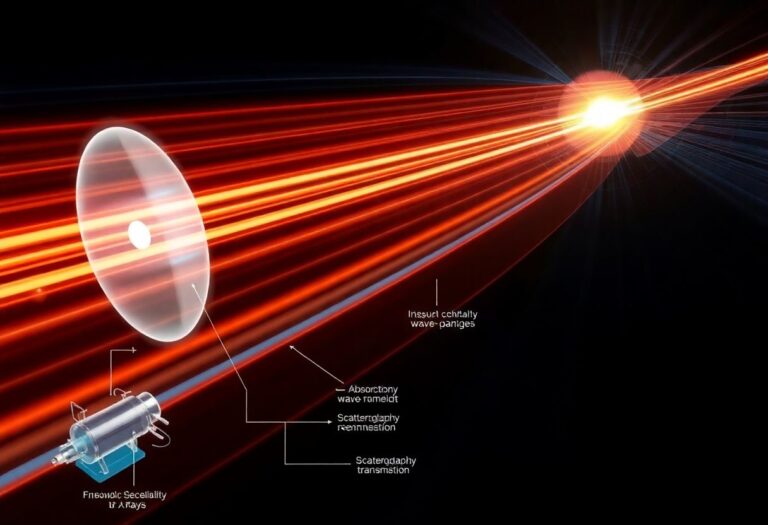
Infrared remote controls, the most common type found in consumer electronics, operate on a principle that might seem almost magical to the uninitiated. These devices harness the power of invisible light to transmit information, utilizing a specific portion of the electromagnetic spectrum just beyond the range of human vision.
When you press a button on an IR remote, a fascinating sequence of events unfolds:
- The button press triggers a specific pattern of electrical pulses within the remote's circuitry.
- These pulses are then translated into a series of infrared light pulses, emitted by a small LED at the remote's tip.
- The controlled device, equipped with an IR receiver, detects these light pulses.
- The receiver converts the light signals back into electrical impulses, which are then decoded and acted upon by the device.
This process occurs at the speed of light, resulting in the near-instantaneous response we've come to expect from our devices. The IR spectrum used by these remotes typically falls between 300 GHz and 430 THz, occupying a narrow band just below visible light in the electromagnetic spectrum.
The encoding of commands in IR signals often employs a technique called Pulse Code Modulation (PCM). In this method, each button on the remote is assigned a unique binary code. When pressed, the remote sends a series of IR pulses representing this code, with the duration and spacing of the pulses conveying the information. For example, a short pulse might represent a '0', while a longer pulse represents a '1'.
Different manufacturers often use proprietary protocols for encoding their IR signals, which explains why a remote from one brand typically won't control devices from another. Some common protocols include the RC-5 standard developed by Philips and the NEC IR protocol, widely used in Japanese electronics.
While IR remotes are cost-effective and energy-efficient, operating for months or even years on a single set of batteries, they do have limitations. The most notable is their requirement for a clear line of sight between the remote and the device, as IR waves cannot penetrate solid objects. This constraint typically limits their effective range to about 30 feet (9 meters) or less.
Radio Frequency (RF) Remote Controls: Breaking Barriers
For applications requiring greater range or the ability to control devices through walls and other obstacles, radio frequency (RF) remote controls offer a compelling alternative. These devices operate by generating radio waves, typically in the Ultra High Frequency (UHF) band ranging from 300 MHz to 3 GHz.
The operation of an RF remote control follows a similar principle to its IR counterpart, but with some key differences:
- Pressing a button activates a radio transmitter within the remote.
- The transmitter generates a coded radio signal at a specific frequency (commonly 315 MHz or 433 MHz in consumer devices).
- These radio waves propagate through the air, easily passing through walls and other non-metallic obstacles.
- A radio receiver in the controlled device, tuned to the same frequency, picks up the signal.
- The receiver decodes the signal and executes the corresponding command.
RF remotes often employ more sophisticated encoding techniques than their IR counterparts. One common method is Frequency-Shift Keying (FSK), where the transmitter switches between two slightly different frequencies to represent binary data. This technique allows for more robust data transmission, less susceptible to interference from other sources.
The advantages of RF technology include longer range (typically 50 to 100 feet or more), the ability to control devices in other rooms or behind cabinet doors, and the capacity to control multiple devices simultaneously. However, these benefits come at the cost of increased complexity, higher power consumption, and potential interference from other RF devices.
The Science of Signal Transmission
To truly appreciate the ingenuity behind remote controls, we must delve deeper into the physics of electromagnetic wave propagation and the intricacies of signal encoding.
Electromagnetic waves, including both IR and RF, travel at the speed of light (approximately 299,792,458 meters per second in a vacuum). This incredible speed allows for the near-instantaneous response we experience when using a remote control. These waves can carry information through modulation – the process of varying one or more properties of the wave to encode data.
In remote controls, several modulation techniques are employed:
-
Amplitude Modulation (AM): The amplitude (strength) of the carrier wave is varied to encode the signal. While less common in modern remotes due to its susceptibility to interference, AM is still used in some applications.
-
Frequency Modulation (FM): The frequency of the carrier wave is varied to encode the signal. FM is more resistant to noise and interference, making it popular for RF remotes.
-
Pulse-Position Modulation (PPM): Often used in IR remotes, PPM encodes data by varying the position of a pulse within a specific time frame.
The choice of modulation technique depends on factors such as the desired range, power consumption, and resistance to interference. Each method has its own strengths and weaknesses, and engineers must carefully consider these factors when designing remote control systems.
Evolution and Innovation in Remote Control Technology
The history of remote controls is a testament to human ingenuity and our constant drive to make life more convenient. From Nikola Tesla's demonstration of a radio-controlled boat in 1898 to the sophisticated smart home controllers of today, remote control technology has undergone a remarkable evolution.
In the 1950s, the first TV remotes were tethered to televisions by wires. The breakthrough came in 1955 when Zenith introduced the "Flashmatic," which used directional light beams to control TVs. This was quickly followed by the "Space Command" in 1956, which utilized ultrasonic sounds for control.
The 1980s saw the widespread adoption of infrared remotes, revolutionizing home entertainment. This period also marked the beginning of standardization efforts, with protocols like RC-5 and NEC IR enabling the development of universal remotes capable of controlling multiple devices from different manufacturers.
Recent years have witnessed a surge of innovations in remote control technology:
- Bluetooth Low Energy (BLE) remotes offer extended battery life and seamless integration with smartphones.
- Wi-Fi-enabled remotes allow control of smart home devices over home networks, often through dedicated apps.
- Voice-controlled remotes, integrated with virtual assistants like Alexa or Google Assistant, are changing how we interact with our devices.
These advancements have expanded the applications of remote control technology far beyond entertainment. In the realm of home automation, we now have the ability to control lighting, thermostats, and security systems with the touch of a button or a simple voice command. Industries have adopted remote control technology for safer and more efficient operations, from crane control in construction to presentation systems in corporate environments.
The automotive sector has also embraced remote control technology, with keyless entry systems, remote start capabilities, and garage door openers becoming standard features in many vehicles. These applications rely heavily on RF technology due to its ability to penetrate vehicle bodies and operate over longer distances.
The Future of Remote Control: Pushing Boundaries
As we look to the future, several exciting trends are emerging in remote control technology, promising to revolutionize how we interact with our environment:
-
Gesture Control: Advanced camera systems and motion sensors are enabling devices to interpret hand movements as commands. This technology is finding applications in gaming, smart TVs, and virtual reality systems, offering a more intuitive and immersive control experience.
-
Neural Interfaces: Research into brain-computer interfaces is opening up the possibility of direct neural control of devices. While still in its early stages, this technology could revolutionize assistive technologies for individuals with disabilities and potentially lead to new paradigms in human-machine interaction.
-
Internet of Things (IoT) Integration: As our homes and workplaces become increasingly connected, we're moving towards seamless control of multiple smart devices through unified interfaces. Artificial intelligence is playing a crucial role in this integration, learning user preferences and automating controls to create more responsive and efficient environments.
-
Enhanced Haptic Feedback: Future remotes may provide sophisticated tactile sensations to confirm actions or convey information. This could significantly improve the user experience, especially for visually impaired users, by providing non-visual cues and feedback.
-
Energy Harvesting: Researchers are exploring ways to power remote controls using ambient energy sources like light, heat, or motion. This could potentially eliminate the need for batteries, making remotes more environmentally friendly and maintenance-free.
Conclusion: The Invisible Thread of Control
Remote controls, those seemingly simple devices we use every day, embody a fascinating confluence of physics, electronics, and information theory. They represent our ability to manipulate the fundamental properties of the universe – in this case, electromagnetic waves – to extend our reach and control over our environment.
As we've explored, the science behind remote controls involves intricate processes of signal generation, modulation, transmission, and decoding. From the invisible pulses of infrared light to the pervasive radio waves that surround us, these technologies have transformed how we interact with our devices and, by extension, how we live our daily lives.
The ongoing evolution of remote control technology reflects broader trends in our increasingly connected and automated world. As we continue to push the boundaries of what's possible, the ways we control and interact with our devices will undoubtedly continue to evolve. Whether through more intuitive interfaces, smarter AI-driven systems, or direct neural connections, the core principle of transmitting our intentions over a distance will remain at the heart of these advancements.
Remote controls serve as a reminder that even the most commonplace technologies we take for granted are built upon layers of scientific discovery and engineering innovation. They exemplify how theoretical understanding of electromagnetic waves, combined with practical electronic design and information encoding techniques, can result in devices that seamlessly enhance our daily lives.
As we stand on the brink of new breakthroughs in fields like quantum computing and neural interfaces, the future of remote control technology holds exciting possibilities. These advancements promise not only to make our lives more convenient but also to open up new realms of human-machine interaction and environmental control.
So the next time you pick up your TV remote or unlock your car from across the parking lot, take a moment to appreciate the invisible waves carrying your commands through the air. It's a small but powerful example of how science and technology continue to shape and improve our everyday experiences, connecting us to our devices and our environment in ever more sophisticated ways. The magic of remote controls lies not just in their convenience, but in their embodiment of our ever-expanding ability to understand and manipulate the fundamental forces of nature to our benefit.