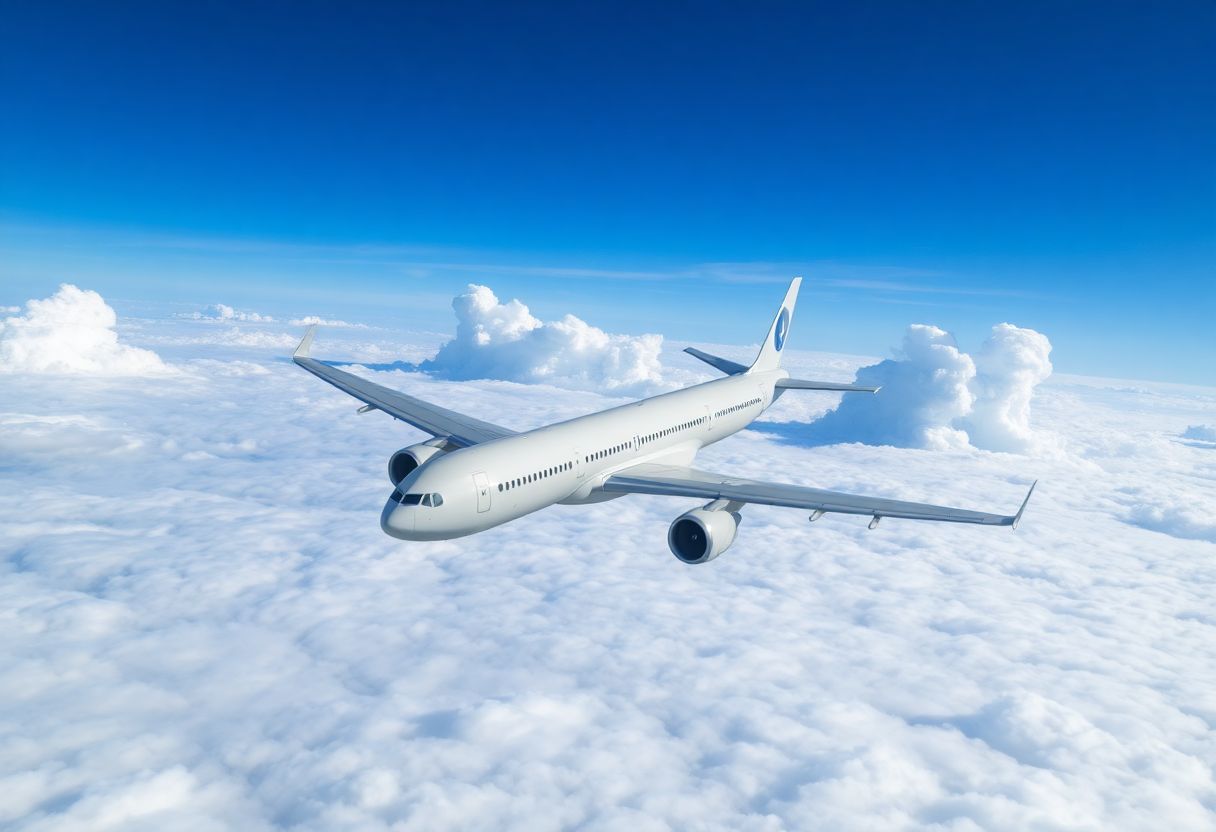
The Marvels of Flight: How Planes Conquer the Skies
Introduction: The Miracle of Human Flight
The sight of a massive airliner gracefully lifting off the ground and soaring into the clouds never fails to inspire awe. What was once the stuff of dreams and mythology is now an everyday reality, with thousands of aircraft crisscrossing the globe at any given moment. But how exactly do these metal behemoths defy gravity and transport us through the air with such apparent ease? In this comprehensive exploration, we'll unravel the fascinating science behind flight, delve into the intricate systems that make modern aviation possible, and gain a deeper appreciation for one of humanity's greatest technological achievements.
The Four Fundamental Forces of Flight
To understand how planes fly, we must first grasp the four primary forces at play during flight. These forces, working in concert, determine whether an aircraft will soar through the skies or remain firmly on the ground.
Thrust: The Force That Propels
Thrust is the forward-directed force generated by an aircraft's engines. In modern jet airliners, this is typically produced by turbofan engines, which work by accelerating a large mass of air to a moderate increase in velocity. The principle behind thrust is rooted in Newton's Third Law of Motion: for every action, there is an equal and opposite reaction. As the engine expels air backward at high speeds, it generates a forward force on the aircraft.
Drag: The Resistance to Motion
Opposing thrust is drag, the force that resists an aircraft's motion through the air. Drag is primarily caused by two factors: friction between the air and the aircraft's surface (skin friction drag) and the difference in air pressure between the front and rear of the aircraft (form drag). Aircraft designers work tirelessly to minimize drag through aerodynamic shaping and smooth surfaces, as reducing drag directly improves fuel efficiency and performance.
Lift: Defying Gravity
Perhaps the most crucial force in flight, lift is the upward force generated primarily by an aircraft's wings that counteracts its weight. The generation of lift is a complex phenomenon that relies on several principles of fluid dynamics. The primary contributors to lift are:
-
The shape of the wing (airfoil): Most aircraft wings have a curved upper surface and a flatter lower surface. This shape causes air flowing over the top of the wing to move faster than air flowing underneath, creating a pressure difference.
-
Angle of attack: Wings are typically positioned at a slight upward angle relative to the oncoming air. This causes air molecules to bounce off the bottom of the wing, creating an additional upward force.
-
Bernoulli's Principle: This principle states that as the speed of a fluid (in this case, air) increases, its pressure decreases. The faster-moving air over the top of the wing creates an area of lower pressure, while the slower-moving air below the wing is at a higher pressure. This pressure difference contributes to the overall lifting force.
Weight: The Opposing Force
Weight is the force of gravity acting on the aircraft, pulling it towards the Earth's center. For an aircraft to fly, the lift force must be greater than or equal to its weight. This is why aircraft are designed to be as light as possible while still maintaining structural integrity and carrying capacity.
The Marvels of Modern Aircraft Design
Wings: The Lifters
The wings are the most critical component for generating lift. Modern aircraft wings are marvels of engineering, carefully designed and tested to provide optimal lift with minimal drag across a wide range of flight conditions. Some key features of modern wings include:
-
Swept-back design: Many jet aircraft have wings that angle backward. This design helps to reduce drag at high speeds by delaying the onset of shock waves that form as the aircraft approaches the speed of sound.
-
Winglets: These vertical extensions at the wingtips reduce drag by minimizing wingtip vortices, improving fuel efficiency.
-
High-lift devices: Flaps and slats can be extended to increase the wing's surface area and curvature, generating more lift at lower speeds for takeoff and landing.
Engines: The Power Plants
Modern commercial aircraft typically use high-bypass turbofan engines, which offer an optimal balance of thrust, fuel efficiency, and noise reduction. These engines work through a series of complex stages:
-
The fan: A large fan at the front of the engine draws in a massive amount of air.
-
The compressor: Some of this air is directed into the engine core, where it's compressed to high pressures.
-
The combustor: Fuel is injected into the compressed air and ignited, creating hot, expanding gases.
-
The turbine: These gases drive a turbine, which powers the fan and compressor.
-
The exhaust: The hot gases are expelled at high speed, providing thrust.
The majority of the air bypasses the engine core, flowing around it and mixing with the hot exhaust gases, providing additional thrust while reducing noise.
Control Surfaces: Steering the Sky
To maneuver an aircraft, pilots use various control surfaces:
-
Ailerons: Located on the trailing edge of the wings, these control the aircraft's roll (tilting left or right).
-
Elevators: Found on the horizontal stabilizer at the tail, these control the aircraft's pitch (nose up or down).
-
Rudder: The vertical surface on the tail, controlling yaw (left or right turning).
-
Flaps and slats: These devices extend from the wings to increase lift at lower speeds, crucial for takeoff and landing.
The Dance of Takeoff and Landing
The Magic of Takeoff
During takeoff, several crucial events occur in rapid succession:
-
The engines are set to full power, accelerating the aircraft down the runway.
-
As speed increases, air flowing over the wings generates more lift.
-
The pilot pulls back on the control column, increasing the wing's angle of attack.
-
When lift exceeds the aircraft's weight, it lifts off the ground.
-
The landing gear is retracted to reduce drag.
-
Flaps are gradually retracted as the aircraft gains altitude and speed.
The Precision of Landing
Landing is often considered the most challenging phase of flight:
-
The approach begins miles from the airport, with the aircraft gradually descending.
-
Flaps and slats are extended to increase lift at lower speeds.
-
The landing gear is lowered.
-
Just before touchdown, the pilot performs the "flare" maneuver, slightly raising the nose to reduce descent rate.
-
Upon touchdown, thrust reversers and spoilers are deployed to slow the aircraft.
-
Brakes are applied to bring the aircraft to a stop.
Beyond the Basics: Advanced Aviation Technologies
Fly-by-Wire Systems
Modern aircraft have replaced many mechanical flight controls with electronic systems. Fly-by-wire technology uses computers to interpret pilot inputs and determine the optimal position for control surfaces, enhancing safety and efficiency.
Composite Materials
Advanced composites like carbon fiber reinforced polymers are increasingly used in aircraft construction. These materials offer superior strength-to-weight ratios compared to traditional metals, allowing for lighter, more fuel-efficient aircraft.
Winglets and Sharklets
These vertical extensions at the wingtips reduce drag by minimizing wingtip vortices. Airbus estimates that their "sharklets" can reduce fuel burn by up to 4% on long-range flights.
Advanced Avionics
Modern cockpits are equipped with sophisticated computer systems that assist with navigation, communication, and aircraft management. Systems like the Electronic Flight Instrument System (EFIS) provide pilots with critical information in an easy-to-interpret format.
The Future of Flight
As we look to the future, several exciting developments are on the horizon:
-
Electric and hybrid-electric propulsion systems promise to reduce emissions and operating costs.
-
Supersonic commercial travel may make a comeback with new designs that address the noise and efficiency issues of past supersonic transports.
-
Urban air mobility concepts like flying taxis could revolutionize short-distance travel in congested cities.
-
Increased automation and artificial intelligence may lead to pilotless commercial aircraft, though this remains a controversial topic.
Conclusion: The Ongoing Marvel of Human Flight
From the Wright brothers' first powered flight in 1903 to the massive airliners of today, the progress in aviation has been nothing short of astounding. As we've explored, the ability of aircraft to fly relies on a complex interplay of forces, ingenious engineering, and the relentless pursuit of technological advancement.
The next time you board a plane, take a moment to appreciate the incredible feat of science and engineering that allows you to soar above the clouds. From the carefully designed wing shape generating lift, to the powerful engines providing thrust, to the sophisticated avionics guiding your journey, every aspect of the aircraft is a testament to human ingenuity and our eternal desire to reach for the skies.
As we continue to push the boundaries of what's possible in aviation, one thing remains certain: the miracle of flight will continue to inspire and amaze for generations to come.