Is Graphite a Ceramic? Exploring the Boundaries of Materials Science
Introduction: Unraveling the Complexity of Material Classifications
In the realm of materials science, classifications often seem clear-cut at first glance. Metals, ceramics, polymers – each category appears distinct and well-defined. However, as we delve deeper into the atomic structures and properties of materials, we find that these boundaries can become surprisingly blurred. One such intriguing case is that of graphite, a material that challenges our conventional understanding of ceramics. This exploration not only sheds light on the nature of graphite but also offers a window into the fascinating world of materials science and its ongoing evolution.
Defining Ceramics: More Than Just Pottery
To tackle the question of whether graphite is a ceramic, we must first establish a clear understanding of what constitutes a ceramic material. Ceramics, in their broadest definition, are inorganic, non-metallic solids, typically formed through high-temperature processing. This definition, however, only scratches the surface of what makes ceramics unique.
At the atomic level, ceramics are characterized by strong ionic or covalent bonds between their constituent elements. These bonds give rise to a crystalline or partially crystalline structure, though some ceramics can also be amorphous. The combination of metallic and non-metallic elements in these structures results in a set of properties that define the ceramic class of materials.
Traditional ceramics, such as pottery, tiles, and bricks, have been used by humanity for millennia. These materials are typically derived from clay and other naturally occurring substances. In recent decades, however, the field of ceramics has expanded dramatically with the development of advanced or engineering ceramics. These materials, like silicon carbide, aluminum oxide, and zirconia, are engineered for specific high-performance applications in electronics, aerospace, and other cutting-edge industries.
The Unique Properties of Ceramics
Ceramics are renowned for a specific set of properties that make them invaluable in countless applications. Understanding these properties is crucial in determining whether graphite fits into this category:
-
High Hardness and Compressive Strength: Most ceramics exhibit exceptional hardness and resistance to compressive forces. This is a direct result of their strong atomic bonds, which resist deformation under stress.
-
High Melting Points: Ceramics typically maintain their solid state at extremely high temperatures, often exceeding 2000°C (3632°F). This property makes them ideal for high-temperature applications in industries such as aerospace and metallurgy.
-
Low Electrical and Thermal Conductivity: Unlike metals, most ceramics are excellent insulators of both electricity and heat. This is due to the lack of free electrons in their atomic structure, which are necessary for efficient conduction.
-
Chemical Inertness: Many ceramics demonstrate high resistance to chemical reactions, even in harsh environments. This property is particularly valuable in applications involving corrosive substances or extreme pH levels.
-
Brittleness: While ceramics are hard, they are also often brittle. They tend to fracture rather than deform plastically when stressed beyond their limits.
-
Low Ductility: Ceramics generally cannot be stretched or shaped at room temperature without breaking, unlike metals which can often be worked and formed.
These properties have led to the widespread use of ceramics in diverse fields, from construction and electronics to medicine and energy production. The unique combination of high-temperature resistance, chemical stability, and electrical insulation makes ceramics indispensable in modern technology.
Graphite: A Material of Contradictions
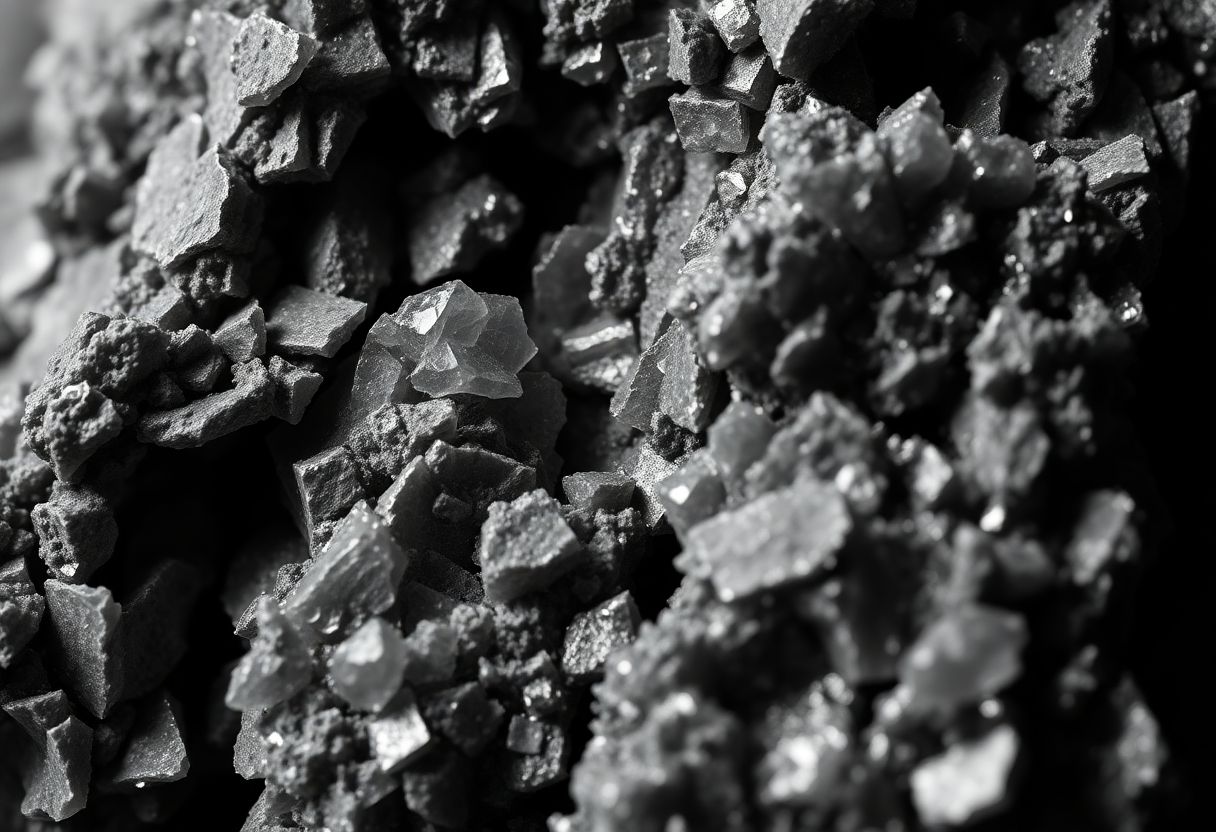
Graphite, with its distinctive grey-black color and soft, flaky texture, is a form of crystalline carbon. Its properties and structure make it a fascinating subject in the context of material classification. Let's examine the characteristics of graphite in detail:
Structure: Graphite consists of layers of carbon atoms arranged in a hexagonal pattern. These layers, known as graphene sheets, are stacked and held together by weak van der Waals forces. This layered structure is key to many of graphite's unique properties.
Electrical Conductivity: Unlike most ceramics, graphite is an excellent conductor of electricity. The electron configuration in graphite allows for easy movement of electrons within the graphene layers, resulting in high electrical conductivity along these planes.
Thermal Conductivity: Graphite also exhibits high thermal conductivity, particularly along the graphene layers. This property stands in stark contrast to the thermal insulation typically associated with ceramics.
Lubrication Properties: The weak interlayer bonds in graphite allow the layers to slide over each other easily, making graphite an excellent solid lubricant. This property is not typically associated with ceramics.
High Melting Point: Despite its softness, graphite has a remarkably high melting point of over 3600°C (6512°F), a characteristic it shares with many ceramic materials.
Chemical Stability: Graphite is highly resistant to many chemicals and remains stable at high temperatures, a property it shares with many ceramics.
Anisotropy: The properties of graphite vary significantly depending on the direction (parallel or perpendicular to the layers), a characteristic known as anisotropy.
The Ceramic Debate: Where Does Graphite Stand?
The classification of graphite as a ceramic is a subject of ongoing debate in the materials science community. Let's examine the arguments for and against its inclusion in the ceramic category:
Arguments for Classification as a Ceramic:
- Graphite meets the basic definition of a ceramic as an inorganic, non-metallic solid.
- It has a defined crystalline structure, albeit a unique one.
- Graphite shares some properties with ceramics, such as high melting point and chemical stability.
- Some materials science textbooks and literature classify graphite as a ceramic based on its chemical composition (pure carbon) and crystal structure.
Arguments Against Classification as a Ceramic:
- Graphite's electrical and thermal conductivity are atypical for ceramics.
- Its softness and lubricating properties are contrary to the hardness and brittleness associated with most ceramics.
- The bonding in graphite (covalent within layers, van der Waals between layers) differs from the ionic or strong covalent bonding typical in ceramics.
- Graphite's anisotropic properties are not commonly observed in traditional ceramic materials.
Given these conflicting characteristics, many scientists argue that graphite, along with other carbon-based materials like diamond and fullerenes, should be placed in a separate category. Terms like "carbon ceramics" or simply "carbon materials" have been proposed to accommodate these unique substances.
The Significance of Material Classification
The debate over graphite's classification might seem academic, but it has real-world implications. How we categorize materials affects how we approach their study, development, and application. It influences everything from educational curricula to industrial processes and regulatory frameworks.
Moreover, the graphite question highlights the evolving nature of materials science. As our understanding of materials at the atomic and molecular level deepens, and as we develop new materials with unprecedented combinations of properties, traditional classification systems are being challenged.
This evolution in materials science is driving innovation across multiple fields:
-
Energy Storage: Graphite's unique properties make it crucial in lithium-ion batteries, powering everything from smartphones to electric vehicles.
-
Aerospace: Both ceramics and graphite play vital roles in developing heat-resistant materials for spacecraft and high-performance aircraft.
-
Electronics: Advanced ceramics and graphene (a single layer of graphite) are pushing the boundaries of what's possible in electronic devices.
-
Medical Implants: Bioceramics and carbon-based materials are revolutionizing the field of medical implants, offering new solutions for joint replacements and tissue engineering.
The Future of Materials Science: Blurring Boundaries
As we look to the future, it's clear that the boundaries between different classes of materials will continue to blur. Advanced materials research is increasingly focused on creating composites and hybrid materials that combine the best properties of different material classes.
For instance, ceramic matrix composites (CMCs) incorporate ceramic fibers into a ceramic matrix, resulting in materials that retain the high-temperature resistance of ceramics while dramatically improving toughness and reducing brittleness. Similarly, graphene-enhanced ceramics are being developed, combining the strength and heat resistance of ceramics with the conductivity and flexibility of graphene.
These developments suggest that our current system of material classification may need to evolve. Instead of rigid categories, we may move towards a more nuanced, property-based classification system that better reflects the complexity of modern materials.
Conclusion: Embracing Complexity in Materials Science
So, is graphite a ceramic? The answer remains ambiguous. Graphite shares some characteristics with ceramics but differs significantly in others. This ambiguity, far from being a problem, is a testament to the rich complexity of the material world and the ever-evolving nature of scientific understanding.
The case of graphite serves as a valuable reminder that in science, categories and classifications are tools to aid our understanding, not immutable laws of nature. As we continue to explore and manipulate materials at the atomic level, we must be prepared to revisit and revise our classifications.
Whether we ultimately decide to class graphite as a ceramic, a carbon material, or something in between, its importance in technology and industry is undeniable. From the humble pencil to cutting-edge battery technology and aerospace applications, graphite continues to play a crucial role in our world.
As materials science advances, it promises to deliver new materials with unprecedented properties and capabilities. These developments will not only challenge our systems of classification but also open up exciting possibilities for solving some of humanity's most pressing challenges in energy, environment, health, and beyond.
In embracing the complexity exemplified by materials like graphite, we open ourselves to a deeper understanding of the material world and the almost limitless potential it holds for technological advancement. The future of materials science is not about fitting everything into neat categories, but about exploring the rich spectrum of possibilities that exist when we push the boundaries of what we thought we knew.