The Wonders of Wood: Nature’s Remarkable Material
Wood has been an integral part of human civilization for millennia, serving as a versatile and renewable resource that continues to shape our world. From ancient tools to modern skyscrapers, wood's remarkable properties have made it an indispensable material across countless applications. In this comprehensive exploration, we'll delve into the fascinating world of wood, examining its structure, properties, uses, and future potential.
Understanding Wood: From Tree to Timber
The Biological Origins of Wood
At its core, wood is the complex tissue that forms the trunks and branches of trees. It's a natural composite material, primarily composed of cellulose fibers bound together by lignin. This unique structure, perfected by evolution over millions of years, allows trees to grow to immense heights and live for centuries or even millennia.
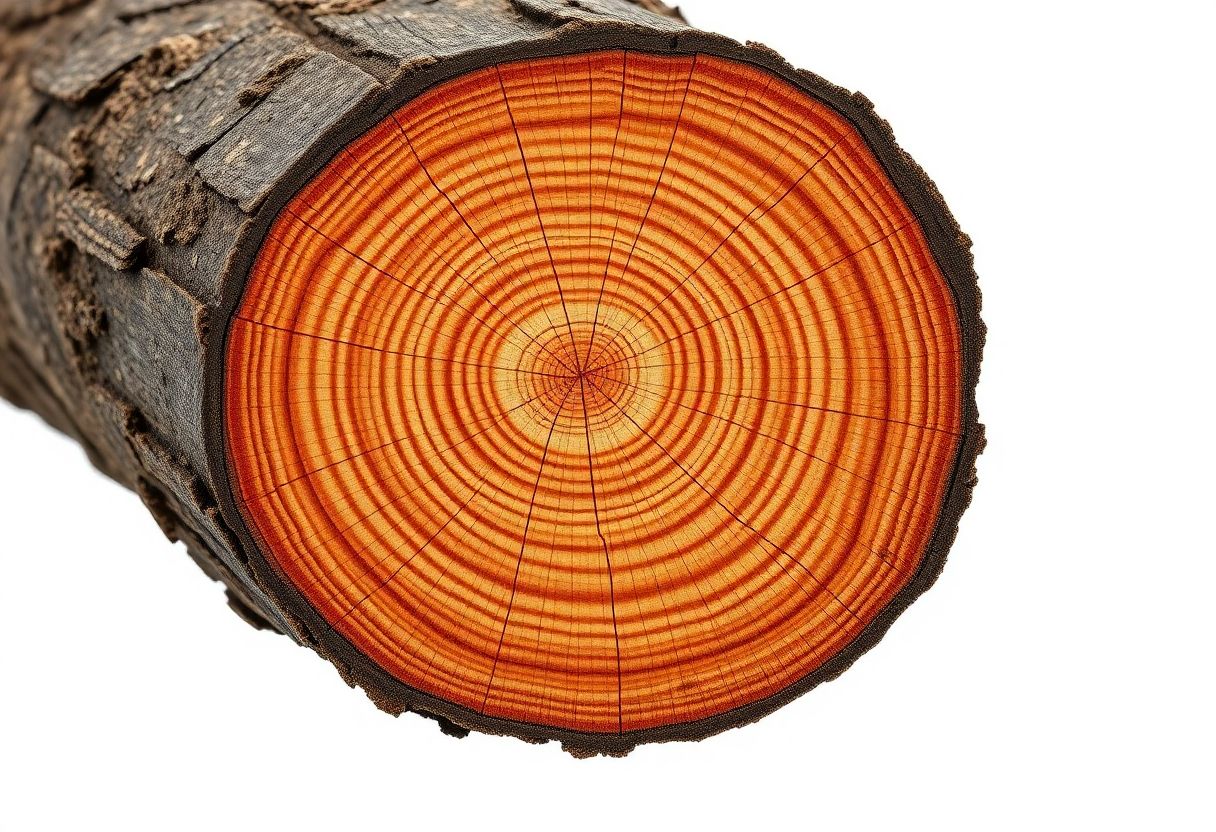
The formation of wood occurs in the cambium, a thin layer of living cells just beneath the bark. Each growing season, the cambium produces new wood cells, creating the familiar growth rings visible in cross-sections of tree trunks. These rings not only mark the passage of time but also provide valuable data about past climate conditions and tree health.
The Anatomy of Wood
To truly appreciate wood, we must understand its intricate structure. A typical tree trunk consists of several distinct layers:
- Bark: The outer protective layer
- Phloem: Inner bark that transports nutrients
- Cambium: The growth layer that produces new wood
- Sapwood: Young, living wood that conducts water and nutrients
- Heartwood: Older, denser core wood that provides structural support
- Pith: The soft center of the trunk
The wood itself is composed of elongated cells called xylem, which are arranged in two primary directions: longitudinal cells running parallel to the trunk and ray cells radiating from the center outward. This cellular architecture gives wood its characteristic grain pattern and directional strength properties.
The Chemistry of Wood: Nature's Complex Polymer
Wood's chemical composition is a marvel of natural engineering. The three primary components are:
- Cellulose (40-50%): A long-chain polymer that provides the primary structural framework
- Hemicellulose (25-35%): Shorter-chain polymers that support the cellulose structure
- Lignin (20-35%): A complex polymer that acts as a binder and stiffener
These proportions can vary significantly between species and even within different parts of the same tree. Understanding this chemical makeup is crucial for industries that process wood, from paper manufacturing to the production of advanced biomaterials.
Wood Classification: Hardwoods and Softwoods
Wood is broadly categorized into two main groups: hardwoods and softwoods. Despite their names, these classifications are based on the trees' seed structure rather than the wood's actual hardness.
Hardwoods come from angiosperm trees, which are typically deciduous and produce enclosed seeds. Examples include oak, maple, and walnut. These woods are generally denser, more durable, and often prized for their aesthetic qualities in furniture and flooring.
Softwoods, on the other hand, come from gymnosperm trees, mainly conifers like pine, spruce, and fir. These trees produce naked seeds and tend to grow more quickly than hardwoods. Softwoods are typically less dense and easier to work with, making them popular in construction and paper production.
The Remarkable Properties of Wood
Strength and Durability
Wood's strength-to-weight ratio is truly impressive, rivaling that of steel in some species. This property stems from its cellular structure and the alignment of cellulose fibers. Wood is strongest when force is applied parallel to the grain, which is why wooden beams are typically oriented with the grain running lengthwise.
Different wood species exhibit varying levels of strength and durability. For instance, oak has a Janka hardness rating of 1,360 lbf (pound-force), while balsa wood rates at just 100 lbf. This wide range of properties allows engineers and craftsmen to select the perfect wood for each application.
Flexibility and Elasticity
Unlike many building materials, wood possesses a degree of flexibility that allows it to bend without breaking. This elasticity is particularly valuable in applications where the material must withstand dynamic loads, such as in boat building or in structures located in earthquake-prone regions.
The modulus of elasticity (MOE) for wood varies widely between species. For example, Douglas fir has an MOE of about 1.95 million psi (pounds per square inch), while Eastern white pine is around 1.24 million psi.
Thermal and Acoustic Properties
Wood is an excellent natural insulator, with a thermal conductivity ranging from 0.1 to 0.4 W/(m·K) for most species. This low thermal conductivity makes wood an energy-efficient choice for building construction, helping to maintain comfortable indoor temperatures with less energy input.
The acoustic properties of wood are equally impressive. Its ability to absorb and reflect sound makes it ideal for musical instruments and concert halls. Different wood species can produce varying tonal qualities, which is why luthiers carefully select specific woods for different parts of instruments.
Hygroscopic Nature
Wood's ability to absorb and release moisture from its environment is both a blessing and a challenge. This hygroscopic property allows wooden structures to help regulate indoor humidity levels naturally. However, it also means that wood can swell, shrink, or warp with changes in moisture content.
The fiber saturation point (FSP) of wood, typically around 30% moisture content, is a critical factor in wood behavior. Below the FSP, changes in moisture content can significantly affect wood's dimensions and properties.
Environmental Aspects of Wood
Carbon Sequestration and Sustainability
One of wood's most significant environmental benefits is its role in carbon sequestration. As trees grow, they absorb carbon dioxide from the atmosphere, converting it into biomass. When wood is used in long-lasting products like buildings or furniture, this carbon remains locked away for decades or even centuries.
According to the Food and Agriculture Organization (FAO), one cubic meter of wood stores approximately 0.9 tonnes of CO2. This makes wood an attractive material for combating climate change, especially when sourced from sustainably managed forests.
Biodegradability and Life Cycle Considerations
At the end of its useful life, wood naturally decomposes, returning nutrients to the ecosystem. This biodegradability stands in stark contrast to many synthetic materials that persist in the environment for centuries. However, it's important to note that treated or painted wood may not biodegrade as readily and requires special consideration for disposal.
Life cycle assessments (LCAs) consistently show that wood products have lower environmental impacts compared to functionally equivalent products made from other materials. For example, a study by the University of Washington found that wood-framed buildings had 26% lower global warming potential than steel-framed alternatives.
Processing and Utilizing Wood
From Forest to Finished Product
The journey from standing tree to usable wood product involves several key steps:
-
Harvesting: Modern forestry practices aim to balance timber production with ecosystem health. Techniques like selective cutting and sustainable forestry management help ensure the long-term viability of forest resources.
-
Seasoning: Freshly cut wood must be dried to remove excess moisture. Air drying can take months to years, while kiln drying accelerates the process to days or weeks. Proper seasoning is crucial to prevent warping, cracking, and other defects in the final product.
-
Preservation: To protect wood from decay, insects, and weathering, various treatments are applied. These range from traditional methods like charring to modern chemical treatments and heat modification techniques.
-
Cutting and Shaping: Advanced woodworking techniques, including computer-controlled CNC machining, allow for precise and efficient production of wood components.
Innovations in Wood Technology
Recent advances are expanding the possibilities for wood use:
-
Cross-Laminated Timber (CLT): This engineered wood product consists of layers of lumber bonded perpendicular to each other, creating panels with exceptional strength and stability. CLT is enabling the construction of wooden high-rise buildings, offering a more sustainable alternative to concrete and steel.
-
Nanocellulose: By breaking wood down to its nanoscale fibers, researchers are developing super-strong, lightweight materials with potential applications in electronics, medical devices, and advanced composites.
-
Transparent Wood: Scientists have developed a method to remove lignin from wood and replace it with a transparent polymer, creating a material that is stronger and more insulating than glass.
The Future of Wood: Meeting Global Challenges
As we face pressing issues like climate change and resource depletion, wood is experiencing a renaissance in technology and application:
Tall Timber Buildings
Advances in engineered wood products are enabling the construction of wooden skyscrapers. Projects like the 18-story Mjøstårnet in Norway demonstrate the feasibility of tall timber structures. These buildings offer significant environmental benefits, with some studies suggesting they could reduce carbon emissions from construction by up to 31% compared to conventional methods.
Wood-based Textiles
Innovative processes are transforming wood pulp into sustainable fabrics, offering alternatives to resource-intensive materials like cotton. Lyocell, for example, is made from dissolved wood pulp and requires significantly less water to produce than cotton.
Biofuels and Biochemicals
Wood-derived biofuels and biochemicals are becoming increasingly important as we seek alternatives to fossil fuels. Cellulosic ethanol, produced from woody biomass, has the potential to reduce greenhouse gas emissions by up to 86% compared to gasoline, according to the U.S. Department of Energy.
Advanced Composites
Combining wood with other materials is producing high-performance products for various industries. Wood-plastic composites, for instance, offer improved durability and reduced maintenance compared to traditional wood products.
Conclusion: The Enduring Legacy of Wood
From the mighty redwoods to the humble pencil, wood continues to play a vital role in our world. Its unique combination of strength, beauty, and versatility has made it indispensable throughout human history. As we look to create a more sustainable future, wood's renewable nature and carbon-sequestering abilities make it more relevant than ever.
The ongoing research and innovation in wood science and technology promise to unlock even more potential from this remarkable material. Whether in traditional applications or cutting-edge developments, wood remains a testament to nature's ingenuity and humanity's ability to harness it.
As we face the challenges of the 21st century, wood stands as a bridge between our past and our future—a material that has supported human progress for millennia and continues to offer solutions for a sustainable world. By understanding and appreciating the extraordinary properties of wood, we can better utilize its strengths and ensure its sustainable use for generations to come.