Unlocking the Secrets of Airflow: The Fascinating World of Wind Tunnels
Wind tunnels have long captivated the imagination of scientists, engineers, and aviation enthusiasts alike. These remarkable testing facilities serve as gateways to understanding the complex interactions between objects and the air that surrounds them. From designing sleek aircraft that slice through the sky to engineering buildings that stand tall against hurricane-force winds, wind tunnels play a pivotal role in shaping our modern world. In this comprehensive exploration, we'll delve deep into the inner workings of wind tunnels, uncover their rich history, and examine their far-reaching applications across various fields of science and engineering.
The Genesis of Wind Tunnel Technology
To truly appreciate the significance of wind tunnels, we must first understand their origins. The concept of wind tunnel testing dates back to the late 19th century, a time when human flight was still a dream on the horizon. In 1871, a British engineer named Frank Wenham made history by constructing what is widely recognized as the world's first wind tunnel. Wenham's pioneering device was modest by today's standards – a mere 12 feet in length with an 18-inch square cross-section, capable of generating wind speeds up to 40 miles per hour. This groundbreaking invention laid the foundation for a revolution in aerodynamic research.
However, it was the Wright brothers, Orville and Wilbur, who truly popularized the use of wind tunnels in aviation development. In their relentless pursuit of powered flight, the Wrights constructed their own wind tunnel in 1901. This humble device, built in their bicycle shop, played a crucial role in their success. By testing over 200 wing shapes, they gathered invaluable data that ultimately led to the historic first flight at Kitty Hawk in 1903. The Wright brothers' use of wind tunnel testing demonstrated its immense potential and set the stage for its widespread adoption in aerospace engineering.
Anatomy of a Modern Wind Tunnel
Today's wind tunnels are marvels of engineering, far more sophisticated than their early predecessors. To understand how these complex machines function, let's examine their key components:
-
Drive System: At the heart of every wind tunnel lies its drive system. This typically consists of powerful electric motors coupled with a fan or compressor. The drive system is responsible for generating the high-speed airflow necessary for testing. In large-scale facilities, these motors can produce thousands of horsepower, creating wind speeds that range from gentle breezes to several times the speed of sound.
-
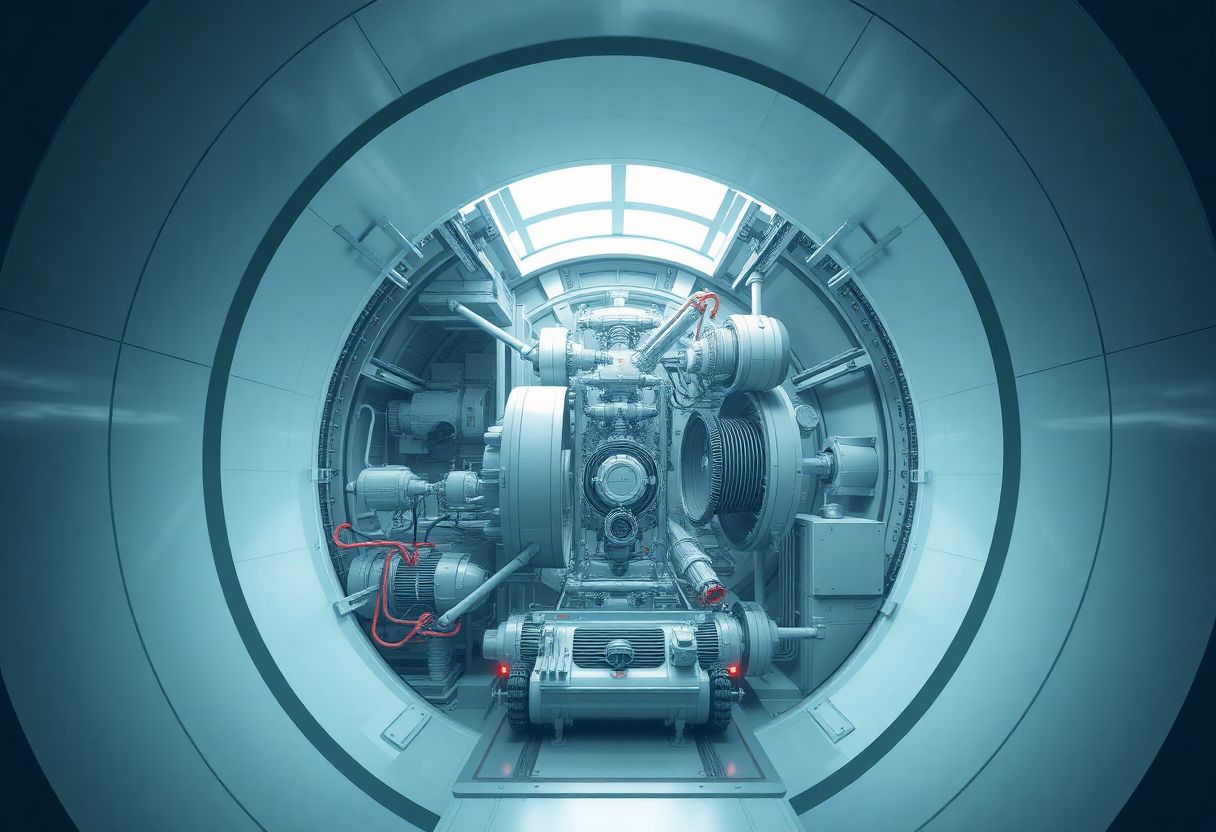
Test Section: This is where the magic happens. The test section is a carefully designed chamber where models or full-scale objects are placed for aerodynamic analysis. It's often equipped with transparent walls to allow for visual observation and may include sophisticated mounting systems to hold test objects in place while minimizing interference with airflow.
-
Contraction Cone: Upstream of the test section, the contraction cone plays a crucial role in accelerating and smoothing the airflow. As air passes through this narrowing section, its velocity increases while turbulence decreases, ensuring a uniform flow in the test section.
-
Diffuser: Downstream of the test section, the diffuser gradually expands the cross-sectional area of the tunnel. This slows down the air, converting its kinetic energy back into pressure energy, which helps to reduce the power required to operate the tunnel.
-
Turning Vanes: In closed-circuit wind tunnels, turning vanes are installed at the corners to guide the airflow smoothly around bends. These curved airfoils minimize energy loss and maintain flow quality throughout the circuit.
-
Honeycomb and Screens: These components are typically placed upstream of the contraction cone. The honeycomb, a matrix of hexagonal cells, helps to straighten the airflow, while screens break up large-scale turbulence into smaller, more manageable eddies.
-
Balance System: Highly sensitive force balances are often integrated into the test section floor or model support system. These instruments measure the aerodynamic forces and moments acting on the test object with exceptional precision.
-
Data Acquisition System: Modern wind tunnels are equipped with advanced computer systems that collect, process, and analyze vast amounts of data in real-time. This includes information from force balances, pressure sensors, and flow visualization techniques.
The Science Behind Wind Tunnel Operation
The fundamental principle behind wind tunnel operation is deceptively simple: instead of moving an object through the air, we move air past a stationary object. This approach allows researchers to study aerodynamics in a controlled environment, free from the variables and risks associated with real-world testing. However, the science underlying this principle is far from simple.
At its core, wind tunnel testing relies on the concept of dynamic similarity. This principle states that the flow patterns around geometrically similar objects will be alike if certain dimensionless parameters are equal. The most important of these parameters is the Reynolds number, which represents the ratio of inertial forces to viscous forces in a fluid flow. By matching the Reynolds number of a scaled model in a wind tunnel to that of a full-size object in real-world conditions, researchers can make accurate predictions about the object's aerodynamic performance.
The operation of a wind tunnel involves several key steps:
-
Air Circulation: In a closed-circuit tunnel, air is continuously recirculated through the system. The drive system pulls air through the circuit, creating a controlled flow of air that passes through the test section.
-
Flow Conditioning: Before reaching the test section, the air passes through a series of devices designed to improve flow quality. The honeycomb and screens work in tandem to reduce turbulence and create a uniform velocity profile.
-
Acceleration: As the air moves through the contraction cone, its velocity increases dramatically. This acceleration is crucial for achieving the desired test conditions in the test section.
-
Test Section Flow: In the test section, the high-speed, uniform airflow interacts with the test object. This interaction creates pressure differences and shear stresses on the object's surface, which are the primary focus of most wind tunnel tests.
-
Data Collection: As the air flows around the test object, various instruments collect data on forces, pressures, and flow patterns. This may include force balances measuring lift and drag, pressure taps on the model surface, and flow visualization techniques.
-
Flow Deceleration: After passing through the test section, the air enters the diffuser where it slows down. This process helps to recover some of the energy put into the flow, improving the overall efficiency of the tunnel.
-
Recirculation: In closed-circuit tunnels, the air is then guided back to the beginning of the circuit via turning vanes, ready to begin the process anew.
Types of Wind Tunnels: Tailored for Every Need
Wind tunnels come in a variety of configurations, each designed to meet specific research requirements. The main types include:
-
Subsonic Wind Tunnels: These are the most common type, operating at speeds below Mach 0.8 (80% of the speed of sound). They are used for testing everything from aircraft and automobiles to buildings and sports equipment.
-
Transonic Wind Tunnels: Operating in the challenging range between Mach 0.8 and 1.2, these tunnels are crucial for studying the complex flow phenomena that occur as objects approach and exceed the speed of sound.
-
Supersonic Wind Tunnels: Designed for testing at speeds above Mach 1.2, these tunnels use specially shaped nozzles to accelerate air to supersonic velocities. They are essential for developing high-speed aircraft and missiles.
-
Hypersonic Wind Tunnels: These advanced facilities simulate speeds above Mach 5, often used for studying spacecraft reentry conditions and advanced propulsion systems.
-
Vertical Wind Tunnels: Unlike horizontal tunnels, these create an upward airflow, useful for testing parachutes, studying building aerodynamics, and even recreational skydiving training.
-
Environmental Wind Tunnels: These specialized tunnels can simulate various weather conditions, including temperature extremes, humidity, and precipitation, alongside wind effects.
-
Acoustic Wind Tunnels: Designed with special features to minimize background noise, these tunnels are used to study aeroacoustics, crucial for developing quieter aircraft and wind turbines.
Advanced Measurement Techniques: Seeing the Invisible
One of the most fascinating aspects of wind tunnel testing is the array of techniques used to visualize and measure airflow. These methods allow researchers to observe phenomena that would be invisible to the naked eye:
-
Smoke Visualization: By injecting smoke or vapor into the airstream, researchers can observe flow patterns around objects. This technique provides an intuitive visual representation of streamlines and areas of turbulence.
-
Particle Image Velocimetry (PIV): This advanced technique uses laser illumination to track the movement of tiny particles in the airflow. High-speed cameras capture these particles' motion, allowing for detailed mapping of velocity fields around the test object.
-
Schlieren Photography: Based on the principle that light bends when passing through density gradients in air, Schlieren imaging makes shock waves and other density variations visible. This is particularly useful in supersonic and hypersonic testing.
-
Pressure-Sensitive Paint: This innovative method uses special paint that changes luminescence based on air pressure. When applied to a model, it provides a full-field view of surface pressure distribution.
-
Hot-Wire Anemometry: Extremely fine wires heated by an electric current are used to measure air velocity with high precision. As air flows over the wire, it cools, changing its electrical resistance, which can be measured and correlated to flow velocity.
-
Laser Doppler Anemometry: This non-intrusive technique uses the Doppler effect to measure air velocity. It's particularly useful for studying turbulent flows and boundary layers.
Applications Beyond Aerospace: Wind Tunnels in Everyday Life
While wind tunnels are most commonly associated with aircraft design, their applications extend far beyond the realm of aviation:
-
Automotive Engineering: Car manufacturers use wind tunnels extensively to improve vehicle aerodynamics, enhancing fuel efficiency and stability. Formula 1 teams, in particular, rely heavily on wind tunnel testing to gain competitive edges in race car design.
-
Architecture and Civil Engineering: Wind tunnels play a crucial role in designing skyscrapers and bridges that can withstand high winds. By testing scale models, engineers can optimize building shapes and structural elements to minimize wind loads and ensure safety.
-
Sports Equipment Development: From golf balls to bicycles, wind tunnels help in designing sports equipment that offers better performance. For example, wind tunnel testing has been instrumental in developing more aerodynamic helmets for cyclists and speed skaters.
-
Environmental Studies: Urban planners and environmental scientists use wind tunnels to study pollution dispersion in cities, helping to design more livable urban spaces and improve air quality.
-
Wind Energy: The wind power industry relies on wind tunnel testing to develop more efficient wind turbine designs, optimizing blade shapes for maximum energy capture.
-
Thermal Management: Electronics manufacturers use specialized wind tunnels to study cooling strategies for computers and other heat-generating devices.
The Future of Wind Tunnel Testing
As we look to the future, wind tunnel technology continues to evolve, driven by advances in computing power, materials science, and measurement techniques:
-
Integration with Computational Fluid Dynamics (CFD): While CFD simulations have become increasingly powerful, they haven't replaced wind tunnels. Instead, we're seeing a synergistic relationship develop, where wind tunnel data is used to validate and improve CFD models, and CFD is used to guide wind tunnel testing strategies.
-
Advanced Materials and Manufacturing: The development of new materials and 3D printing technologies is revolutionizing model construction. Researchers can now create complex, instrumented models with unprecedented speed and precision.
-
Intelligent Testing Systems: Artificial intelligence and machine learning algorithms are being integrated into wind tunnel control systems, optimizing test procedures and data analysis in real-time.
-
Extreme Condition Simulation: New wind tunnel designs are pushing the boundaries of what can be simulated, including hypersonic flows for space exploration and extreme weather events for climate research.
-
Virtual and Augmented Reality: These technologies are enhancing data visualization and analysis, allowing researchers to interact with wind tunnel data in immersive, three-dimensional environments.
Conclusion: The Enduring Legacy of Wind Tunnels
From their humble beginnings in Frank Wenham's workshop to today's cutting-edge facilities, wind tunnels have played an indispensable role in advancing our understanding of aerodynamics and fluid dynamics. They have been instrumental in shaping the modern world, from the aircraft that connect continents to the buildings that define our skylines.
As we face new challenges in fields like sustainable transportation, renewable energy, and space exploration, wind tunnels will continue to be at the forefront of innovation. Their ability to provide controlled, repeatable testing environments makes them invaluable tools for pushing the boundaries of what's possible in engineering and science.
The story of wind tunnels is a testament to human ingenuity and our relentless pursuit of knowledge. By allowing us to peer into the invisible world of airflow, these remarkable machines have unlocked secrets that have transformed our world. As we look to the future, wind tunnels will undoubtedly continue to play a crucial role in solving some of humanity's most pressing technological challenges, helping us to build a safer, more efficient, and more sustainable world.
In the end, wind tunnels remind us that sometimes, to understand the world around us, we need to create our own miniature versions of it. They stand as monuments to the power of scientific inquiry and the endless possibilities that arise when we dare to ask, "What if?" As long as there are questions about how objects interact with the air around them, wind tunnels will remain indispensable tools in our quest for answers.