Unveiling the Invisible: The Science and Wonder of Radar Technology
In a world increasingly reliant on advanced sensing technologies, radar stands out as a true marvel of human ingenuity. From guiding massive aircraft through impenetrable fog to peering into the hearts of distant storms, radar technology has revolutionized our ability to perceive and understand the world around us. This article delves deep into the fascinating realm of radar, exploring its inner workings, diverse applications, and the cutting-edge developments shaping its future.
The Fundamentals of Radar: Seeing with Radio Waves
At its core, radar (Radio Detection And Ranging) is a sensing system that uses radio waves to detect objects and determine their distance, speed, and sometimes even their shape. While our eyes rely on visible light to perceive the world, radar employs electromagnetic waves in the radio spectrum, allowing it to "see" in conditions where human vision fails.
The Basic Principles of Radar Operation
The operation of a radar system can be broken down into several key steps:
-
Wave Generation: At the heart of every radar system lies the magnetron, a specialized vacuum tube that generates high-frequency radio waves, typically in the microwave range. These waves are carefully tuned to specific frequencies, often between 300 MHz and 15 GHz, depending on the radar's intended purpose.
-
Transmission: Once generated, these radio waves are directed into a focused beam by an antenna. The design of this antenna is crucial, as it determines the radar's field of view and resolution. Modern phased array antennas can even steer the beam electronically, without any moving parts.
-
Propagation: The radio waves travel outward at the speed of light, approximately 299,792,458 meters per second. This known speed is fundamental to radar's ability to measure distance accurately.
-
Reflection: When the radio waves encounter an object, a portion of them bounce back towards the radar antenna. The amount of energy reflected depends on various factors, including the object's size, shape, and material composition. Metal objects, for instance, are excellent reflectors of radio waves.
-
Reception: The same antenna that transmitted the waves usually also serves as the receiver, alternating between these two roles many times per second. A component called a duplexer manages this rapid switching.
-
Signal Processing: Once received, the reflected waves are processed by specialized electronics. These systems filter out unwanted echoes and noise, then convert the raw signal data into useful information about detected objects.
-
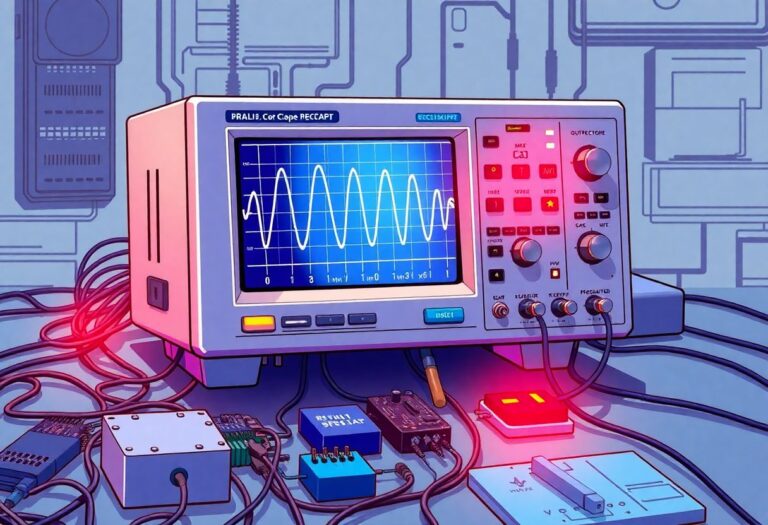
Display and Interpretation: The processed information is typically displayed on a screen for a human operator to interpret, though increasingly, artificial intelligence systems are being employed to analyze radar data automatically.
Measuring Distance and Speed: The Heart of Radar's Capabilities
Radar's ability to precisely measure the distance and speed of objects is what makes it such a powerful tool. Let's explore these fundamental capabilities in more detail:
Distance Measurement
Radar determines the distance to an object using a clever timing technique. Here's a step-by-step breakdown:
- The radar sends out a short pulse of radio waves.
- These waves travel at the known speed of light (c).
- The system measures the time (t) it takes for the reflection to return.
- Using the formula: Distance = (c × t) ÷ 2, the radar calculates the object's distance.
We divide by 2 because the waves travel to the object and back. For example, if it takes 0.0001 seconds for the reflection to return:
Distance = (299,792,458 m/s × 0.0001 s) ÷ 2 ≈ 14,990 meters
This principle allows radar to measure distances with remarkable precision, often to within a few meters over ranges of many kilometers.
Speed Measurement
To measure speed, many radar systems employ the Doppler effect, a phenomenon first described by Austrian physicist Christian Doppler in 1842. Here's how it works in the context of radar:
- The radar sends out a continuous wave at a fixed frequency.
- If the target is moving relative to the radar, the reflected waves will have a slightly different frequency due to the Doppler effect.
- The radar measures this frequency shift.
- The magnitude of the shift is directly related to the target's radial velocity (speed towards or away from the radar).
The formula for the Doppler shift is:
Δf = 2v × f₀ / c
Where:
Δf is the change in frequency
v is the relative velocity of the target
f₀ is the original transmitted frequency
c is the speed of light
For example, a car moving at 100 km/h (about 28 m/s) detected by a radar operating at 10 GHz would produce a Doppler shift of about 1.87 kHz. By measuring this shift, the radar can determine the car's speed with high accuracy.
Types of Radar Systems: A Diverse Array of Technologies
As radar technology has evolved, various specialized types have been developed to meet different needs. Here are some of the most common:
Pulse Radar
This is the most widespread type of radar. It works by sending out short, powerful pulses of radio waves and listening for echoes between pulses. Pulse radar excels at measuring distance and is widely used in aviation, maritime navigation, and weather monitoring.
Key characteristics of pulse radar include:
- High peak power, but lower average power consumption
- Good range resolution
- Ability to detect multiple targets at different ranges simultaneously
Continuous-Wave (CW) Radar
Instead of pulses, CW radar transmits a continuous beam of radio waves. It's particularly adept at measuring speed using the Doppler effect but isn't as effective at determining distance without additional techniques. This is the type commonly used in police speed guns and some sports applications, like measuring the speed of tennis serves.
CW radar benefits include:
- Excellent velocity resolution
- Simpler hardware design
- Lower peak power requirements
Synthetic Aperture Radar (SAR)
SAR is a sophisticated radar technique that uses the motion of the radar antenna to create high-resolution images of landscapes and objects. As the antenna moves, it collects data from multiple positions, which are then combined using complex signal processing algorithms to create a single, detailed image.
SAR advantages include:
- Very high spatial resolution, often sub-meter
- Ability to penetrate cloud cover and operate day or night
- Wide area coverage from airborne or space-based platforms
Phased Array Radar
This advanced type of radar uses an array of small antenna elements, each of which can be individually controlled. By adjusting the phase of the signal to each element, the radar beam can be steered electronically, without any moving parts. This allows for rapid scanning and the ability to track multiple targets simultaneously.
Phased array benefits include:
- Extremely fast beam steering
- Ability to form multiple beams for simultaneous operations
- Improved reliability due to lack of moving parts
Applications of Radar: From War Rooms to Weather Forecasts
The versatility of radar technology has led to its adoption in a wide range of fields. Let's explore some of the most significant applications:
Military and Defense
Radar was originally developed for military purposes during World War II, and it remains a crucial technology in modern warfare:
- Air Defense: Advanced radar systems like the AN/TPY-2 can detect and track multiple aircraft and missiles at ranges exceeding 1000 km.
- Weapon Guidance: Radar guides missiles to their targets with pinpoint accuracy. The AIM-120 AMRAAM air-to-air missile, for instance, uses an active radar seeker for terminal guidance.
- Battlefield Awareness: Ground-based systems like the AN/TPQ-53 can detect and locate enemy artillery, mortars, and rockets, allowing for rapid countermeasures.
Aviation
Radar is indispensable in modern aviation, playing crucial roles in navigation, safety, and air traffic control:
- Air Traffic Control: Systems like the ASR-11 airport surveillance radar can track aircraft up to 60 nautical miles away, helping controllers guide planes safely through crowded airspace.
- Weather Avoidance: Airborne weather radar allows pilots to detect and avoid dangerous storms, significantly enhancing flight safety.
- Terrain Mapping: Radar altimeters provide precise height information, crucial for low-altitude flight and automated landing systems.
Meteorology and Climate Science
Weather forecasting and climate research rely heavily on radar technology:
- Doppler Weather Radar: Systems like the NEXRAD network in the United States can detect precipitation, measure wind speeds, and even identify the formation of tornadoes.
- Precipitation Measurement: Dual-polarization radar can distinguish between different types of precipitation (rain, snow, hail) and estimate rainfall rates with high accuracy.
- Climate Monitoring: Satellite-based radar systems like NASA's CloudSat provide detailed data on cloud structures and precipitation patterns, crucial for understanding global climate systems.
Maritime Applications
Radar is essential for safe navigation at sea:
- Collision Avoidance: Marine radar systems help ships detect other vessels, landmasses, and obstacles, especially in low visibility conditions.
- Navigation: Radar is used to identify coastlines, buoys, and other navigational aids, complementing GPS systems.
- Search and Rescue: Radar plays a vital role in locating ships and aircraft in distress during maritime emergencies.
Automotive Safety
Modern vehicles increasingly incorporate radar for advanced driver assistance systems (ADAS):
- Adaptive Cruise Control: Automotive radar systems maintain safe distances from other vehicles automatically.
- Collision Avoidance: Short-range radar detects obstacles and helps prevent accidents by triggering automatic braking systems.
- Parking Assistance: Radar sensors guide drivers into tight parking spaces and enable automated parking features.
Space Exploration
Radar technology has been instrumental in our exploration of the solar system:
- Planetary Mapping: Spacecraft like NASA's Magellan used radar to map the surface of Venus, penetrating its thick cloud cover.
- Asteroid Detection: Ground-based radar observatories like Arecibo (before its collapse) and Goldstone play crucial roles in identifying and characterizing potentially hazardous near-Earth objects.
- Landing Assistance: Radar altimeters are essential for the precise landing of spacecraft on other planets, as demonstrated in the Mars rover missions.
The Future of Radar: Pushing the Boundaries of Perception
As we look to the future, radar technology continues to evolve, promising even greater capabilities and applications. Some of the most exciting developments include:
Cognitive Radar
Next-generation radar systems will incorporate artificial intelligence to adapt their operation based on the environment and learn to recognize and classify targets more accurately. These cognitive radars will be able to:
- Optimize their waveforms and processing in real-time to improve detection in challenging conditions.
- Learn from experience to better distinguish between different types of targets.
- Collaborate with other sensors and radar systems to build a more comprehensive picture of the environment.
Quantum Radar
Still in the early research stages, quantum radar could potentially revolutionize the field by exploiting the principles of quantum entanglement. Theoretical advantages include:
- The ability to detect stealth aircraft by overcoming traditional radar-absorbing materials.
- Extreme sensitivity, potentially able to detect single photons.
- Improved resistance to jamming and other forms of electronic countermeasures.
While still largely theoretical, research institutions and defense agencies worldwide are investing heavily in this promising technology.
Terahertz Radar
Operating at frequencies between traditional radar and infrared light, terahertz radar systems promise unique capabilities:
- Extremely high-resolution imaging, potentially able to detect concealed weapons or explosives.
- The ability to penetrate some materials that are opaque to visible light and traditional radar.
- Potential applications in medical imaging and non-destructive testing of materials.
Software-Defined Radar
As radar hardware becomes more flexible, software-defined radar systems will allow for greater adaptability and upgradability:
- The ability to change radar functionality through software updates, rather than hardware replacements.
- Increased interoperability between different radar systems and other sensor types.
- Reduced costs and improved longevity for radar installations.
Conclusion: The Enduring Impact of Radar Technology
From its origins as a tool of war to its diverse modern applications, radar has revolutionized our ability to sense and understand the world around us. By harnessing the power of radio waves, we've created a technology that allows us to see through darkness, peer through clouds, measure the speed of distant objects, and even map the surface of other planets.
As radar technology continues to advance, it promises to play an ever-increasing role in our lives – from making our roads safer to helping us understand climate change and explore the cosmos. The invisible radio waves that surround us are hard at work, helping us to see what our eyes cannot, and pushing the boundaries of human perception.
The story of radar is a testament to human ingenuity and the power of scientific discovery. As we face the challenges of the 21st century, from autonomous transportation to space exploration and environmental monitoring, radar will undoubtedly continue to be at the forefront of technological innovation, helping us to unveil the invisible and navigate an increasingly complex world.