The Marvels of Jet Propulsion: Powering Modern Aviation
Jet engines have revolutionized air travel, allowing us to traverse vast distances in a matter of hours. These technological marvels have not only transformed the aviation industry but have also had a profound impact on global commerce, international relations, and our modern way of life. In this comprehensive exploration, we'll delve into the fascinating world of jet propulsion, uncovering the intricate workings of these powerful machines and their far-reaching implications.
The Fundamentals of Jet Propulsion
At its core, a jet engine is an ingenious device that converts the chemical energy stored in fuel into kinetic energy, propelling aircraft through the sky with remarkable efficiency. The basic principle behind jet propulsion is rooted in Newton's Third Law of Motion: for every action, there is an equal and opposite reaction. In the case of a jet engine, the "action" is the expulsion of hot gases at high velocity, and the "reaction" is the forward thrust that drives the aircraft.
The Anatomy of a Jet Engine
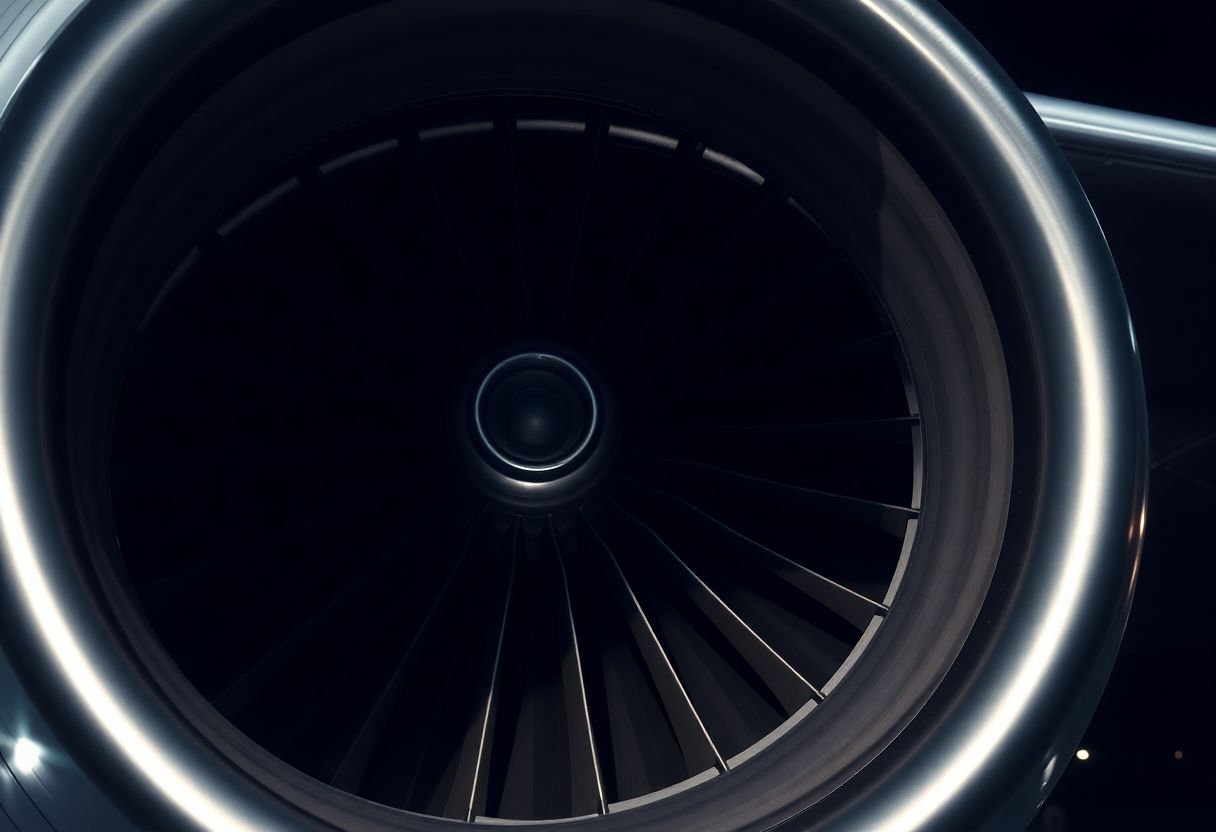
To understand how jet engines work, it's essential to familiarize ourselves with their key components:
- Intake: The front section that draws in large volumes of air.
- Compressor: A series of spinning blades that compress the incoming air.
- Combustion chamber: Where fuel is mixed with compressed air and ignited.
- Turbine: Extracts energy from the hot gases to power the compressor.
- Exhaust nozzle: Accelerates the exhaust gases to produce thrust.
These components work in harmony to create the powerful propulsion that enables modern aviation.
The Jet Engine Cycle: A Step-by-Step Journey
Let's take a closer look at the fascinating journey of air through a typical turbojet engine:
-
Air Intake: As the aircraft moves forward, enormous quantities of air are drawn into the engine through the intake. This process is crucial for the engine's efficiency and performance.
-
Compression: The incoming air is then compressed by a series of rotating blades in the compressor section. This compression increases both the pressure and temperature of the air, preparing it for the combustion process. Modern high-bypass turbofan engines can achieve pressure ratios of up to 50:1, significantly enhancing efficiency.
-
Combustion: In the combustion chamber, highly compressed air is mixed with atomized jet fuel. This mixture is then ignited, creating a continuous, controlled explosion. The resulting hot gases can reach temperatures of over 2,000°C (3,632°F), which is well above the melting point of most metals.
-
Power Generation: The extremely hot, high-pressure gases expand and rush towards the rear of the engine, passing through the turbine section. The turbine extracts some energy from this gas flow to power the compressor and other engine systems. Modern turbine blades are marvels of materials science, often made from single-crystal superalloys and cooled by intricate internal air channels.
-
Thrust Production: Finally, the remaining hot gases are expelled at high velocity through the exhaust nozzle. This high-speed ejection of mass creates the thrust that propels the aircraft forward, in accordance with Newton's Third Law of Motion. In some military aircraft, an afterburner can be engaged at this stage, injecting additional fuel into the exhaust stream to dramatically increase thrust for short periods.
Types of Jet Engines: Diverse Solutions for Varied Applications
The aviation industry employs several types of jet engines, each designed to meet specific operational requirements:
-
Turbojets: The simplest type of jet engine, used primarily in early jet aircraft and some military applications. While less efficient than modern designs, they can achieve very high speeds.
-
Turbofans: The most common type in modern commercial aviation, offering an optimal balance of speed and fuel efficiency. High-bypass turbofans, with bypass ratios up to 12:1, power most of today's airliners.
-
Turboprops: Ideal for smaller, slower aircraft, these engines drive a propeller for excellent efficiency at lower speeds and altitudes. The Pratt & Whitney Canada PT6, powering many general aviation aircraft, is a prime example of this technology.
-
Ramjets: Used in high-speed military aircraft and missiles, these simple engines have no moving parts and rely on the aircraft's forward motion to compress incoming air. They only operate efficiently at supersonic speeds.
-
Scramjets: Experimental engines designed for hypersonic flight (above Mach 5). NASA's X-43A demonstrated scramjet technology, briefly achieving a speed of Mach 9.6 in 2004.
The Physics of Jet Propulsion: A Symphony of Scientific Principles
Jet propulsion is a testament to our understanding and application of fundamental physical principles:
-
Newton's Laws of Motion: Particularly the Third Law, which explains how the rearward expulsion of gases creates forward thrust.
-
Bernoulli's Principle: This principle, which relates fluid pressure to velocity, is crucial in the design of engine intakes and compressor blades.
-
The Brayton Cycle: This thermodynamic cycle describes the idealized operation of a jet engine, involving compression, combustion at constant pressure, and expansion.
-
The First and Second Laws of Thermodynamics: These fundamental principles govern the conversion of heat into work and the limitations of this process.
Efficiency and Environmental Considerations: Balancing Power and Responsibility
As global awareness of environmental issues grows, the aviation industry is intensifying its focus on improving efficiency and reducing environmental impact:
-
Fuel Efficiency: Modern jet engines have achieved remarkable improvements in fuel efficiency. For instance, the GE9X engine, developed for the Boeing 777X, is designed to be 10% more fuel-efficient than its predecessor, the GE90.
-
Noise Reduction: Innovations like chevrons on engine nozzles and advanced acoustic liners have significantly reduced engine noise. The Airbus A380, despite its size, is notably quieter than many smaller aircraft.
-
Emissions Control: Engineers are working tirelessly to reduce harmful emissions, particularly nitrogen oxides (NOx) and carbon dioxide (CO2). The LEAP engine, used on the Airbus A320neo and Boeing 737 MAX, reduces CO2 emissions by 15% compared to previous generation engines.
The Future of Jet Engines: Pushing the Boundaries of Possibility
The aviation industry continues to push the envelope of jet engine technology:
-
Electric and Hybrid Propulsion: Companies like Airbus and Rolls-Royce are developing hybrid-electric propulsion systems, aiming to reduce emissions and fuel consumption.
-
Sustainable Aviation Fuels (SAF): The industry is investing heavily in biofuels and synthetic fuels to reduce its carbon footprint. Some modern engines can already operate on a blend of up to 50% SAF.
-
Open Rotor Engines: This concept, which eliminates the engine nacelle for improved efficiency, is being explored for future aircraft designs.
-
Hypersonic Engines: Research continues into engines capable of sustained flight at speeds above Mach 5, with potential applications in both military and civilian sectors.
The Impact of Jet Engines on Modern Society: A Global Transformation
The advent of jet propulsion has had far-reaching effects on our world:
-
Global Connectivity: Jet engines have shrunk the globe, enabling rapid international travel and fostering cultural exchange.
-
Economic Growth: The ability to quickly transport people and goods across vast distances has been a cornerstone of globalization and economic development.
-
Military Applications: Jet propulsion has revolutionized warfare, from fighter jets to cruise missiles, reshaping global defense strategies.
-
Space Exploration: The principles of jet propulsion have been crucial in the development of rocket engines, enabling humanity's ventures into space.
Conclusion: The Ongoing Evolution of Jet Engines
As we look to the future, jet engines will undoubtedly continue to evolve, adapting to new challenges and opportunities. From the pursuit of ever-greater efficiency to the exploration of alternative propulsion methods, the field of jet engine technology remains as dynamic and exciting as ever. As we face the dual challenges of meeting growing global travel demands and addressing urgent environmental concerns, the ingenuity that gave birth to the jet age will be called upon once again to propel us into a sustainable aviation future.
The jet engine stands as a testament to human innovation and our ability to harness the laws of nature for practical purposes. It has transformed our world in ways that its inventors could scarcely have imagined, and its continued development promises to shape the future of transportation and beyond. As we marvel at these incredible machines that power modern aviation, we can be certain that the principles of jet propulsion will continue to play a vital role in pushing the boundaries of what's possible in the skies and beyond.