Unveiling the Pacific Ring of Fire: Earth’s Seismic Spectacle
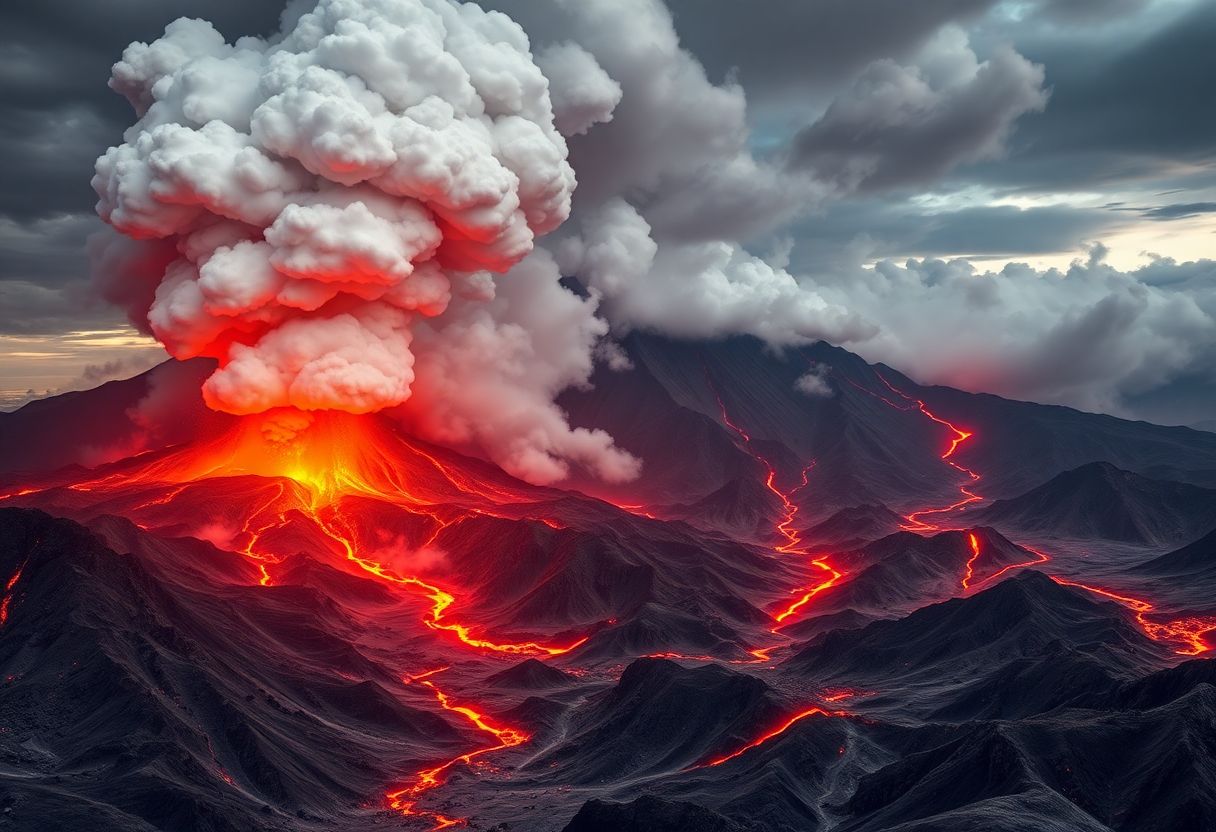
The Pacific Ring of Fire stands as a testament to our planet's dynamic nature, a vast horseshoe-shaped zone of intense geological activity that has captivated scientists and the public alike for generations. Stretching approximately 40,000 kilometers around the Pacific Ocean, this region is home to some of the most dramatic natural phenomena on Earth, including frequent earthquakes and volcanic eruptions that shape the very face of our planet.
The Anatomy of Earth's Most Active Fault Lines
The Pacific Ring of Fire is not a single fault line, but rather a complex network of tectonic plate boundaries that encircle the Pacific Ocean. This region is characterized by a nearly continuous series of oceanic trenches, volcanic arcs, and plate movements, making it the most seismically and volcanically active zone on the planet.
At its core, the Ring of Fire is a product of plate tectonics, the theory that explains how the Earth's crust is divided into several large plates that float on the semi-molten rock of the mantle. These plates are in constant motion, driven by convection currents in the Earth's interior. Where these plates meet, we find the boundaries that define the Ring of Fire.
The majority of the Ring of Fire consists of convergent boundaries, where oceanic plates subduct beneath continental plates or other oceanic plates. This subduction process is responsible for creating deep ocean trenches, such as the Mariana Trench, which plunges to depths of nearly 11,000 meters. It also leads to the formation of volcanic arcs, like the Japanese archipelago, as molten rock from the subducting plate rises to the surface.
Seismic Symphony: Understanding Earthquakes in the Ring of Fire
Earthquakes are the most frequent and, often, the most destructive manifestations of the Ring of Fire's activity. To truly appreciate the power and frequency of these seismic events, we must delve into the mechanics of how earthquakes occur.
At convergent boundaries, as one plate subducts beneath another, enormous amounts of stress build up along the fault line. This stress accumulates over time as the plates attempt to move past each other but are held in place by friction. When the stress finally overcomes the friction, the rocks suddenly slip past each other, releasing the stored energy in the form of seismic waves. This is the moment we experience as an earthquake.
The Ring of Fire is particularly prone to large, powerful earthquakes due to the nature of its subduction zones. These zones can generate what seismologists call "megathrust earthquakes," some of the most powerful seismic events on Earth. The 1960 Valdivia earthquake in Chile, which reached a staggering magnitude of 9.5, is a prime example of a megathrust event and remains the most powerful earthquake ever recorded.
Technological Marvels: Measuring Earth's Movements
Our understanding of earthquakes in the Ring of Fire has been revolutionized by advancements in technology. Modern seismometers can detect the smallest tremors, allowing scientists to build a comprehensive picture of seismic activity in the region.
One of the most significant developments in recent years has been the implementation of early warning systems. These systems use networks of seismometers to detect the initial, faster-moving P-waves of an earthquake before the more destructive S-waves arrive. In places like Japan, this can provide precious seconds of warning before strong shaking begins, allowing people to take cover and automated systems to shut down critical infrastructure.
Another technological marvel aiding our understanding of the Ring of Fire is the Global Positioning System (GPS). High-precision GPS measurements can detect minute movements of the Earth's crust, sometimes just millimeters per year. This data helps scientists map the slow, constant motion of tectonic plates and identify areas where stress is building up, potentially indicating future earthquake risk.
The Human Element: Living with Seismic Risk
While the scientific aspects of the Ring of Fire are fascinating, it's crucial to remember the human element. Millions of people live in cities and communities along this seismically active zone, from Tokyo to San Francisco, Santiago to Jakarta. For these populations, earthquake preparedness is not just a matter of scientific interest—it's a daily reality.
In response to this ever-present risk, many Ring of Fire countries have developed some of the most advanced earthquake engineering and preparedness measures in the world. Japan, for instance, has implemented strict building codes that require structures to withstand significant seismic forces. Their early warning system, coupled with regular earthquake drills, has created a culture of preparedness that has undoubtedly saved countless lives.
Similarly, cities like San Francisco and Vancouver have retrofitted older buildings to improve their seismic resistance and implemented public education programs to ensure residents know how to respond during an earthquake. These measures reflect a growing understanding that while we cannot prevent earthquakes, we can significantly mitigate their impact through proper planning and preparation.
Beyond the Tremors: Secondary Hazards of Ring of Fire Earthquakes
While the ground shaking of an earthquake is its primary and most obvious manifestation, the Ring of Fire reminds us that earthquakes often trigger a cascade of secondary hazards that can be equally, if not more, destructive.
Tsunamis are perhaps the most dramatic of these secondary hazards. When a large earthquake occurs underwater, it can displace a massive volume of water, generating a series of powerful waves. The 2004 Indian Ocean tsunami, triggered by a magnitude 9.1 earthquake off the coast of Sumatra, tragically demonstrated the devastating potential of these events. The tsunami claimed over 230,000 lives across 14 countries, making it one of the deadliest natural disasters in recorded history.
Landslides are another significant secondary hazard, particularly in the mountainous regions that characterize much of the Ring of Fire. The 1970 Ancash earthquake in Peru triggered a massive landslide that buried the town of Yungay, resulting in tens of thousands of fatalities. This event underscored the importance of considering geological factors beyond just seismic shaking when assessing earthquake risk.
The Frontiers of Earthquake Science
As our understanding of the Ring of Fire grows, so too does our ability to study and potentially predict seismic events. One of the most exciting frontiers in earthquake science is the use of machine learning and artificial intelligence to analyze vast amounts of seismic data.
Researchers are developing algorithms that can detect patterns in seismic data that might be imperceptible to human analysts. These AI systems have the potential to identify precursor events or subtle changes in seismic activity that could indicate an increased likelihood of a major earthquake. While we are still far from being able to predict earthquakes with precision, these tools are providing new insights into the behavior of fault systems and improving our ability to assess seismic risk.
Another area of cutting-edge research is the use of seafloor geodesy. Traditional GPS systems don't work underwater, making it challenging to measure the movement of oceanic plates directly. However, new technologies using acoustic signals and pressure sensors are allowing scientists to measure seafloor deformation with unprecedented accuracy. This data is crucial for understanding the behavior of subduction zones and improving our models of how megathrust earthquakes develop.
A Global Perspective: The Ring of Fire's Role in Earth's Systems
While we often focus on the local impacts of Ring of Fire earthquakes, it's important to consider their role in global Earth systems. The subduction processes driving seismic activity along the Ring of Fire play a crucial role in the carbon cycle, as carbonates in subducting oceanic crust are returned to the Earth's interior. This process has implications for long-term climate regulation and the evolution of Earth's atmosphere.
Moreover, the volcanic activity associated with the Ring of Fire contributes significantly to the formation of new crust and the recycling of old crust back into the mantle. This ongoing process of crustal renewal is fundamental to the long-term evolution of our planet's surface.
Conclusion: Embracing the Dynamic Earth
The Pacific Ring of Fire serves as a vivid reminder of the dynamic nature of our planet. It is a region where the immense forces shaping our world are on full display, offering both challenges and opportunities for those who call it home.
As we continue to study and understand the complex processes at work in this region, we are not just gaining scientific knowledge—we are developing the tools and strategies needed to build more resilient communities in the face of natural hazards. The story of the Ring of Fire is, in many ways, the story of humanity's relationship with the ever-changing Earth.
From the earliest seafaring peoples who navigated its volatile waters to the modern cities that now line its shores, humans have long been drawn to the resources and opportunities the Ring of Fire provides. As we look to the future, our growing understanding of this remarkable region will be crucial in helping us balance the risks and rewards of living on a geologically active planet.
The Pacific Ring of Fire stands as a testament to the power and beauty of our dynamic Earth. It challenges us to expand our scientific understanding, to innovate in our approach to risk mitigation, and to cultivate a deep respect for the natural forces that shape our world. As we continue to unlock its secrets, we move closer to a future where we can coexist more harmoniously with the awesome power of our planet's geological processes.