

The Evolution of Customer Service: Embracing AI-Powered Solutions to Enhance Customer Experience
Introduction
Customer service has come a long way since the days of switchboard operators and physical help desks. As technology has advanced and consumer expectations have skyrocketed, businesses have had to adapt to meet the demands of an always-on, instant-gratification society. In this digital age, customers expect fast, personalized support across a multitude of channels – and they expect it 24/7.
Enter artificial intelligence (AI). AI-powered solutions are revolutionizing the customer service landscape, enabling businesses to deliver the speed, convenience, and personalization that modern consumers crave. By embracing AI, companies can not only meet these heightened expectations but also differentiate themselves in an increasingly competitive marketplace.
In this article, we‘ll explore the evolution of customer service, the transformative power of AI, and how businesses can effectively implement AI-powered solutions to enhance the customer experience and drive long-term success.
The Changing Face of Customer Service
To understand the magnitude of AI‘s impact on customer service, let‘s first examine how consumer expectations have shifted over time. Gone are the days when customers were content to wait on hold for an available representative or to receive generic, scripted responses to their inquiries. In today‘s on-demand economy, customers expect immediate gratification and personalized interactions.
Consider these telling statistics:
- 90% of consumers rate an "immediate" response as important or very important when they have a customer service question. 60% of consumers define "immediate" as 10 minutes or less. (HubSpot Research)
- 82% of consumers expect immediate responses to their sales questions, while 90% expect an immediate response to their customer support questions. (HubSpot)
- 70% of customers say that connected processes, such as seamless handoffs between channels and contextualized engagement based on earlier interactions, are very important to winning their business. (Salesforce)
These figures underscore the critical importance of speed and personalization in modern customer service. To meet these demands at scale, businesses are turning to AI-powered solutions.
The Power of AI in Customer Service
AI is transforming customer service in myriad ways, from automating routine tasks to enabling predictive, proactive support. Let‘s explore some of the most impactful applications of AI in this domain.
AI-Powered Chatbots and Virtual Assistants
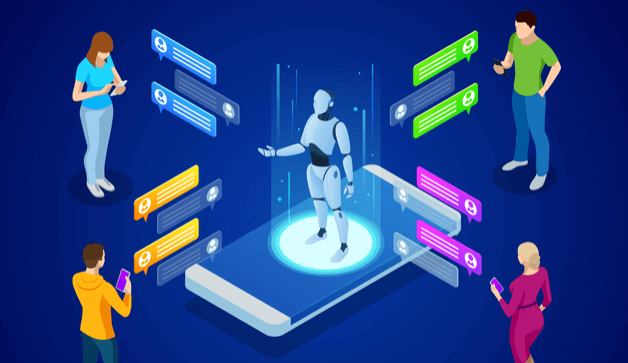
One of the most prominent manifestations of AI in customer service is the rise of chatbots and virtual assistants. These AI-powered tools use natural language processing (NLP) and machine learning to understand customer inquiries, provide relevant responses, and even carry out tasks on the customer‘s behalf.
Chatbots can handle a high volume of routine inquiries simultaneously, providing instant support 24/7. This frees up human agents to focus on more complex, high-value interactions that require empathy and critical thinking. According to Juniper Research, chatbots are expected to handle 75-90% of customer service inquiries by 2025, driving significant cost savings for businesses.
But chatbots are not just about efficiency; they can also deliver a more humanized, conversational experience. Advances in NLP and sentiment analysis allow chatbots to understand context, detect emotional cues, and respond in a more natural, empathetic manner. For example, Bank of America‘s virtual assistant, Erica, can recognize over 60 banking requests and understands 800,000 variations of those requests. Erica uses predictive analytics to provide personalized financial guidance, helping customers make smarter decisions.
Predictive Analytics for Proactive Service
Another powerful application of AI in customer service is predictive analytics. By analyzing vast amounts of customer data – such as purchase history, browsing behavior, and interaction patterns – AI algorithms can anticipate customer needs and preferences, enabling businesses to provide proactive support.
For instance, predictive analytics can help businesses:
- Detect potential issues before they escalate: By monitoring customer sentiment across channels, AI can alert support teams to brewing problems, allowing them to reach out proactively and mitigate damage.
- Deliver targeted offers: AI can analyze individual customer preferences and behavior to recommend personalized products, services, or content at the right time, increasing conversion rates and customer lifetime value.
- Prevent churn: Predictive models can identify customers at risk of churning based on factors like decreased engagement or negative sentiment, enabling businesses to intervene with targeted retention strategies.
A great example of proactive service in action is Netflix‘s predictive recommendation engine. By analyzing viewing history and preferences, Netflix can suggest highly relevant content to keep subscribers engaged and reduce churn. This personalized approach has been wildly successful, with 80% of viewer activity driven by recommendations.
AI-Powered Knowledge Management
AI is also transforming how customer service teams access and leverage knowledge to resolve issues faster. AI-powered knowledge management systems can automatically tag, organize, and surface the most relevant content to chatbots and human agents based on the context of the customer interaction.
This not only speeds up resolution times but also ensures consistency across service channels. For example, Salesforce‘s Einstein AI uses machine learning to automatically classify cases and recommend the best solutions from the knowledge base. This helps agents find answers faster and reduces the need for escalations.
By putting the right knowledge at agents‘ fingertips, AI empowers them to provide more accurate, efficient support. According to Gartner, organizations with an AI-enhanced knowledge management system can achieve a 20-30% increase in productivity and a 30-50% decrease in escalations.
Best Practices for Implementing AI in Customer Service
While the benefits of AI in customer service are clear, implementing these solutions effectively requires a strategic, human-centered approach. Here are some best practices to guide your AI journey:
-
Start with a clear strategy: Define your specific customer service goals and pain points, and identify how AI can help address them. Align your AI initiatives with your overall business objectives.
-
Take a phased approach: Start with smaller, focused AI projects and iterate based on learnings. This agile approach allows you to prove value and build momentum before scaling up.
-
Design for the human experience: Put the customer at the center of your AI design. Ensure that AI interactions feel natural, empathetic, and seamlessly integrated with human support when needed.
-
Invest in data quality: AI is only as good as the data it‘s trained on. Ensure that your data is accurate, relevant, and representative to avoid biased or flawed outputs.
-
Emphasize transparency: Be upfront with customers about when they are interacting with AI and provide clear escalation paths to human support. Build trust through transparency.
-
Train and upskill your team: Help your service teams understand how to work effectively alongside AI. Invest in training to help them develop the skills needed to manage and optimize AI systems.
-
Continuously measure and optimize: Establish clear KPIs to measure the impact of your AI initiatives. Continuously gather feedback and optimize based on data-driven insights.
By following these best practices, businesses can harness the power of AI to deliver faster, more personalized, and more efficient customer service experiences.
Measuring the ROI of AI in Customer Service
To justify investment in AI and ensure ongoing optimization, it‘s crucial to measure the impact of your AI initiatives. Here are some key metrics to track:
- First Contact Resolution (FCR): The percentage of customer issues resolved on the first interaction. AI can help boost FCR by providing agents with the right knowledge and context to solve problems quickly.
- Average Handle Time (AHT): The average time it takes to resolve a customer issue. AI can reduce AHT by automating routine tasks and surfacing relevant information to agents.
- Customer Satisfaction (CSAT): A measure of how satisfied customers are with their service experience. AI can improve CSAT by enabling faster, more personalized support.
- Agent Productivity: AI can augment agent performance by handling routine inquiries, freeing up agents to focus on higher-value interactions.
- Cost per Contact: The average cost of resolving a customer issue. AI can help reduce costs by deflecting contacts to self-service channels and improving agent efficiency.
By tracking these metrics over time, businesses can quantify the ROI of their AI investments and identify areas for ongoing improvement.
Real-World Success Stories
Many companies are already reaping the benefits of AI-powered customer service. Here are a few notable examples:
-
Lowe‘s: The home improvement retailer implemented LoweBot, an AI-powered robot that navigates stores, answers customer questions, and helps employees with inventory management. LoweBot has helped increase customer satisfaction and store efficiency.
-
Sephora: The beauty retailer‘s Virtual Artist chatbot uses AI to guide customers through personalized product recommendations and makeup tutorials. The bot has seen a 70% user engagement rate and a 25% conversion rate.
-
Nest: The smart home company uses predictive analytics to proactively detect and resolve issues with its devices before customers even notice. This proactive approach has reduced customer service calls by 20%.
These success stories demonstrate the tangible impact that AI can have on customer experience and business outcomes.
The Future of AI-Powered Customer Service
As AI technologies continue to advance, we can expect even more sophisticated applications in customer service. In the near future, AI will enable:
- Hyper-personalization: AI will allow businesses to tailor every interaction based on individual customer preferences, history, and context. This will create a truly bespoke service experience.
- Multimodal interfaces: Customers will be able to seamlessly switch between text, voice, and visual interfaces, with AI providing a consistent experience across channels.
- Predictive service: AI will move beyond reactive support to proactively addressing customer needs before they even arise. This will create a frictionless, effortless customer experience.
However, as AI becomes more integrated into customer service, it‘s crucial that businesses prioritize responsible, ethical AI development. This means ensuring that AI systems are transparent, unbiased, and respect customer privacy. Businesses must also find the right balance between automation and human interaction, leveraging AI to augment rather than replace human empathy and judgment.
Conclusion
The future of customer service is undeniably AI-powered. As consumer expectations continue to rise and technologies continue to advance, embracing AI will be critical for businesses to stay competitive and deliver the experiences customers demand.
By implementing AI-powered chatbots, predictive analytics, and knowledge management systems, businesses can provide faster, more personalized support at scale. However, success requires a strategic, human-centered approach that prioritizes transparency, ethics, and continuous optimization.
As you embark on your own AI journey, remember that AI is not a silver bullet but rather a powerful tool to augment and elevate human service. By finding the right balance between AI efficiency and human empathy, you can create a customer service experience that truly delights and differentiates.
The age of AI-powered customer service has arrived. Is your business ready to embrace it?


![The Do‘s and Don‘ts of Positive Scripting in Customer Service [Template]](https://greenlitcontent.com/wp-content/uploads/2026/04/20260423164516-69ea4c9c43c88.jpg)
