
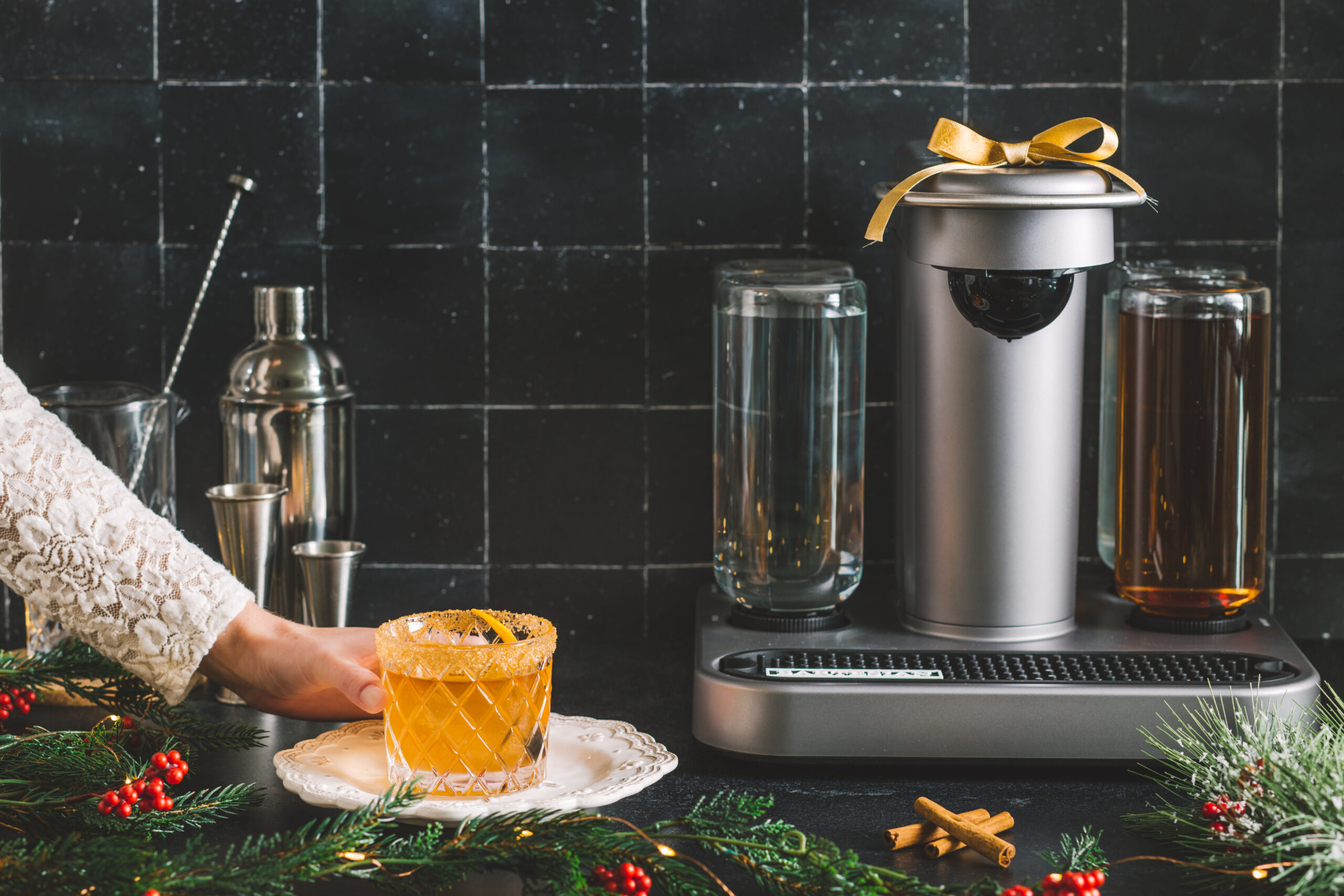
Shaking Up the $4.6 Billion Cocktail Market: Bartesian‘s $25 Million Success Story
When Ryan Close first started tinkering with a cocktail machine in his kitchen, he never imagined it would turn into a $25 million business in just one year. But that‘s exactly what happened with Bartesian, the innovative startup shaking up the home cocktail market one drink at a time.
Launched in late 2019, Bartesian‘s robotic machines and pre-made flavor pods have proven to be a hit with consumers thirsty for an easier way to enjoy craft cocktails at home. Revenues hit $25 million in 2020, and have only continued to grow, with the company projecting another year of triple-digit expansion ahead.
While the COVID-19 pandemic certainly accelerated adoption, Bartesian‘s success is no pandemic-induced fluke. It‘s the result of Close‘s ingenuity in solving a common problem, years of meticulous product development, and keen insight into the changing tastes of the $4.6 billion U.S. cocktail market.
From Bartender to Innovator: The Lightbulb Moment
Close‘s journey to Bartesian began, ironically, during his years spent bartending to pay his way through college. Crafting hundreds of cocktails per night, he developed an appreciation for the precision, creativity, and showmanship that went into making a great drink.
Fast forward a decade, and Close found himself working a corporate job but still moonlighting as an at-home mixologist. One night, while making an old fashioned for his wife, he realized just how inconvenient – and messy – the process could be.
"Half the kitchen‘s a mess," Close recalls. "It‘s too sweet, it‘s not sweet enough. The sugar doesn‘t dissolve, it‘s too boozy, it‘s not boozy enough."
He started dreaming up ways to recreate that "perfect pour" he had once mastered as a bartender, but without all the specialized tools and ingredients. After connecting with two engineering partners, the first Bartesian prototype was born.
For several years, Close worked tirelessly on refining the machine, often burning the midnight oil after his day job. He poured every spare dollar into the project, even selling his beloved Audi S4 sports car to help fund development. In 2014, with a working prototype in hand, he made the leap to pursue Bartesian full-time.
"I‘m going for broke on this," Close remembers telling his wife. "I‘m putting all our chips on the table."
Tapping Into the Home Cocktail Revolution
What Close realized before almost anyone else was that the way people drink was changing rapidly, particularly among younger generations. Fed up with overpriced, watered-down drinks and rowdy crowds, millennials were increasingly opting to imbibe at home.
This trend was already well underway before COVID hit, with 55% of Americans saying they preferred drinking at home as of 2018. When the pandemic shut down bars and restaurants, at-home drinking went from a preference to the norm practically overnight.
But even after the lockdowns lifted, the home cocktail habit seems to have stuck. The global cocktail market is expected to grow from $4.6 billion in 2020 to $6.7 billion by 2028, fueled largely by surging demand for premium spirits and ready-to-drink options.
All this has created the perfect storm for products like Bartesian that cater to the home mixology crowd. Sales of hard seltzers and pre-mixed cocktails have exploded, while startups making everything from premium mixers to cocktail delivery services have attracted millions in venture capital.
One Pod, One Perfect Pour
It‘s not hard to see the appeal of Bartesian‘s machines, with their sleek design and effortless functionality. Users simply insert a flavor pod of their choice, supply their own liquor, and press a button. In under 20 seconds, the machine dispenses a perfectly crafted cocktail, from margaritas to whiskey sours to cosmopolitans.
But developing such a intuitive device was hardly an easy pour. It took Close and his team over five years of trial and error to get the technology right, starting with a crude prototype made from a soda machine and evolving into the current patented system.
At the heart of Bartesian‘s magic are the flavor pods, which contain all the bitters, extracts, and juices needed to make a balanced drink. The pods are produced in an FDA-approved facility using completely natural ingredients, with no preservatives or artificial flavors.
Each pod features a barcode that tells the machine exactly how to mix the drink, from the precise ratios of liquor to mixers to the ideal dilution with water. This ensures that every cocktail tastes just as the Bartesian mixologists intended, no matter the skill of the home bartender.
Perfecting this barcoding system was a major engineering feat. Close and his team started by defining their target flavor profiles and ABV levels for each drink. They then experimented with countless iterations of the ingredients, testing everything from different juice blends to various grades of pure cane sugar.
Once the recipes were finalized, the team had to figure out how to translate that information to the machine via the barcodes. They developed complex algorithms to map out all the variables, from the pod‘s fill level to the specific gravity of each liquid.
The result is a system so precise that Bartesian can even account for the alcoholic strength of the user‘s liquor of choice and adjust the pour accordingly. According to the company, a Bartesian margarita made with an 80-proof tequila will taste exactly the same as one made with a 92-proof option.
Raising the Bar
Of course, all that painstaking product development doesn‘t mean much if you can‘t get your creation into people‘s hands. And so, with a perfected prototype and several drinks‘ worth of data, Close set out to introduce Bartesian to the world.
But instead of going the traditional route of pitching VCs and aiming for hypergrowth, he decided to take a more unconventional approach. Close‘s first move was to take Bartesian‘s prototype to retailers and ask for letters of intent, signaling their interest in carrying the product.
Armed with those LOIs, Close was able to raise seed funding from angel investors in bite-sized chunks, starting as small as $10,000 at a time. He used that money to produce more prototypes and gather feedback from industry leaders and potential customers.
Over the course of five years, Close estimates he conducted over 14,000 demos of Bartesian. He took the machines to trade shows, conventions, and cocktail festivals, letting people taste the drinks and share their opinions. Each new data point helped refine the hardware and pods further.
As word of Bartesian began to spread, Close started attracting the attention of major players in the spirits industry. In 2016, he landed a significant investment from liquor giant Jim Beam – a testament to the strength of Bartesian‘s technology and market momentum.
But even with more financial firepower, Close resisted the temptation to launch prematurely. Instead, he continued methodically laying the groundwork for a blockbuster debut.
When Bartesian‘s machines finally hit the market in late 2019, they did so with all the force of a finely shaken cocktail. The company had secured partnerships with major retailers like Amazon, Target, and Walmart. Bartesian was named one of "Oprah‘s Favorite Things" and promptly sold out its entire inventory for the holiday season.
Mixing It Up in the Future
As impressive as Bartesian‘s home success has been, the company‘s ambitions extend far beyond the consumer market. Close and his team are now hard at work developing commercial versions of their machines for use in bars, restaurants, hotels, cruise ships, and sports venues.
The potential for Bartesian to become an industry standard in the hospitality space is enormous. Bars and restaurants often struggle with consistency and speed when it comes to cocktails, particularly in high-volume settings. A single Bartesian machine can crank out up to 200 drinks per hour with perfect precision every time.
Bartesian has already completed a successful pilot program with Hyatt Regency hotels and is rolling out across major sporting venues like Wrigley Field in Chicago. The company expects on-premise accounts to comprise up to 20% of its business within the next few years.
Expansion into international markets is also on the roadmap, with Bartesian currently exploring distribution partnerships in Europe, Asia, and Latin America. Cocktail culture is thriving globally, and there‘s no reason to believe that the convenience of Bartesian won‘t translate across borders.
But even as it grows, Bartesian remains committed to the ethos of constant improvement that has driven its success from the start. The company‘s R&D team is perpetually tinkering with new pod flavors and hardware upgrades. A "mocktails" line of non-alcoholic pods is currently in development, as are potential offerings for other beverage categories beyond cocktails.
As the company looks ahead to another year of blockbuster growth, it‘s clear that Bartesian has no plans to rest on its laurels. With a proven product, a growing customer base, and a seemingly endless runway for expansion, the future looks bright – and deliciously mixed – for this cocktail innovator.
Shaking Up the Startup Playbook
Looking back on Bartesian‘s journey, it‘s hard not to marvel at the unconventional path Close took to build his business. In an era where hypergrowth and billion-dollar valuations are often seen as the only markers of startup success, Bartesian is a refreshing reminder that slow and steady can still win the race.
Close credits much of his entrepreneurial savvy to the years he spent working traditional corporate jobs after his bartending days. Stints in sales, operations, and management at companies like Syntax and Cimteq taught him the nuts and bolts of running a business, from managing inventory to motivating teams.
But more than that, Close says his time in the corporate trenches taught him the importance of resilience and adaptability. He learned to weather setbacks and failures, gleaning wisdom from both good and bad bosses along the way.
Of course, all the corporate experience in the world can‘t quite prepare you for the all-consuming nature of founding a startup. For Close, the early years of Bartesian meant countless sleepless nights and more than a few moments of self-doubt.
There was the time he maxed out his credit cards to pay for a last-minute trip to China to visit a potential manufacturer. Or the day he realized he had just $37 left in his personal bank account after making payroll.
But through it all, Close held fast to his vision of making the perfect cocktail accessible to anyone, anywhere. He surrounded himself with a team of equally passionate and resilient individuals, from his steadfast co-founders to his first hires.
Together, they learned to embrace the ups and downs of startup life and find creative solutions to seemingly impossible problems. When a key supplier suddenly raised prices, they found a way to adjust the pod designs to compensate. When a major retailer backed out of a deal at the last minute, they pivoted to direct-to-consumer sales and came out even stronger.
In many ways, Bartesian‘s story is a masterclass in the power of grit, adaptability, and unconventional thinking. It‘s a reminder that sometimes the biggest breakthroughs come from the most unlikely places – like a former bartender tinkering with a cocktail machine in his kitchen.
So what advice does Close have for other aspiring entrepreneurs looking to shake up their industries? First and foremost, he says, trust your gut and don‘t be afraid to write your own rules. Conventional startup wisdom can be a useful guide, but it‘s rarely one-size-fits-all.
Secondly, Close stresses the importance of relentless testing and iteration. No matter how great your initial idea may seem, it‘s only through continuous refinement that you‘ll arrive at a truly game-changing product. For Bartesian, that meant thousands of demos, countless recipe tweaks, and a steadfast commitment to quality over speed.
Finally, Close advises founders to stay true to their core mission, even as they scale. As Bartesian has grown from a scrappy startup to a major player in the cocktail industry, Close has worked hard to maintain the company‘s innovative spirit and customer-first ethos.
Whether it‘s personally responding to user feedback or insisting on only the highest quality ingredients for the pods, Close is adamant that Bartesian will never lose sight of its original aim: to bring the craft cocktail experience to the masses.
That unwavering focus, combined with a healthy dose of tenacity and outside-the-box thinking, has propelled Bartesian to the forefront of the booming home cocktail market. And if Close has his way, this is only the beginning of the company‘s spirited success story.
As he puts it, with a smile and a freshly mixed drink in hand: "We‘re just getting started."



![The Straightforward Guide to Value Chain Analysis [+ Templates]](https://greenlitcontent.com/wp-content/uploads/2026/04/20260423141333-69ea290d7666e.jpeg)