29 Stunning Dental Website Designs to Inspire Your Own in 2024 [+ Proven Tips to Get New Patients]
As a dental professional, your website is one of the most powerful tools you have to attract new patients, build credibility, and keep your schedule full. In fact, a recent study found that over 80% of patients now search online when looking for a new dentist.
However, not just any website will do. With countless practices competing for attention online, you need a site that truly stands out and positions you as the obvious choice. Luckily, we‘ve rounded up 29 of the best dental websites to fuel your inspiration in 2024.
But first, let‘s dive into why having a phenomenal website is non-negotiable for modern dental practices.
Why an Exceptional Website is a Must-Have for Dentists
Your website is often the first impression prospective patients have of your practice. It‘s your chance to showcase your expertise, build trust, and convince them to choose you over competitors. Consider these eye-opening statistics:
- 94% of patients say they would reject a referral to a dentist with a poor website (Source: Futuredontics)
- Practices with modernized websites saw an average 25% increase in new patient flow (Source: Dental Economics)
- 68% of dental practices say their website is the most effective marketing channel (Source: Dental Products Report)
A well-designed website not only attracts more patients, but also streamlines your operations and improves the overall patient experience. By enabling online booking, bill pay, access to dental records, and more, you make it incredibly convenient for patients to engage with your practice.
Now, let‘s explore the dental websites setting the bar for exceptional design and functionality in 2024.
Dental Website Design Examples to Inspire You
1. Seattle Sound Dental
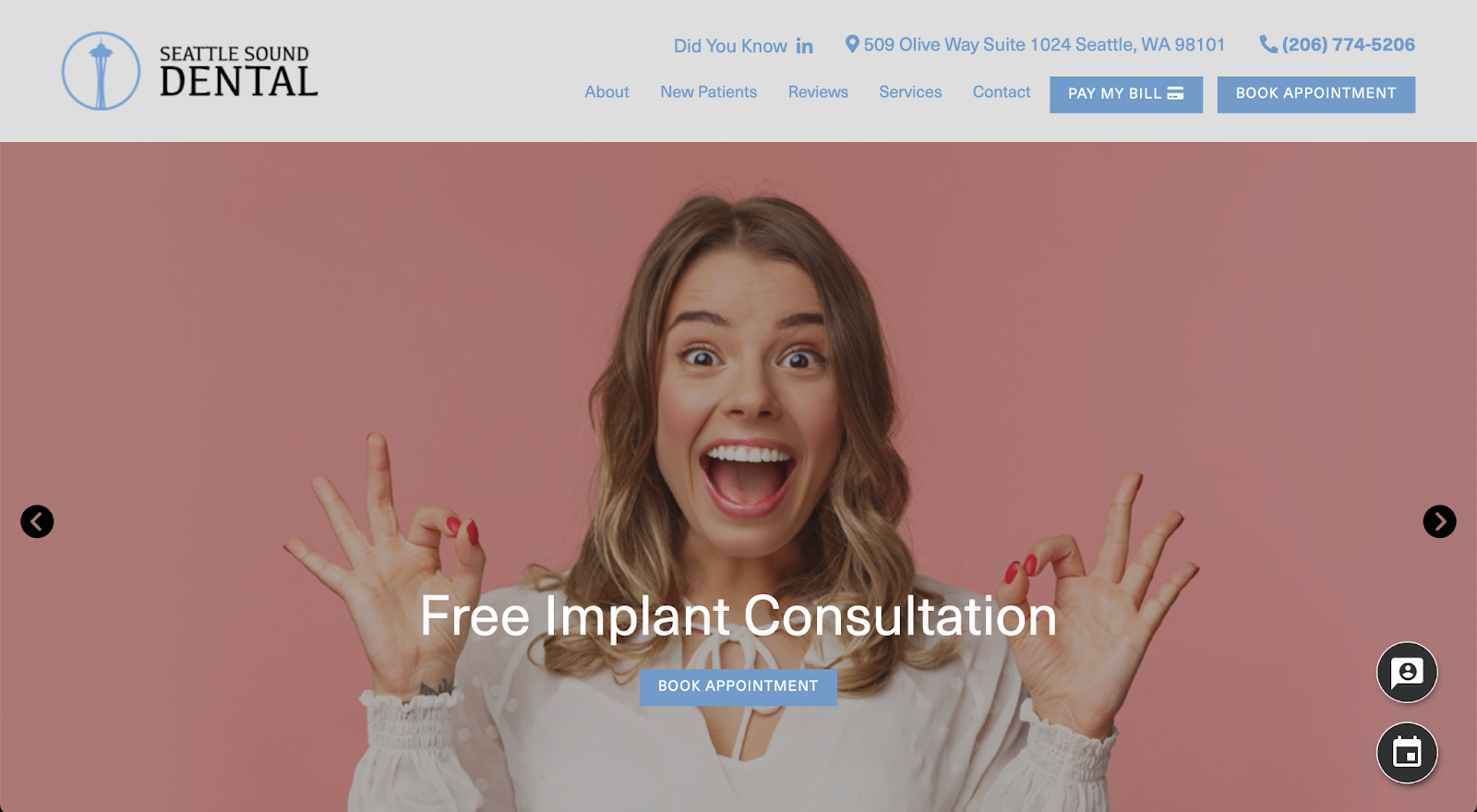
Seattle Sound Dental instantly grabs attention with a stunning, full-width video background showcasing its beautiful office. The soothing color palette and clean typography create an inviting, professional aesthetic.
What stands out most is the user-friendly layout and clear calls-to-action. Visitors can easily request an appointment, access patient forms, and learn about services. The sticky navigation keeps important links accessible as users scroll.
2. Tend
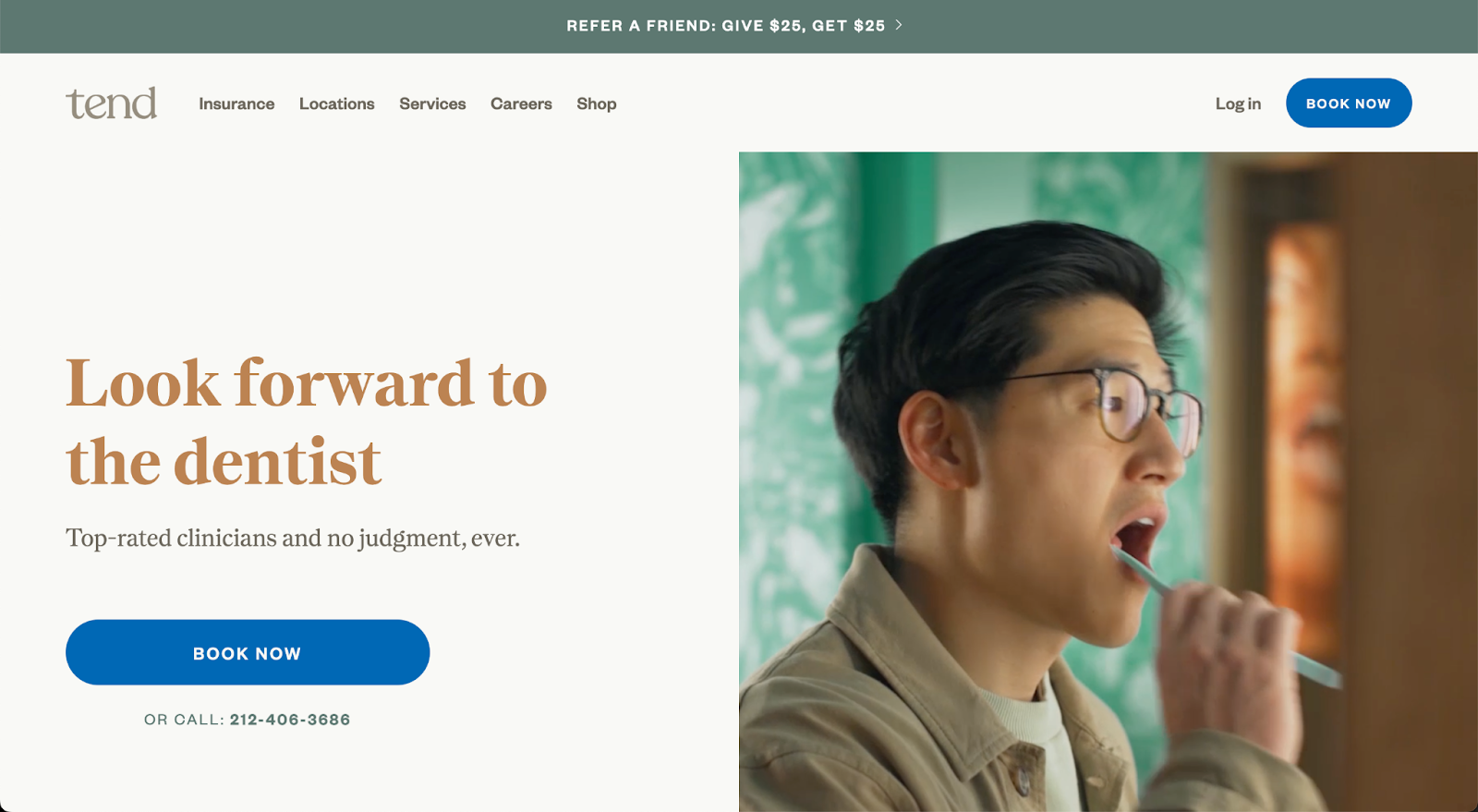
Tend takes a fresh, modern approach rarely seen in dental web design. The bold color blocking, playful illustrations, and conversational copy position Tend as an innovative, patient-centric practice.
Interactive quizzes help users find the right services for their needs, while a prominent chatbot offers immediate assistance. The site also features authentic patient stories and a sleek studio locator to build trust and credibility.
3. Bowles Dental Center
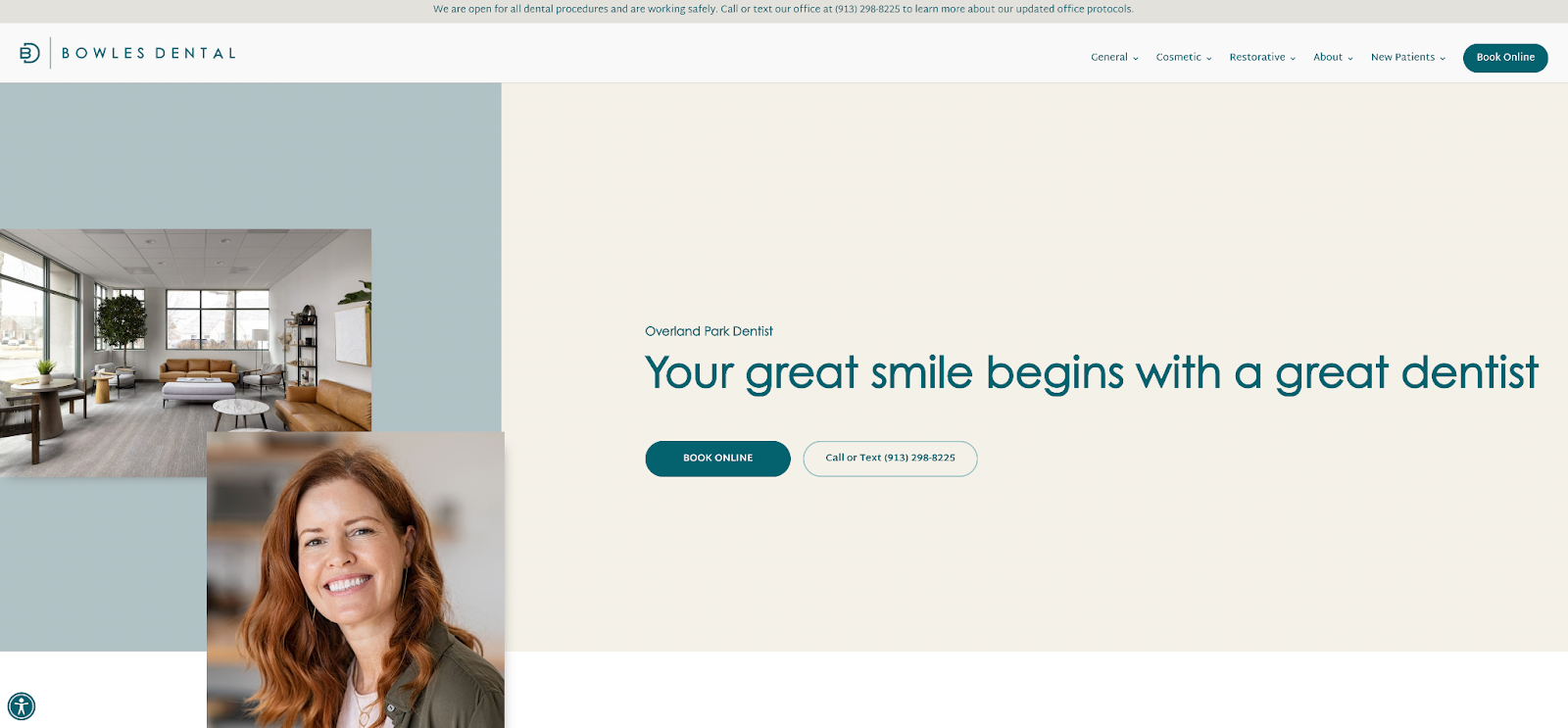
Bowles Dental Center pairs a clean, minimalist design with pops of vibrant color to create a friendly yet professional feel. The unique curved elements add visual interest and guide users down the page.
The homepage features concise overviews of each service, with a focus on benefits. Glowing patient reviews are displayed front and center for social proof. The footer includes helpful resources like a blog, FAQ, and insurance information.
4. Grand Street Dental
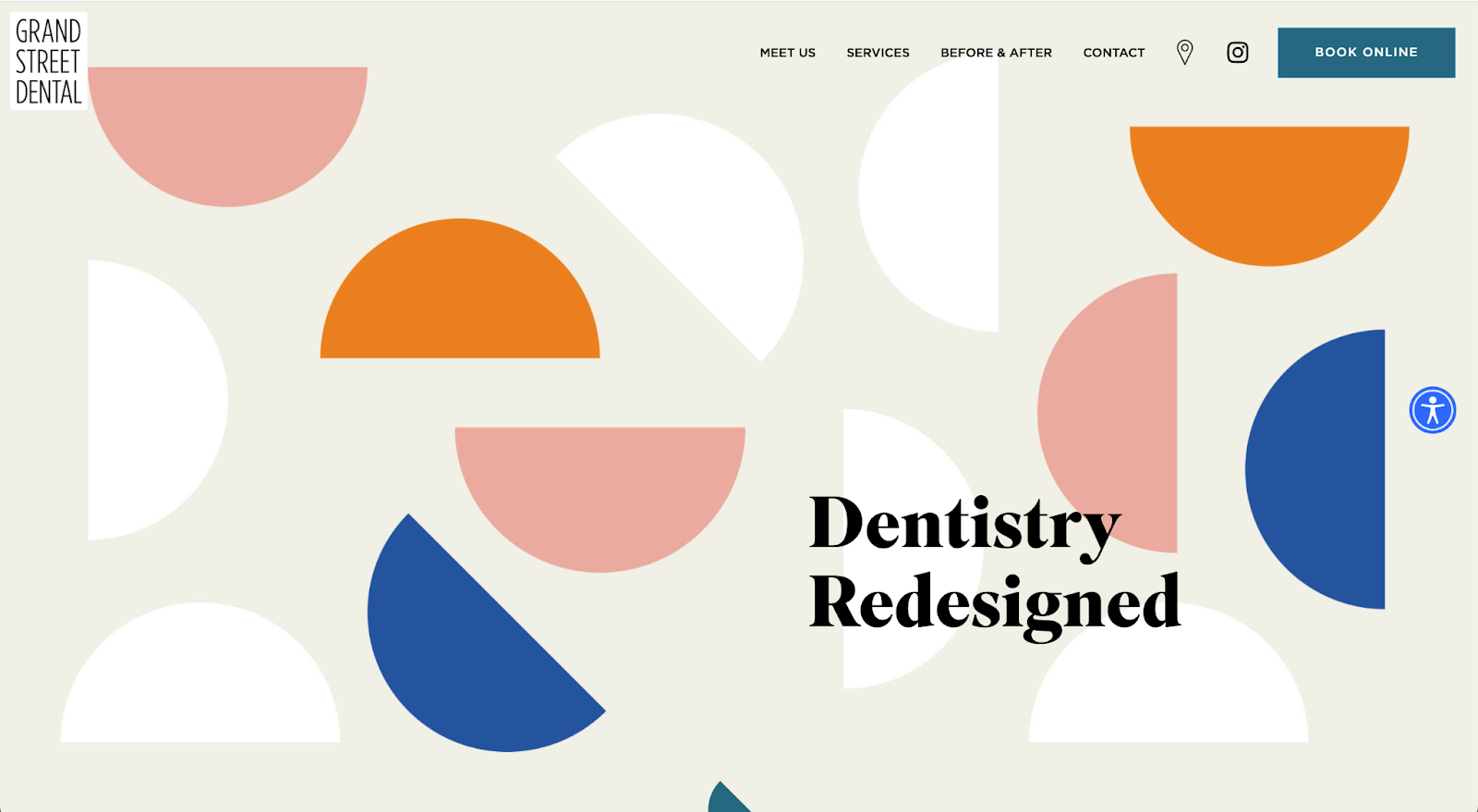
Grand Street Dental proves that a single-page website can be just as impactful as a multi-page site when done right. The full-screen design immerses visitors in the brand‘s chic, Instagram-worthy aesthetic.
As users scroll, they‘re guided through a logical flow of information, from services to patient reviews to a contact form. Subtle animations add delight and keep visitors engaged. The floating appointment button ensures scheduling is always top of mind.
Dental Web Design Best Practices
Now that you‘re filled with inspiration, let‘s walk through how to bring these ideas to life in your own website. Here are the dental web design best practices to follow in 2024 and beyond.
1. Prioritize branding and visual appeal
Your website should be a visual extension of your practice brand. Stick to a consistent color palette, typography, and imagery across your site and marketing materials. Opt for a modern, uncluttered layout with ample whitespace.
High-quality photos of your team and office go a long way in creating a welcoming feel. Hire a professional photographer to capture images that align with your brand personality, whether that‘s bright and friendly or sleek and sophisticated.
2. Streamline navigation and user flows
Put yourself in your patients‘ shoes and consider what they want to accomplish on your site. Typically, their top tasks include booking an appointment, learning about services, getting directions, and accessing patient resources.
Make these actions incredibly easy to complete with clear navigation and prominent calls-to-action. Use descriptive labels like "Schedule Now" or "New Patient Info" instead of generic phrases like "Click Here."
Organize content in a logical hierarchy and use visual cues like contrasting colors or arrows to guide users to important information. The goal is to minimize friction and help patients find what they need in as few clicks as possible.
3. Optimize for mobile devices
A whopping 61% of patients now search for dentists on their smartphones (Source: Think with Google). If your site isn‘t optimized for mobile, you risk losing over half of your potential patient base.
Implement a responsive design that automatically adjusts your site‘s layout to fit any screen size. Keep mobile users in mind when designing page layouts, opting for single-column content, large buttons, and streamlined forms.
Compress images and use caching to ensure fast load times on mobile networks. A one-second delay in mobile load times can impact conversions by up to 20% (Source: Google).
4. Highlight your services and expertise
Your website should clearly communicate the full range of dental services you offer and what sets you apart from other practices. Organize information in a scannable way, using headlines, bullet points, and visuals to break up text.
If you specialize in certain areas like cosmetic dentistry or pediatrics, make that front and center on your homepage. Include a dedicated page for each service with detailed descriptions, benefit statements, and patient FAQs.
Consider adding interactive tools like a "Find Your Ideal Treatment" quiz or a virtual consultation portal to help patients explore their options and build confidence in your expertise.
5. Showcase patient reviews and results
Glowing patient testimonials and before-and-after photos are powerful social proof that can sway prospective patients to choose your practice. Sprinkle this content throughout your site, including your homepage, service pages, and dedicated review page.
Make sure to include a variety of reviews that speak to different aspects of the patient experience, from bedside manner to clinical results. Use high-quality photos and videos for added impact.
Don‘t forget to actively collect reviews on external sites like Google, Facebook, and Healthgrades, as these also influence your search rankings and online reputation. Make it easy for happy patients to leave reviews with email or text prompts.
6. Create valuable educational content
Establishing your website as a go-to resource for dental education not only helps patients make informed decisions, but also boosts your search engine optimization (SEO). By consistently publishing blog posts, videos, and guides on relevant topics, you signal to Google that your site is a trustworthy authority.
Focus on creating content that addresses common patient questions and concerns. Use keyword research tools to identify phrases patients are searching for and optimize your content accordingly. Make sure to organically incorporate keywords in page titles, headings, and body copy.
In addition to blog posts, consider offering downloadable resources like eBooks, checklists, or infographics in exchange for a patient‘s email address. This allows you to nurture leads and stay top of mind until they‘re ready to book an appointment.
7. Simplify appointment scheduling and payments
One of the most impactful things you can do to improve the patient experience and increase bookings is to offer online scheduling. A recent survey found that 80% of patients prefer to book appointments digitally (Source: PatientPop).
Integrate scheduling software that syncs with your practice management system and shows real-time availability. Allow patients to easily view open time slots, select their preferred provider, and receive automatic confirmation and reminder emails.
Similarly, make it simple for patients to view and pay bills online. Offer multiple secure payment options, including credit cards and digital wallets. Send automated payment reminders and allow patients to enroll in payment plans or autopay.
8. Prioritize page speed and technical SEO
Even the most beautifully designed website will fail to convert patients if it loads slowly or is difficult for search engines to crawl. Page speed is a critical ranking factor, with Google recommending a load time of under two seconds.
To optimize your site‘s speed, start by compressing images, minifying code, and leveraging browser caching. Use tools like Google PageSpeed Insights to identify areas for improvement and track your progress.
Next, focus on technical SEO best practices to ensure search engines can easily understand and index your content. This includes using a logical site structure, descriptive URLs, and proper heading tags. Submit an XML sitemap to help search bots efficiently crawl your pages.
Finally, make sure your site is secured with HTTPS encryption to protect patient data and establish trust. Display your security badges and privacy policy prominently to reassure visitors their information is safe.
Measuring the Success of Your Dental Website
Designing a patient-centric website is an ongoing process that requires continuous measurement and optimization. Use tools like Google Analytics to track key performance indicators (KPIs) such as:
- Unique visitors
- Average time on site
- Bounce rate
- Pages per session
- Conversion rate (appointment requests, contact form submissions, etc.)
Set up goals in Analytics to monitor how well your site is achieving its objectives. For example, if your primary goal is to increase new patient bookings, track the number of online appointment requests and the conversion rate from website visitor to booked appointment.
In addition to quantitative data, gather qualitative feedback from patients through surveys, interviews, or user testing. Ask questions like:
- What made you choose our practice over others?
- How easy was it to find the information you needed on our website?
- Did you encounter any issues when trying to book an appointment online?
- Is there anything missing from our website that would be helpful?
Use these insights to continually refine and enhance your website experience. Remember, your website is a living, breathing asset that should evolve along with your practice and patient needs.
Bringing Your Dream Dental Website to Life
Creating an exceptional dental website takes time, effort, and expertise. If you have the technical skills and bandwidth, you can certainly design your own site using a website builder like WordPress or Squarespace.
However, for most busy dental practices, partnering with a professional web design agency that specializes in the dental industry is the way to go. Look for a partner that takes a strategic, data-driven approach and has a proven track record of delivering results for practices like yours.
At the end of the day, your website is an investment that will pay dividends for years to come. By following the best practices outlined in this guide and staying attuned to your patients‘ evolving needs, you‘ll be well on your way to having a dental website that drives practice growth and positions you as a leader in your market.