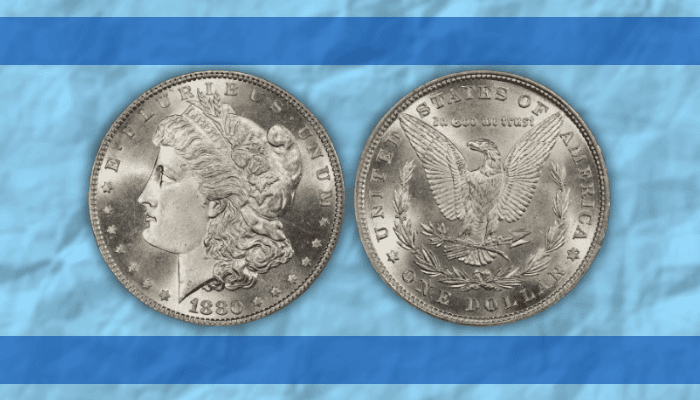
1880 Morgan Silver Dollar Value Chart: How Much Is It Worth Today?
As a professional numismatist with over two decades of experience examining and trading Morgan dollars, I‘ve watched these remarkable coins become increasingly sought-after pieces of American history. The 1880 Morgan Silver Dollar holds particular significance, with specimens ranging from modest $30 pieces to exceptional examples commanding well over $160,000 at recent auctions.
The Historical Journey of the 1880 Morgan Silver Dollar
The story of the 1880 Morgan Silver Dollar begins against the backdrop of significant economic upheaval in late 19th century America. The United States found itself at a crucial monetary crossroads, with Spanish pieces of eight still circulating as common currency. Congress responded by passing the Bland-Allison Act in 1878, mandating the Treasury to purchase substantial amounts of silver for coining.
During 1880, four U.S. Mint facilities produced Morgan dollars:
- Philadelphia struck 12,601,355 pieces without a mint mark
- San Francisco contributed 8,900,000 coins marked with ‘S‘
- New Orleans produced 5,305,000 specimens bearing ‘O‘
- Carson City minted just 495,000 pieces marked ‘CC‘
This distributed production created subtle variations that collectors prize today. The Carson City mintage, being particularly low, has become especially valuable in higher grades.
Physical Characteristics Through an Expert‘s Eye
When examining an 1880 Morgan dollar, I first note its substantial specifications:
- Weight: precisely 26.73 grams
- Silver content: 90% (with 10% copper for durability)
- Diameter: 38.1 millimeters
- Thickness: 2.4 millimeters
The obverse showcases George T. Morgan‘s classical Liberty portrait, while the reverse presents an eagle with spread wings. Having examined thousands of specimens, I‘ve identified key authentication points that separate genuine pieces from counterfeits:
The Liberty portrait should display:
- Precise hair strands with individual definition
- Sharp detail in the cotton leaves and grain
- Clear, well-defined stars along the rim
- Proper letter spacing in "E PLURIBUS UNUM"
The reverse eagle requires:
- Sharp breast feather definition
- Clear arrow feather detail
- Precise olive branch rendering
- Distinct wing feather separation
Current Market Values and Grade Analysis
Today‘s market shows fascinating variations based on mint marks and conditions. From my recent market analysis and auction observations through December 2024:
Circulated Grades:
Good (G-4) through Very Fine (VF-20):
- Philadelphia (No Mint): $30-85
- San Francisco (S): $35-95
- New Orleans (O): $40-100
- Carson City (CC): $175-500
Uncirculated Grades:
MS-60 through MS-65:
- Philadelphia: $150-4,000
- San Francisco: $175-4,500
- New Orleans: $200-30,000
- Carson City: $550-18,000
Proof Specimens:
- PR63: $3,500-5,000
- PR65: $6,000-9,500
- PR67: $15,000-25,000
Authentication Techniques and Grading Insights
Through years of professional grading, I‘ve developed a systematic approach to authenticating 1880 Morgan dollars:
Surface Analysis:
First, examine the coin‘s luster under proper lighting. Original mint luster exhibits a cartwheel effect when rotated – a characteristic that‘s nearly impossible to replicate. Look for consistent wear patterns and natural toning.
Strike Quality:
Check the strike quality, particularly in Liberty‘s hair above the ear and the eagle‘s breast feathers. Well-struck coins show sharp detail in these areas. Weak strikes, while genuine, typically command lower prices.
Mint Mark Verification:
Examine the mint mark (when present) under 10x magnification. Genuine mint marks show consistent depth and serif characteristics matching known authentic examples.
Regional Market Dynamics
My extensive dealing network reveals fascinating regional price variations:
Northeast Region:
- Premium prices for CC mint marks (+15-20%)
- Strong demand for proof specimens
- Emphasis on original toning
West Coast:
- Higher values for S-mint pieces (+10-15%)
- Premium for pristine white specimens
- Strong Asian buyer influence
Southeast:
- Notable premiums for O-mint coins (+8-12%)
- Growing collector base
- Emphasis on historical significance
Midwest:
- Stable market for all mint marks
- Strong appreciation for original surfaces
- Active auction participation
Investment Strategy and Market Outlook
Based on current market trends and historical data, I recommend these investment approaches:
Short-Term Strategy (1-3 years):
Focus on acquiring MS64-65 specimens of all mint marks, particularly those with original surfaces and attractive toning. These grades offer the best balance of rarity and affordability.
Long-Term Holdings (5-10 years):
Target CC mint marks in MS63 and better, as these show consistent appreciation. Consider proof specimens for significant long-term potential.
Market Indicators:
Recent trends show increasing demand from international collectors, particularly in Asia and Europe. The growing recognition of American numismatic history globally suggests continued price appreciation.
Conservation and Preservation
Proper conservation remains crucial for maintaining value. From my experience, I recommend:
Storage Methods:
- Use high-quality mylar holders or certified holders
- Maintain constant temperature and humidity
- Avoid direct handling of uncertified coins
- Store away from paper products
Environmental Controls:
- Keep humidity below 50%
- Maintain temperature between 68-72°F
- Avoid exposure to fluorescent lighting
- Use archival quality storage materials
Future Market Projections
Looking ahead, several factors suggest continued strength in the 1880 Morgan dollar market:
Population Dynamics:
- Decreasing availability of high-grade specimens
- Growing collector base, particularly internationally
- Increasing recognition of historical significance
Price Trends:
- Consistent appreciation in MS65 and better
- Strong performance of original-toned examples
- Premium values for CC mint marks
Market Forces:
- Rising precious metals prices
- Growing interest in tangible assets
- Expanding international collector base
Collecting Tips from Years of Experience
After handling thousands of 1880 Morgan dollars, I‘ve developed these key insights:
- Always verify certification when buying high-grade examples
- Study authentic specimens before making significant purchases
- Build relationships with reputable dealers
- Maintain detailed records of purchases and market prices
- Consider joining numismatic organizations for networking
Conclusion
The 1880 Morgan Silver Dollar represents both a fascinating piece of American history and a solid numismatic investment. Whether you‘re building a collection or considering these coins for investment, understanding their characteristics, history, and market dynamics proves essential. With proper knowledge and careful selection, these historic pieces offer both collecting satisfaction and potential financial reward.
Remember, each coin tells a unique story of American history, and proper research, authentication, and preservation ensure these stories continue for future generations of collectors.