1943 Copper Penny Value: The Million-Dollar Wartime Mistake That Made History
In the world of rare coin collecting, few pieces generate as much excitement and intrigue as the 1943 Copper Penny. What started as an accidental minting error during World War II has become one of the most valuable and sought-after coins in American numismatic history, with the finest known specimen selling for an astounding $1.7 million.
The Fascinating History Behind the 1943 Copper Penny
The story of this remarkable coin begins in the midst of World War II, when copper became a crucial strategic metal for the American war effort. Every shell casing, every communications wire, and countless pieces of military equipment required copper. In response to this critical need, the U.S. government ordered the Mint to stop using copper for penny production in 1943.
The Mint switched to zinc-coated steel cents that year, creating the distinctive "steel pennies" that many collectors now recognize. However, during this transition, something extraordinary happened. A small number of copper planchets (blank coins) from 1942 remained in the presses or stuck in the corners of large bins. When these copper blanks were fed into the presses alongside the new steel versions, they created what would become some of the most valuable minting errors ever produced.
Understanding the Mintage Numbers
The rarity of 1943 Copper Pennies cannot be overstated. While the Mint produced over one billion steel cents that year, only around 40 copper specimens are known to exist:
Philadelphia Mint produced approximately 684,628,670 steel cents, with only 12 confirmed copper examples surviving.
Denver Mint struck roughly 217,660,000 steel cents, but just one copper specimen has been authenticated.
San Francisco Mint created about 191,550,000 steel cents, with six verified copper examples known.
These numbers make the 1943 Copper Penny among the rarest U.S. coins ever produced, surpassing even many colonial-era pieces in terms of scarcity.
Physical Characteristics and Authentication
When examining a potential 1943 Copper Penny, several key features demand attention. The genuine article weighs precisely 3.11 grams and consists of 95% copper with 5% tin and zinc. The coin measures 19mm in diameter with a thickness of 1.55mm.
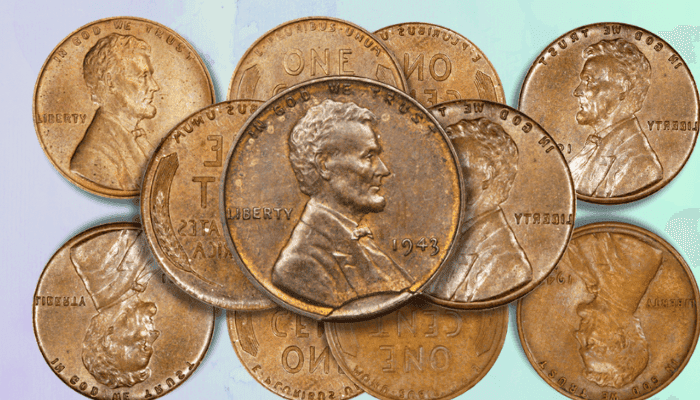
The obverse features Victor D. Brenner‘s iconic portrait of Abraham Lincoln, while the reverse displays the distinctive wheat stalks design. The date "1943" appears in a specific font style unique to that year, with the lower curve of the "3" showing a distinctive extension not found on other dates.
Authentication requires multiple verification steps:
The magnetic test provides the first line of defense against counterfeits. Genuine 1943 Copper Pennies will not attract a magnet, while steel cents (even copper-plated ones) will show magnetic properties.
Weight verification proves crucial, as copper pennies weigh noticeably more than their steel counterparts. A precision scale capable of measuring to hundredths of a gram becomes essential.
Professional grading services employ advanced metallurgical testing, including X-ray fluorescence spectroscopy, to verify the coin‘s composition definitively.
Current Market Values and Notable Sales
The market for 1943 Copper Pennies has shown remarkable strength and growth over the past decades. Current valuations vary significantly based on mint mark, condition, and provenance:
The unique Denver Mint specimen, graded MS64 BN by PCGS, commands the highest value, having sold for $1.7 million. Market estimates suggest its current value exceeds $2 million.
Philadelphia Mint examples in MS63 condition regularly trade in the $850,000 to $1 million range, with superior specimens potentially worth more.
San Francisco Mint specimens, typically found in slightly lower grades, still command prices from $500,000 to $750,000.
Even heavily circulated authentic specimens can fetch six-figure sums, with one VF35 example selling for $282,000 at auction.
Investment Considerations and Market Trends
For serious numismatic investors, the 1943 Copper Penny presents unique opportunities. The coin‘s combination of historical significance, extreme rarity, and strong price appreciation history makes it particularly attractive to high-end collectors.
Market analysis shows consistent price appreciation over the past three decades, with values increasing an average of 12% annually. This growth rate surpasses many traditional investments and even other rare coins.
However, potential investors should consider several factors:
Authentication remains paramount, as sophisticated counterfeits continue to appear in the market. Working with reputable dealers and third-party grading services proves essential.
Liquidity can vary, as the ultra-high-end nature of these coins limits the potential buyer pool. Patience may be required when seeking to sell.
Insurance and security costs must be factored into the overall investment strategy, as these coins require specialized storage and protection.
Regional Market Variations and Collecting Patterns
Interesting geographic patterns emerge when analyzing the 1943 Copper Penny market. The Northeast traditionally shows the strongest presence of both buyers and sellers, with major auction houses reporting the highest concentration of sales in this region.
West Coast collectors have become increasingly active in recent years, particularly in California and Washington state. This emerging collector base has contributed to rising prices and increased competition for premium specimens.
The Midwest maintains a stable market with strong private collector participation, while Southern states show growing interest, particularly among institutional buyers and investment groups.
Conservation and Preservation Methods
Proper preservation of a 1943 Copper Penny requires careful attention to environmental controls and storage methods. Temperature should remain stable between 68-72°F, with relative humidity maintained at 45-50%.
Professional conservators recommend:
Storing coins in inert materials like Mylar or high-grade acetate holders
Avoiding direct handling by using cotton gloves or holding coins by their edges
Regular monitoring for any signs of environmental damage or deterioration
Maintaining detailed condition reports and photographs
Authentication Guide for Collectors
When examining a potential 1943 Copper Penny, several key areas demand careful scrutiny:
Strike characteristics should show sharp rim definition and clear detail in Lincoln‘s hair and the wheat stalks. The lettering must display precise formation consistent with 1943 production methods.
Surface analysis requires careful examination of the coin‘s patina. Genuine specimens typically show natural copper toning patterns that develop over decades.
Date formation proves crucial, as many counterfeits begin life as altered 1948 cents. The specific font characteristics of the 1943 date, particularly the "3," must match known genuine examples.
Building a Legacy Collection
For collectors considering adding a 1943 Copper Penny to their holdings, several strategies can improve the likelihood of success:
Develop relationships with major dealers specializing in error coins and rarities. These connections often provide early access to fresh-to-market specimens.
Study auction records thoroughly to understand price trends and condition rarity patterns. This knowledge proves invaluable when evaluating potential purchases.
Consider joining specialized collector groups focused on Lincoln cents or error coins. These communities often share valuable information and experiences.
Document everything related to potential purchases, including certification numbers, photographs, and provenance information.
Future Market Outlook
The market for 1943 Copper Pennies shows strong indicators for continued growth. Several factors support this outlook:
Increasing international collector interest, particularly from Asia and Europe, expands the potential buyer pool.
Growing appreciation for historical American rarities drives demand among serious collectors.
Limited supply ensures continued scarcity, while new discoveries remain possible but increasingly unlikely.
The coin‘s fascinating story continues to capture public imagination, maintaining strong interest from both collectors and investors.
Conclusion
The 1943 Copper Penny stands as a testament to the enduring appeal of numismatic rarities. Its combination of historical significance, extreme rarity, and strong market performance creates a compelling case for both collectors and investors. As we approach the coin‘s 80th anniversary, its position as one of America‘s most valuable and intriguing coins appears stronger than ever.
For those fortunate enough to encounter or acquire one of these remarkable pieces, they possess not just a valuable coin, but a tangible piece of American history. The story of the 1943 Copper Penny reminds us that sometimes the most valuable treasures arise from simple mistakes, preserved through time by careful stewardship and passionate collecting.