The 1985 Twenty Dollar Bill: A Collector‘s Guide to Value and Historical Significance
As an antique currency specialist with over two decades of experience examining rare bills, I find the 1985 twenty-dollar bill particularly fascinating. While most examples circulate at face value, certain specimens have achieved remarkable prices, with the most notable selling for $6,900 in 2005.
Historical Context and Design Elements
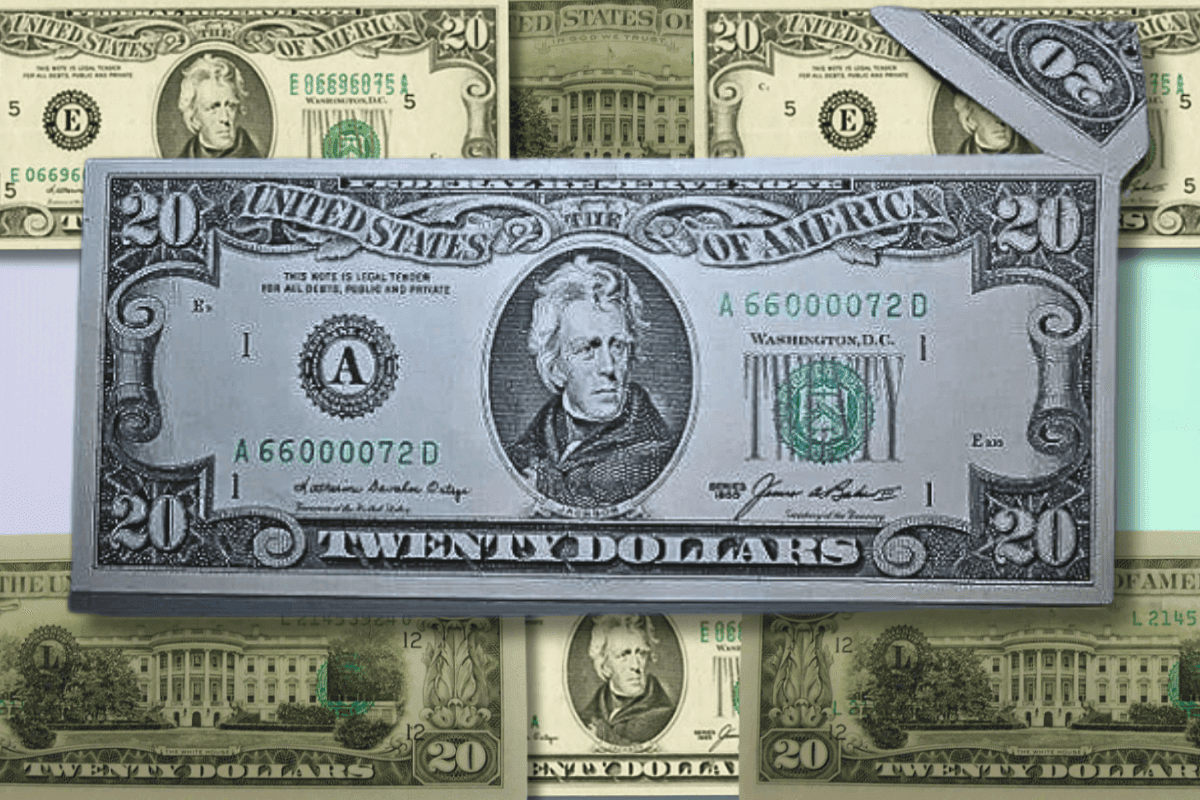
The 1985 series twenty-dollar Federal Reserve Note represents a significant period in American currency production. These notes feature the traditional portrait of Andrew Jackson, continuing a design legacy that began in 1928. The green Treasury seal and Federal Reserve Bank seals maintain the iconic American currency aesthetic that collectors cherish.
When examining a 1985 twenty-dollar bill, you‘ll notice several distinctive features. The portrait of Andrew Jackson appears slightly left of center, while the Treasury seal sits prominently to the right. The Federal Reserve Bank seal and corresponding letter designation appear on the left side. These positioning elements prove crucial for authentication.
Production Details and Varieties
The Bureau of Engraving and Printing produced approximately 6.8 billion regular notes and 36.4 million star replacement notes during the 1985 series run. All production occurred at the Washington D.C. facility, as the Fort Worth location hadn‘t opened yet.
Twelve Federal Reserve Bank varieties exist, designated by letters A through L:
A – Boston
B – New York
C – Philadelphia
D – Cleveland
E – Richmond
F – Atlanta
G – Chicago
H – St. Louis
I – Minneapolis
J – Kansas City
K – Dallas
L – San Francisco
Each variety displays its corresponding letter within the Federal Reserve seal. While supply quantities varied among districts, most regular issues remain readily available today.
The $6,900 Specimen: A Remarkable Error Note
The most valuable 1985 twenty-dollar bill sold to date features an extraordinary printing error that currency collectors dream of discovering. This specimen, which sold at auction in 2005, displays the middle portions of two identical notes printed sideways on standard-size currency paper.
What makes this error particularly intriguing is its documented journey through official channels. The note bears a purple rubber stamp reading "No Value Redeemed by BEP," indicating it reached a Federal Reserve bank before being pulled from circulation. This official marking adds considerable provenance value to an already remarkable piece.
Market Values Across Conditions
Regular 1985 twenty-dollar bills typically trade based on their condition:
Circulated specimens generally maintain face value ($20), regardless of wear level, provided they retain over 50% of the original surface area. Choice Uncirculated notes (MS-63) command $40-50, while Gem specimens (MS-65 and higher) can fetch $50 or more depending on quality.
Star replacement notes, marked by a star symbol replacing the last digit in the serial number, typically sell for $85-90 in uncirculated condition. These notes represent approximately 0.5% of total production.
Notable Error Categories
Beyond the record-setting $6,900 specimen, several other error types attract collector interest:
Cutting Errors: A particularly appealing example showing perfectly proportioned halves from two different notes sold for $2,160 in January 2022. Another specimen featuring portions of three additional notes attached to a complete bill achieved $2,300 in 2005.
Third Print Errors: These occur when serial numbers and seals print on the reverse instead of the obverse. A San Francisco star note with this error sold for $4,320 in 2023, demonstrating how multiple special attributes can multiply value.
Misaligned Prints: Less severe but still collectible, these show shifted serial numbers, seals, or other elements. Values typically range from $100-500 depending on severity and condition.
Authentication Techniques
When examining 1985 twenty-dollar bills, several authentication points require careful attention:
Paper Quality: Genuine notes use distinctive cotton-linen paper with randomly distributed red and blue security fibers visible under magnification.
Printing Methods: The primary design uses intaglio printing, creating a raised feel on portrait and border details. Flat areas should appear smooth.
Security Features: While primitive by today‘s standards, 1985 notes include microprinting around the portrait and fine-line detail work that counterfeiters struggled to replicate.
Conservation and Preservation
Proper storage proves essential for maintaining value. Store notes flat in archival-quality currency holders that don‘t contain harmful chemicals. Avoid plastic materials that might trap moisture or release damaging compounds over time.
Climate control matters significantly. Maintain constant temperature and humidity levels, ideally around 70°F and 50% relative humidity. Rapid environmental changes can damage paper fibers and inks.
Handle notes by their edges only, and never use tape or other adhesives for repairs. Professional conservation services exist for damaged specimens worth restoring.
Regional Market Variations
Market values for 1985 twenty-dollar bills show interesting regional patterns. Areas with historically active collecting communities, like the Northeast and West Coast, often see higher prices for premium specimens. Midwest markets typically offer better opportunities for finding undervalued pieces.
Error notes tend to command the highest premiums in major metropolitan areas where specialized currency dealers operate. Rural areas occasionally yield discoveries as fewer collectors actively search these markets.
Investment Strategy
For investors considering 1985 twenty-dollar bills, several approaches merit consideration:
Focus on acquiring the highest-grade regular issues you can find. While common in circulated condition, truly pristine examples become increasingly scarce.
Target documented error notes with provenance. The market for unusual varieties continues strengthening as collectors seek distinctive pieces for their collections.
Consider building complete Federal Reserve Bank variety sets in matching grades. Such collections often sell for premiums over individual note values.
Collecting Recommendations
If you‘re starting a 1985 twenty-dollar bill collection, consider these guidelines:
Begin with uncirculated regular issues to learn proper grading and authentication. These provide affordable entry points while developing expertise.
Document everything. Keep detailed records of purchases, including seller information, prices paid, and any certification numbers.
Network with experienced collectors and dealers. Their knowledge proves invaluable for spotting opportunities and avoiding pitfalls.
Join numismatic organizations focusing on paper money. These groups offer educational resources and trading opportunities not available elsewhere.
Future Market Outlook
The market for 1985 twenty-dollar bills continues evolving. While common examples likely maintain face value, premium specimens should appreciate steadily. Error notes, particularly those with documentation proving institutional handling, represent the segment with greatest potential for significant value increases.
As collecting interests shift toward more modern issues, well-preserved 1985 specimens may see increased demand. Their relative affordability compared to earlier series makes them attractive to new collectors entering the market.
The announced eventual replacement of Andrew Jackson‘s portrait with Harriet Tubman‘s image on future twenty-dollar bills may spark additional interest in collecting earlier designs. This could create opportunities for strategic acquisitions before such changes occur.
Remember that condition remains paramount. Even common varieties in exceptional states of preservation can command surprising premiums from condition-conscious collectors. Focus on quality over quantity when building your collection.
Through careful study, proper preservation, and strategic acquisition, you can build a rewarding collection of 1985 twenty-dollar bills. Whether pursuing regular issues, star notes, or fascinating errors like the $6,900 specimen, this series offers numerous possibilities for both beginning and advanced collectors.