Antique Ruby Rings Value: From Royal Treasures to Record-Breaking $2.6 Million Sales
The warm glow of a perfectly cut ruby catches my eye as I examine an exquisite Victorian ring under my loupe. After 25 years of collecting and studying antique ruby rings, each piece still fills me with wonder. These remarkable jewels carry centuries of history in their crimson depths, and today‘s collectors prize them more than ever.
The Timeless Appeal of Antique Ruby Rings
Ancient civilizations revered rubies as the "king of precious stones," and this reverence lives on in today‘s market. The most extraordinary antique ruby rings command millions at auction, with the finest examples achieving prices that surpass even the rarest diamonds. The 2010 sale of a 9.20-carat Burmese ruby ring for $2.6 million marked a watershed moment in the market.
The story of antique ruby rings begins in the mist-shrouded valleys of Myanmar (formerly Burma), where Stone Age tools discovered at ancient mining sites date back to 2500 BC. These early miners recognized the exceptional quality of Mogok Valley rubies, whose perfect "pigeon‘s blood" red color remains the standard of excellence.
Understanding Ruby Ring Values Through Time
The value of antique ruby rings stems from an intricate interplay of factors. During my years specializing in period jewelry, I‘ve observed how historical significance combines with gemological qualities to determine worth.
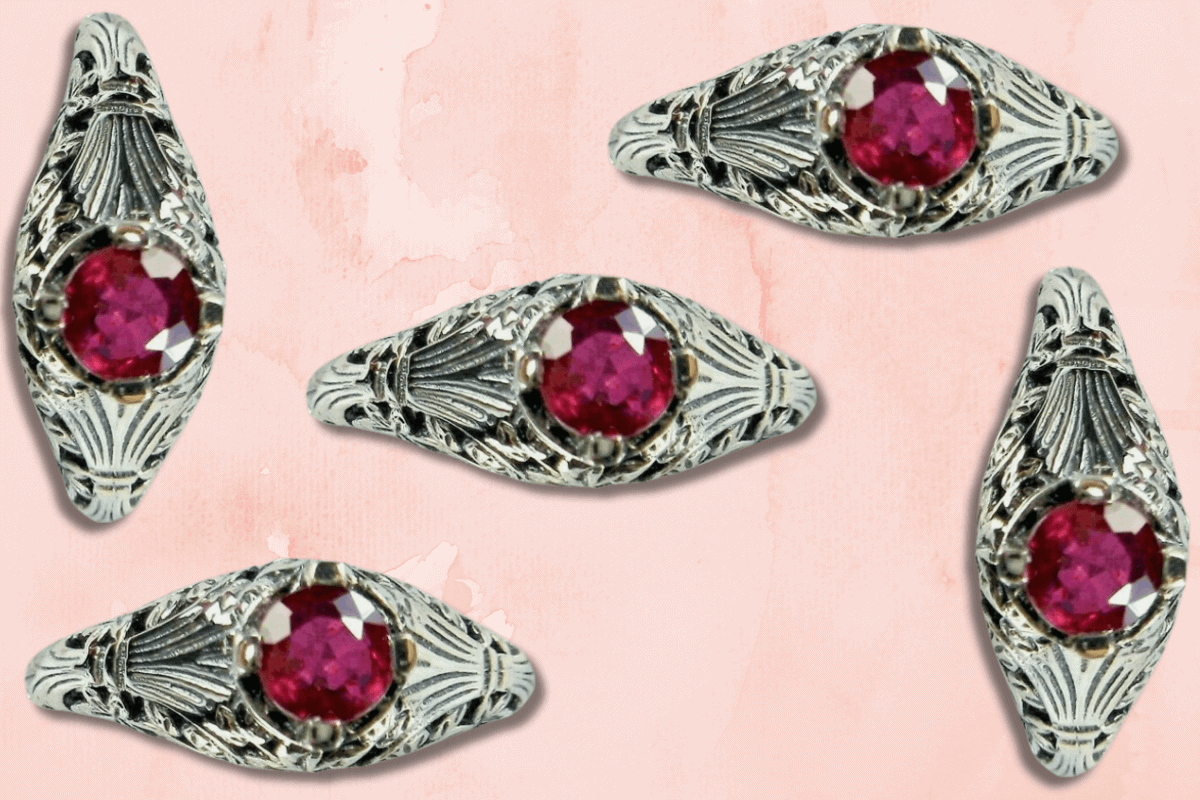
Georgian era rings (1714-1837) typically feature rose-cut rubies in closed-back settings. These early pieces often incorporate foiled backs to enhance color and brilliance. A fine Georgian ruby ring with documented provenance might fetch $15,000 to $50,000 in today‘s market.
Victorian era pieces (1837-1901) showcase more varied designs, from romantic cluster rings to dramatic snake motifs. The industrial revolution brought new cutting techniques, resulting in more precise faceting. Well-preserved Victorian ruby rings from notable makers range from $8,000 to $100,000.
Edwardian and Art Deco pieces (1901-1935) feature innovative platinum settings and precise caliber-cut rubies. These sophisticated designs remain highly sought after, with prices ranging from $10,000 to over $250,000 for exceptional examples.
Identifying Authentic Antique Ruby Rings
Authentication requires careful examination of multiple elements. The metal content tells an important story – Georgian and Victorian pieces typically contain higher purity gold (18-22k) than modern jewelry. Under magnification, hand-forging marks reveal period-appropriate manufacturing techniques.
The rubies themselves provide crucial clues. Early cutting styles feature irregular facets and high crowns. Natural inclusions should match known patterns from historical mining regions. Modern treatments like glass filling or beryllium diffusion would not have been available to original craftsmen.
Period-specific construction details matter tremendously. Look for hand-cut seat settings, old-style prongs, and authentic wear patterns. Even small details like the style of hallmarks can confirm authenticity.
Market Analysis: Current Trends and Regional Variations
The market for antique ruby rings shows fascinating regional differences. Asian buyers particularly value documented Burmese origin, often paying 20-30% premiums for certified stones. European collectors focus more on historical significance and maker‘s marks. North American buyers increasingly seek Victorian pieces with romantic symbolism.
Investment-grade pieces continue appreciating at 8-12% annually, outperforming many traditional investments. Museum-quality rings with royal or aristocratic provenance can see even stronger returns.
Notable Sales That Shaped the Market
The 2010 sale of the "Sunrise Ruby Ring" for $2.6 million represented a pivotal moment. This extraordinary piece featured a 9.20-carat Burmese ruby of exceptional color, mounted in a circa 1910 platinum setting with diamond shoulders. Its documented provenance suggested royal ownership.
In 2022, a Victorian memorial ring achieved $195,000 at auction. The 3.5-carat Burmese ruby displayed classic "pigeon‘s blood" color, while its documented connection to British nobility drove intense bidding.
A rare Art Deco ring by Cartier, featuring a 4.05-carat Burma ruby, sold for $985,000 in 2023. The geometric platinum mounting exemplified the period‘s finest craftsmanship.
Conservation and Care: Preserving Value
Proper care proves essential for maintaining both condition and value. Store antique ruby rings individually in silk-lined boxes at stable temperature and humidity. Handle pieces only with clean hands and support the entire structure when examining.
Regular professional cleaning by an experienced conservator helps prevent deterioration. Document any restoration work carefully, as this affects future value. Consider specialized insurance coverage that accounts for appreciation over time.
Building a Distinguished Collection
Starting a collection requires careful strategy. Begin with well-documented pieces from reputable dealers. Focus initially on one period or style to develop expertise. Consider these factors when evaluating potential acquisitions:
Quality of the ruby takes precedence. Look for stones with rich, saturated color and good transparency. Natural inclusions actually add value by confirming lack of treatment. Size matters less than overall quality and historical significance.
Construction quality reveals much about authenticity. Examine how well the ring has survived daily wear. Original elements should show appropriate aging. Repairs or alterations typically reduce value unless performed by renowned craftsmen.
Documentation increases worth substantially. Original boxes, certificates, or family records can double a piece‘s value. Photographs showing the ring worn by previous owners add historical context.
Authentication Technologies and Expertise
Modern technology aids authentication significantly. Advanced spectroscopy identifies stone origin and treatments. X-ray fluorescence reveals metal composition. Microscopic analysis confirms period-appropriate construction techniques.
However, technology cannot replace connoisseurship. Developing an eye for quality and authenticity requires years of hands-on experience. Study reference collections, attend major auctions, and build relationships with respected dealers.
Investment Considerations and Market Outlook
The market for fine antique ruby rings remains strong, driven by increasing rarity and growing appreciation for historical pieces. Museum-quality examples consistently achieve record prices. However, careful evaluation proves essential.
Consider these factors when investing:
Condition impacts value dramatically. Original elements in good condition command significant premiums. Previous repairs should be disclosed and documented. Professional restoration by recognized experts may preserve or enhance value.
Provenance adds substantial worth. Documented ownership by historical figures or noble families can multiply value several times. Exhibition history in major museums also increases desirability.
Market dynamics vary by region and period. Victorian rings currently show strong appreciation in North American markets. Art Deco pieces command premium prices in Asia. European buyers focus heavily on signed pieces from renowned makers.
Practical Guidance for Collectors
When beginning your collection, establish relationships with reputable dealers who specialize in period jewelry. Request detailed condition reports and authentication documents. Compare prices across multiple sources before making significant purchases.
Join collector organizations to expand your knowledge and network. Attend major auctions to observe market dynamics firsthand. Consider having important pieces independently authenticated by recognized laboratories.
Document your collection thoroughly. Maintain detailed records of provenance, condition, and any restoration work. Quality photographs help track condition over time and support insurance claims if needed.
The world of antique ruby rings offers remarkable opportunities for appreciation and investment. These magnificent pieces connect us to centuries of craftsmanship and human history. With careful study and guidance, you can build a collection that brings both personal joy and financial reward.
Remember that each antique ruby ring tells a unique story through its design, materials, and provenance. Taking time to understand these stories enriches the collecting experience immeasurably. The field continues evolving as new scholarship emerges and market preferences shift, making it an endlessly fascinating pursuit for the dedicated collector.