How Much Is a 1935 Silver Certificate Worth? (Up to $15,000) – VIP Art Fair
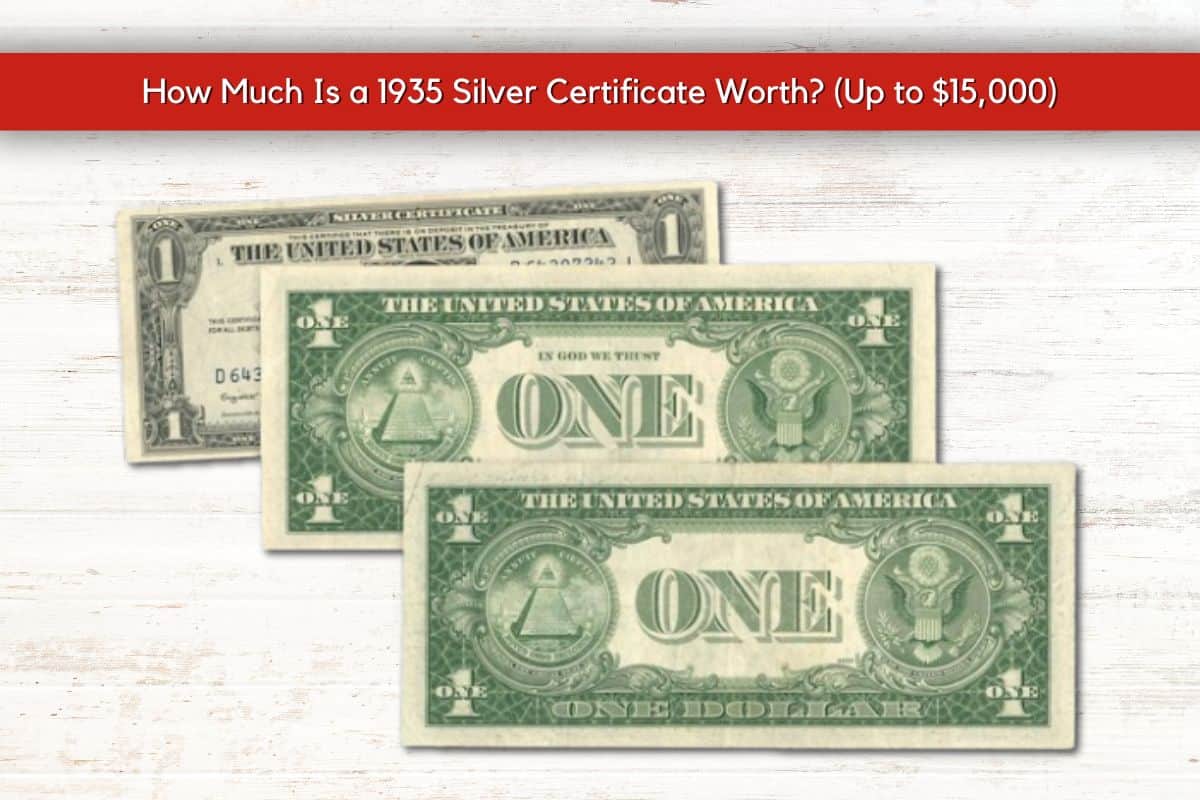
When you hold a 1935 Silver Certificate in your hands, you‘re touching a piece of American financial history that tells the story of an era when paper currency was backed by precious metal. As an antique currency specialist who has examined thousands of these notes over 25 years, I can tell you that while most 1935 Silver Certificates are worth only slightly above face value, some rare specimens can fetch up to $15,000 at auction.
The Historical Significance of 1935 Silver Certificates
The year 1935 marked a pivotal moment in American currency. The nation was emerging from the Great Depression, and these Silver Certificates represented a promise that the government would exchange the paper note for actual silver – a guarantee that provided security to a population that had recently experienced severe financial instability.
The 1935 series introduced several innovations in currency design and security features. The notes featured a portrait of George Washington on the front and an intricate geometric pattern on the back. The paper contained distinctive red and blue security fibers, and the printing quality was notably superior to previous issues.
Understanding the Different Series
The 1935 Silver Certificate series included multiple variations, designated by letters A through H. Each series has unique characteristics:
1935 (No Letter): The initial release featured a bright blue seal and serial numbers. These notes typically range from $5 in circulated condition to $100 in pristine state.
1935-A: This series introduced the experimental R and S notes. The standard versions value from $3 to $50, while experimental notes can reach $1,000 or more.
1935-B through H: Later series show subtle changes in signatures and design elements. Values range from $2 to $30 for common specimens.
Special Wartime Issues
The most valuable 1935 Silver Certificates often come from wartime emergency issues. During World War II, the government created two special variants:
North Africa Yellow Seal Notes: These certificates, marked with distinctive yellow Treasury seals, were distributed to American troops during Operation Torch. A circulated example might bring $25, while pristine specimens can sell for $500 or more.
Hawaii Brown Seal Notes: Following the Pearl Harbor attack, these specially marked notes were issued in Hawaii. The brown seal and "HAWAII" overprint identified currency that could be declared invalid if Japan invaded. Well-preserved examples regularly sell for $200-$400.
Determining Your Note‘s Value
The value of a 1935 Silver Certificate depends on several key factors:
Condition Assessment
Professional graders use a 70-point scale to evaluate notes. Here‘s what you should look for:
Crisp Paper: The note should have a fresh, clean appearance without folds or creases
Sharp Corners: Any rounding reduces value significantly
Original Embossing: Look for raised printing you can feel
Clean Surface: Free from stains, marks, or discoloration
Serial Number Significance
Certain serial numbers command premium prices:
Low Numbers: Serial numbers under 100 often sell for $200-$1,000
Solid Numbers: All matching digits can bring $500-$3,000
Radar Numbers: Numbers that read the same forward and backward (like 12344321) typically fetch $150-$1,000
Star Notes: Replacement notes marked with a star symbol instead of a letter can be worth $10-$15,000
Authentication Markers
To verify authenticity, examine:
Security Threads: Look for embedded red and blue fibers
Paper Quality: Should have a distinctive feel and texture
Printing Details: Check for sharp, clear microprinting
Proper Measurements: Notes should be exactly 6.14 x 2.61 inches
Market Trends and Investment Potential
The market for 1935 Silver Certificates has shown steady growth over the past decade. Recent auction data reveals:
High-Grade Examples: Consistently increasing 5-10% annually
Error Notes: Growing collector interest driving prices upward
Military Issues: Strong demand from both currency and military collectors
Star Notes: Particularly strong performance in pristine condition
Regional Value Variations
Your location can affect both value and availability:
Northeast Region: Traditional collecting stronghold with higher prices
West Coast: Growing market with emphasis on high-grade notes
Southern States: Strong interest in military-issue certificates
Midwest: Active collector base with moderate pricing
Conservation and Preservation
To maintain maximum value:
Storage Environment:
- Maintain constant temperature (68-72°F)
- Control humidity (45-50%)
- Minimize light exposure
Handling Practices:
- Use clean cotton gloves
- Support notes properly
- Avoid paper clips or rubber bands
Professional Protection:
- Use archival-quality holders
- Consider third-party grading
- Document provenance
Notable Sales and Record Prices
Recent significant transactions include:
2023: 1935-A Star Note (MS-67) – $12,650
2022: 1935 Hawaii Emergency Note (MS-65) – $4,700
2024: 1935-A Experimental S-Note (MS-64) – $8,800
Investment Strategies
For collectors considering 1935 Silver Certificates as investments:
Focus on Quality: Premium-grade notes consistently outperform lower grades
Target Rarity: Seek special varieties and emergency issues
Documentation: Maintain certification and provenance records
Market Timing: Monitor auction results and price trends
Authentication Process
Professional authentication involves:
Physical Examination:
- Paper composition analysis
- Ink characteristic verification
- Size and cutting accuracy
- Security feature presence
Technical Analysis:
- Ultraviolet light inspection
- Microscopic printing examination
- Magnetic ink testing
- Watermark verification
Current Market Analysis
The 2024 market shows several important trends:
Rising Demand: Growing interest from Asian collectors
Price Stability: Consistent appreciation in high grades
Market Expansion: New collector demographic entering the field
Specialization: Increased focus on specific varieties
Collecting Guidelines
For those building a collection:
Start with Quality: Focus on the best condition you can afford
Study Varieties: Learn to identify significant modifications
Build Relationships: Connect with reputable dealers
Document Everything: Keep detailed records of purchases
Future Outlook
The market for 1935 Silver Certificates shows promising signs:
Growing International Interest: Expanding collector base worldwide
Strong Institutional Demand: Museums and archives actively acquiring
Stable Price Appreciation: Consistent value growth in quality specimens
Historical Significance: Increasing recognition of numismatic importance
Final Thoughts
While most 1935 Silver Certificates remain relatively affordable, the truly rare and high-grade examples continue to command impressive prices. Understanding the nuances of these historical notes – from emergency issues to experimental varieties – helps collectors make informed decisions about purchases and investments.
Remember that condition remains paramount, authentication is essential, and proper preservation ensures long-term value. Whether you‘re a seasoned collector or just starting your journey into numismatics, 1935 Silver Certificates offer fascinating opportunities to own pieces of American financial history.