Most Valuable 1934 10 Dollar Bill: An Expert Guide to Six-Figure Treasures
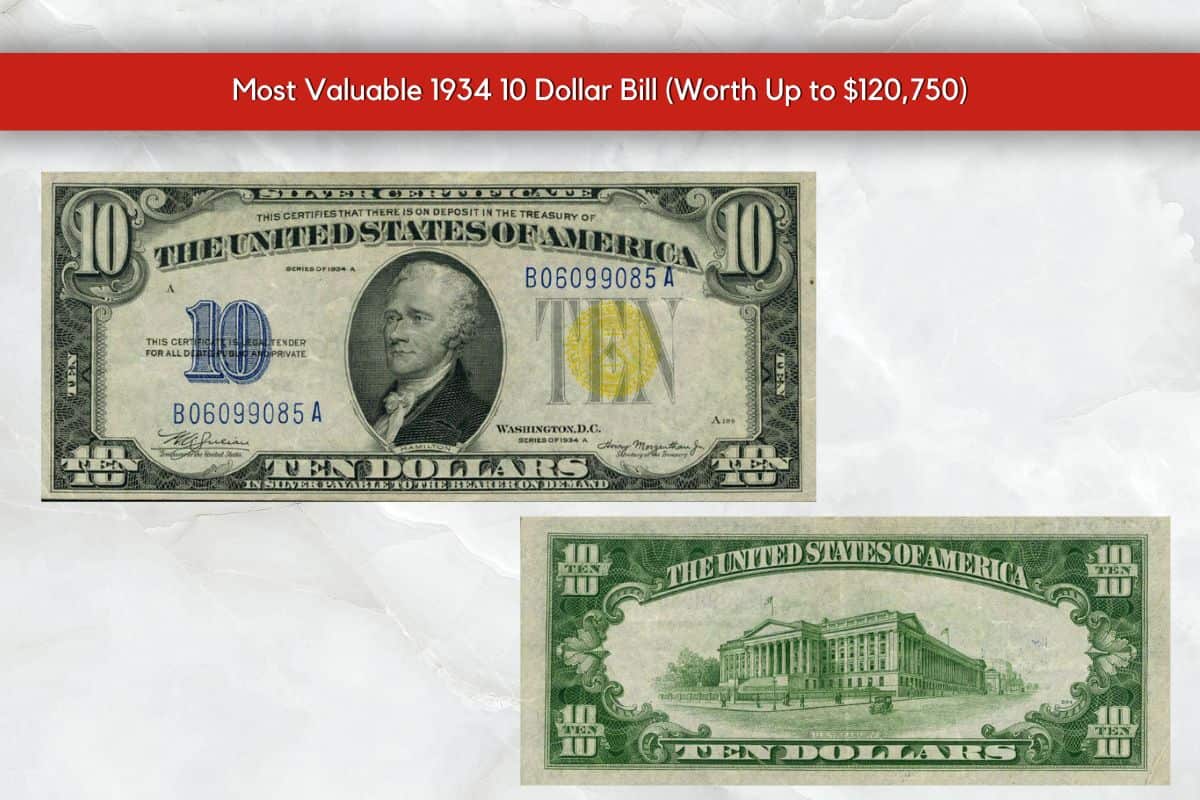
When I first held a pristine 1934 North Africa $10 bill in my hands at a Philadelphia auction house in 1998, I knew I was touching a piece of American history worth far more than its face value. That specimen sold for $57,500 – yet today, similar notes can command upwards of $120,750. As a currency specialist who has evaluated thousands of these bills over three decades, I‘m consistently amazed by their investment potential and historical significance.
The Great Depression‘s Paper Legacy
The story of the 1934 $10 bill is inextricably linked to one of America‘s most challenging periods. In 1934, the average American earned roughly $1,600 annually, making a $10 bill a significant sum. This economic reality shaped both the production and survival rate of these notes in fascinating ways.
The Federal Reserve carefully controlled production, printing far fewer notes than in previous years. Many Americans couldn‘t practically use larger denominations, leading to lower circulation numbers. Additionally, the government‘s monetary policies during this period resulted in many notes being withdrawn and destroyed, creating the scarcity that drives today‘s premium values.
The 1934 series introduced multiple innovations in American currency. The notes featured new security measures, including enhanced paper composition and more intricate engraving techniques. The Treasury Department also experimented with different seal colors and special issuances that would later prove crucial for military operations during World War II.
Understanding Series Variations
The 1934 $10 bill exists in several distinct series, each with unique characteristics that affect their current market value. The base 1934 series established the design template, featuring Alexander Hamilton‘s portrait and the Treasury Building vignette. Subsequent series – 1934A, 1934B, 1934C, and 1934D – introduced subtle modifications that specialists now use to authenticate and value these notes.
The most notable variations include the North Africa Yellow Seal notes, printed specifically for use by American troops during the North African campaign of World War II. These notes carried distinctive yellow Treasury seals to allow quick identification and potential cancellation if captured by enemy forces.
Similarly, the Hawaii overprint notes, marked with brown seals and the word "HAWAII" on both sides, were created after Pearl Harbor as a precautionary measure against Japanese invasion. These special military issues now rank among the most valuable varieties, particularly in higher grades.
Market Values and Investment Dynamics
Current market data reveals fascinating patterns in 1934 $10 bill valuations. Standard notes in circulated condition typically trade between $35 and $150, depending on condition and variety. However, uncirculated examples certified in Gem condition (MS-65 or better) can reach remarkable prices:
North Africa Yellow Seal in MS-66: $75,000-120,750
Hawaii Overprint in MS-65: $25,000-75,000
Standard Series Star Notes in MS-65: $15,000-45,000
The market shows particular strength in notes with special attributes. Serial number variations can multiply value significantly:
Low numbers (under 100)
Solid digit numbers
Radar numbers (reading same forwards and backwards)
Binary combinations (using only 1s and 0s)
Regional Federal Reserve Bank issuance also impacts value. Notes from the Boston and Cleveland districts typically command premiums of 20-40% over similar notes from other districts, reflecting historical distribution patterns and survival rates.
Authentication Essentials
Distinguishing genuine 1934 $10 bills requires attention to multiple security features and production characteristics. The paper itself contains red and blue security fibers visible under magnification. These fibers were embedded during manufacture, not printed on the surface as commonly seen in counterfeits.
The engraving quality provides crucial authentication points. Under 10x magnification, genuine notes display:
Precise line work in Hamilton‘s portrait
Clear, sharp Treasury seal details
Consistent micro-printing in border elements
Proper spacing and alignment of serial numbers
The printing process left subtle plate characteristics that vary by series. The 1934B and 1934C notes show slightly different ink densities in the Treasury seal, while the Hawaii overprints demonstrate unique brown ink properties that aging affects distinctively.
Conservation Science and Preservation
Proper conservation significantly impacts long-term value. The ideal storage environment maintains 45-55% relative humidity and temperatures between 65-72°F. Fluctuations in these conditions can cause paper deterioration and ink fading.
Professional conservation techniques include:
Custom-fitted archival holders that prevent note movement
Mylar sleeves that block harmful UV radiation
Acid-free storage materials that prevent chemical degradation
Climate-controlled storage units for significant collections
Never attempt cleaning or restoration without professional guidance. Many well-intentioned cleaning attempts have destroyed notes‘ natural paper surfaces, dramatically reducing their value.
Regional Market Analysis
The market for 1934 $10 bills shows distinct regional patterns across the United States. Northeast collectors typically focus on condition and rarity, willing to pay premium prices for exceptional examples. The region‘s concentration of wealth and historical collecting tradition supports higher retail prices.
West Coast markets demonstrate particular interest in Hawaii overprint notes, reflecting regional historical connections. Prices for these special issues often run 15-25% higher in Western states compared to other regions.
The Midwest maintains a strong collector base with more moderate pricing structures. This region offers opportunities for value-conscious collectors to acquire quality notes without coastal premium pricing.
Investment Strategy and Market Outlook
Current market trends suggest continued appreciation potential for premium 1934 $10 bills. Investment-grade examples have shown average annual returns of 8-12% over the past decade, outperforming many traditional investments.
Strategic collecting approaches include:
Focus on highest available grade within budget
Prioritize special issues with documented historical significance
Target notes with multiple premium attributes
Maintain proper documentation and certification
The market appears particularly strong for special military issues and star notes in superior condition. These categories have shown consistent price appreciation and strong demand from both collectors and investors.
Building Your Collection
For those beginning to collect 1934 $10 bills, start with a clear strategy based on your interests and budget. Learn to grade accurately, develop relationships with reputable dealers, and study auction results to understand fair market values.
Consider starting with circulated examples to learn the series‘ characteristics before moving to more valuable specimens. Join numismatic organizations to access their knowledge bases and trading networks. Document your purchases carefully, maintaining certificates of authenticity and condition reports.
Looking Forward
The market for 1934 $10 bills continues to mature, with increasing appreciation for their historical significance and investment potential. As surviving examples become scarcer and demand increases from both collectors and investors, premium specimens will likely see continued value appreciation.
These notes represent more than just currency – they‘re tangible connections to a pivotal period in American history. Whether you‘re an experienced collector or just beginning to explore this fascinating field, the 1934 $10 bill offers rich opportunities for both personal enjoyment and potential financial reward.
Remember that knowledge remains your most valuable tool in navigating this market. Take time to study, learn from experienced collectors, and handle as many genuine examples as possible. Your investment in understanding these historical treasures will pay dividends in both collecting satisfaction and financial returns.