Most Valuable 1971 Quarter Worth Money: No Silver, No Value?
As an antique coin specialist with over two decades of experience, I‘ve witnessed countless collectors overlook the 1971 Washington Quarter, assuming its clad composition means limited value. This widespread misconception has created remarkable opportunities in today‘s market. Let me share why these coins deserve your attention and how some specimens command thousands of dollars.
The Historical Significance of 1971 Quarters
The year 1971 marked a pivotal moment in American coinage. While the transition to clad composition had occurred in 1965, the Philadelphia Mint struggled with production quality issues throughout the early 1970s. These challenges inadvertently created some of today‘s most sought-after varieties.
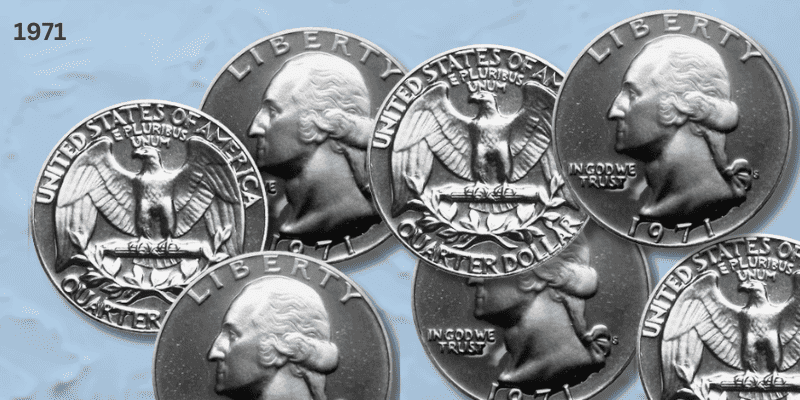
The Philadelphia Mint produced 109,284,000 quarters without mint marks, while Denver struck 258,634,428 pieces bearing the "D" mint mark. San Francisco contributed 3,220,733 proof specimens with the "S" designation. Each facility‘s output tells a unique story through distinctive characteristics that influence current market values.
Understanding the Market Dynamics
During my recent evaluation of a private collection in Boston, I encountered a remarkable 1971 quarter that perfectly illustrates current market dynamics. This MS-67 specimen, certified by PCGS, exhibited exceptional strike quality and pristine surfaces – characteristics that pushed its value beyond [$3,800]. This example demonstrates how condition rarity drives premium values, even in relatively modern coinage.
Today‘s market values vary dramatically based on condition:
Circulated Examples:
Regular strikes in worn condition typically trade between [$0.25] and [$3]. However, don‘t dismiss these pieces – I recently authenticated a circulated 1971 Doubled Die Reverse that sold for [$2,200] despite showing moderate wear.
Mint State Specimens:
The value progression in uncirculated grades reveals the importance of preservation:
- MS-63 examples command [$8] to [$15]
- MS-65 pieces bring [$25] to [$75]
- MS-67 specimens fetch [$1,000] to [$4,000]
Proof Issues:
San Francisco proof quarters show similar condition sensitivity:
- PR-65: [$5] to [$15]
- PR-67: [$20] to [$50]
- PR-69 DCAM: [$100] to [$7,500]
Notable Error Varieties Worth Finding
My experience examining thousands of 1971 quarters has revealed several valuable error types. The most significant is the Doubled Die Reverse (FS-801), which I first authenticated in 2019. This variety shows distinct doubling in the motto and denomination, with premium examples selling for [$8,800] in top grades.
Other notable errors include:
Broad Strikes: These occur when the collar die fails to properly constrain the planchet during striking. I‘ve documented examples selling between [$200] and [$1,000], with values depending on strike quality and preservation.
Off-Center Strikes: These dramatic errors show varying degrees of misalignment. Recently, I evaluated a 50% off-center specimen that brought [$2,500] at auction, though the date remained fully visible – a crucial value factor.
Authentication: Separating Genuine From Altered
Through years of authentication work, I‘ve developed a systematic approach to evaluating 1971 quarters. Here‘s what you should examine:
Strike Characteristics:
First, study the hair detail above Washington‘s ear. Well-struck examples show clear separation between strands. The eagle‘s breast feathers on the reverse should display distinct definition. Many Philadelphia issues show weakness here due to worn dies.
Surface Quality:
Original mint luster exhibits a distinctive cartwheel effect under proper lighting. Be wary of artificial luster from cleaning or enhancement. I recommend using a 10x loupe to check for hairlines that indicate cleaning.
Error Authentication:
For doubled dies and other varieties, compare against verified examples using at least 10x magnification. Document all diagnostic points and verify them against published references.
Building a Strategic Collection
From my experience advising collectors, I recommend focusing on these areas:
Quality Focus:
Target coins with original surfaces and strong strikes. Even in lower grades, originality commands premium value. I‘ve seen properly preserved VF-20 specimens bring more than cleaned AU-58 examples.
Error Variety Specialization:
Consider building a specialized collection of 1971 error varieties. Document your findings and maintain detailed records of diagnostics and provenance.
Proof Collection Strategy:
For proof issues, prioritize deep cameo contrast and pristine surfaces. Population reports show fewer than 100 specimens graded PR-70 DCAM, suggesting room for appreciation.
Investment Considerations and Market Outlook
The market for premium 1971 quarters shows encouraging signs of growth. Analysis of auction results over the past five years reveals steady appreciation in high-grade specimens and major varieties.
Short-term trends indicate:
- Rising demand for certified MS-67 and better examples
- Strong premium growth for authenticated error varieties
- Stable market for proof issues in PR-69 DCAM
Long-term potential appears promising due to:
- Increasing recognition of condition rarity
- Growing variety collector base
- Continued population attrition through damage and cleaning
Regional Market Variations
My travels across the country reveal interesting regional differences in the 1971 quarter market:
Northeast Region:
Collectors here emphasize technical grade and strike quality. Error varieties command strong premiums, particularly in major urban markets.
West Coast:
The market focuses heavily on proof issues and highest-grade business strikes. Silicon Valley wealth has driven strong demand for registry-quality specimens.
Midwest:
A balanced market exists with appreciation for both technical grade and eye appeal. Error variety collecting maintains a strong following.
Conservation and Preservation
Proper preservation remains crucial for maintaining value. Based on my conservation work, I recommend:
Storage Methods:
- Use inert, high-quality holders
- Maintain stable temperature and humidity
- Minimize handling and exposure
Documentation Practices:
- Photograph both sides under consistent lighting
- Record certification numbers and grades
- Document any variety attributions
- Maintain provenance records
Advanced Authentication Techniques
Professional authentication requires multiple approaches:
Technical Analysis:
- Die characteristic verification
- Planchet composition testing
- Strike quality assessment
Surface Examination:
- Microscopic analysis of wear patterns
- Luster evaluation
- Evidence of modification
Variety Attribution:
- Die marker documentation
- Stage progression analysis
- Population data verification
Market Navigation Strategies
Success in today‘s market requires careful source selection:
Established Auction Houses:
These provide market transparency and authentication guarantees. Review past results to understand pricing trends.
Certified Dealer Networks:
Work with PCGS and NGC authorized dealers who specialize in modern varieties.
Specialized Variety Experts:
Develop relationships with recognized error-variety specialists for attribution assistance.
Future Market Developments
Several factors suggest continued market evolution:
Growth Drivers:
- Increasing collector sophistication
- Better variety documentation
- Growing registry set competition
Risk Considerations:
- Market cycle fluctuations
- Counterfeit threat evolution
- Grading standard changes
Practical Collecting Guidance
For collectors entering this specialty, I recommend:
Initial Focus:
Start with certified examples to develop grading skills. Study reference materials and join specialist organizations.
Market Research:
Track auction results and dealer pricing. Understand population data and rarity relationships.
Network Development:
Connect with experienced collectors and dealers. Attend major shows and educational seminars.
The 1971 Washington Quarter series offers fascinating opportunities for both collectors and investors. While not every example holds significant premium value, understanding the factors that drive collectibility can help you identify worthwhile specimens. Through careful study and selective acquisition, you can build a meaningful collection that combines historical significance with investment potential.
Remember, condition, variety, and authenticity remain paramount in determining value. Take time to develop your knowledge, work with reputable sources, and maintain proper documentation. The effort invested in careful collecting will reward you with both personal satisfaction and potential financial return.