Convolution Neural Networks: A Transformative Journey Through Artificial Perception
The Genesis of Computational Vision
Imagine standing at the intersection of neuroscience and computer engineering, where machines begin to "see" the world not just as pixels, but as intricate landscapes of information. This is the remarkable realm of Convolution Neural Networks (CNNs), a technological marvel that has revolutionized how we understand machine perception.
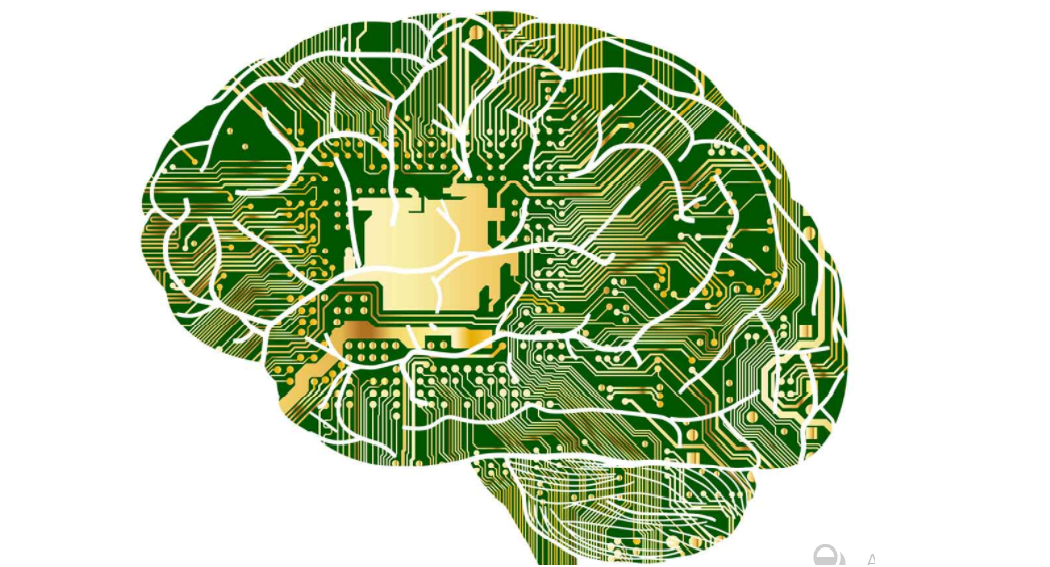
When I first encountered CNNs during my early research days, it felt like witnessing a technological miracle. These networks weren‘t just algorithms; they were digital mimics of our brain‘s visual processing system, capable of extracting complex patterns from raw data with astonishing precision.
The Biological Inspiration
Our human brain processes visual information through a hierarchical system. When you glance at a photograph, your visual cortex doesn‘t immediately recognize the entire scene. Instead, it breaks down the image into fundamental components – edges, shapes, colors – before reconstructing a comprehensive understanding.
CNNs follow an eerily similar approach. They deconstruct images through layers of computational filters, progressively understanding more complex features with each successive layer. It‘s as if these networks are learning to see, much like a child develops visual comprehension.
Mathematical Foundations: Beyond Simple Computation
The heart of CNN lies in its convolution operation, a mathematical transformation that goes far beyond traditional computational methods. Let‘s demystify this intricate process.
[h(x) = \int_{-\infty}^{\infty} f(t)g(x-t)dt]This elegant equation represents more than a mathematical abstraction. It‘s a window into how machines can extract meaningful information from seemingly chaotic data streams. The convolution operation acts like a sophisticated filter, sliding across input data and detecting patterns that human eyes might miss.
Architectural Evolution
Early neural network designs were rudimentary, struggling with complex pattern recognition. Researchers like Yann LeCun and Geoffrey Hinton challenged these limitations, pioneering architectures that could learn hierarchical representations.
Their breakthrough came from understanding that not all neural connections are equally important. By introducing local receptive fields and parameter sharing, they created networks that could efficiently process visual information with dramatically reduced computational overhead.
The Intricate Dance of Layers
Picture a CNN as a multi-tiered detective, systematically investigating visual clues. Each layer serves a unique purpose in unraveling the data‘s mysteries.
Convolution Layers: The Feature Detectors
Convolution layers are the network‘s primary investigators. They use kernels – small mathematical windows – that slide across input data, detecting local patterns. These kernels might identify simple features like edges in initial layers, progressively advancing to complex object characteristics in deeper layers.
Consider an image of a cat. The first convolution layer might detect basic edges and color transitions. Subsequent layers would recognize more nuanced features – whisker patterns, ear shapes, fur textures – ultimately constructing a comprehensive understanding of "catness".
Activation Functions: The Decision Makers
Activation functions like ReLU (Rectified Linear Unit) introduce non-linearity, allowing networks to learn complex, non-linear relationships. They‘re the neural network‘s decision-making mechanism, determining which signals propagate and which get suppressed.
Pooling Layers: Information Distillation
Pooling layers act as information condensers. By reducing spatial dimensions, they help networks focus on the most critical features while discarding redundant information. Max pooling, for instance, retains the most significant activation values, creating a more compact representation.
Real-World Performance: Beyond Academic Theory
CNNs have transcended academic research, becoming pivotal in numerous domains:
- Medical Imaging: Detecting subtle anomalies in radiological scans
- Autonomous Vehicles: Recognizing road conditions and potential hazards
- Facial Recognition: Powering security and personalization technologies
- Satellite Imagery Analysis: Monitoring environmental changes
Computational Challenges and Innovations
Despite their remarkable capabilities, CNNs aren‘t without challenges. Training these networks requires substantial computational resources and sophisticated optimization strategies.
Researchers are continuously developing more efficient architectures like EfficientNet and MobileNet, which balance model complexity with computational efficiency. These innovations represent a critical frontier in making AI more accessible and sustainable.
The Quantum Horizon: Future Perspectives
As we look forward, the convergence of quantum computing and neural networks promises unprecedented computational capabilities. Imagine networks that can simultaneously explore multiple computational pathways, dramatically accelerating machine learning processes.
Practical Implementation: A Glimpse into the Code
def advanced_cnn_architecture(input_shape, num_classes):
    model = Sequential([
        Conv2D(64, kernel_size=(3,3), activation=‘relu‘, input_shape=input_shape),
        BatchNormalization(),
        MaxPooling2D(pool_size=(2,2)),
        Conv2D(128, kernel_size=(3,3), activation=‘relu‘),
        GlobalAveragePooling2D(),
        Dense(256, activation=‘relu‘),
        Dropout(0.5),
        Dense(num_classes, activation=‘softmax‘)
    ])
    return model
Conclusion: A Continuous Learning Journey
Convolution Neural Networks represent more than a technological achievement. They symbolize humanity‘s relentless pursuit of understanding intelligence – both artificial and biological.
As we continue exploring this fascinating domain, we‘re not just developing algorithms. We‘re crafting digital minds capable of perceiving and interpreting the world in ways we‘re only beginning to comprehend.
The journey of CNNs is far from over. It‘s an ongoing narrative of human creativity, mathematical elegance, and technological wonder.