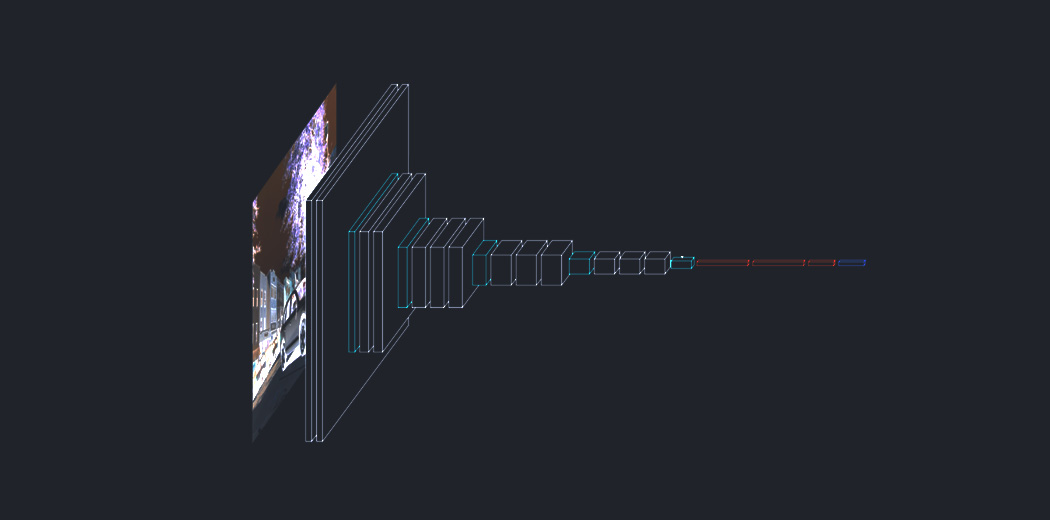
Neural Radiance Fields: Reimagining Visual Reconstruction in the Digital Era
The Genesis of a Technological Revolution
Imagine standing in a world where capturing the essence of a three-dimensional space isn‘t just about taking photographs, but about understanding every intricate detail of light, geometry, and perspective. This is precisely where Neural Radiance Fields (NeRF) emerge as a transformative technology that‘s rewriting our understanding of visual representation.
When I first encountered NeRF during a machine learning conference, it felt like witnessing a technological miracle. Traditional 3D rendering techniques always seemed limited – capturing static moments, struggling with complex geometries, and failing to truly represent the dynamic nature of visual environments.
The Technological Landscape Before NeRF
Before diving deep into Neural Radiance Fields, let‘s understand the technological context. Computer graphics had long relied on explicit geometric modeling – painstakingly constructing 3D models using polygons, textures, and manual interventions. These methods, while revolutionary in their time, carried significant limitations.
Imagine trying to reconstruct the intricate architecture of an ancient temple using traditional photogrammetry. You‘d need hundreds of precisely aligned photographs, complex calibration processes, and substantial computational resources. The results? Often disappointing, with significant information loss and artificial-looking reconstructions.
Understanding Neural Radiance Fields: A Paradigm Shift
Neural Radiance Fields represent more than just a technological improvement – they‘re a fundamental reimagining of how machines perceive and reconstruct visual information.
The Mathematical Symphony of NeRF
At its core, NeRF transforms scene representation into a continuous mathematical function. Instead of discrete points and polygons, we now have a neural network that learns to represent space as a sophisticated, learnable equation.
The mathematical representation can be expressed as:
[F_{θ}(x, d) = (c, σ)]Where:
- [x] represents spatial coordinates
- [d] represents viewing direction
- [c] represents color information
- [σ] represents volume density
This seemingly simple equation encapsulates an incredibly complex process of scene understanding.
How NeRF Learns and Reconstructs
Unlike traditional methods, NeRF doesn‘t just map existing data – it learns the underlying principles of scene representation. By training on a limited set of input images, the neural network develops an extraordinary ability to interpolate and generate novel views with remarkable photorealistic quality.
The Technical Architecture: A Deep Dive
The NeRF architecture is a marvel of neural network design. Utilizing a multilayered perceptron (MLP), it processes 5D coordinate inputs to generate comprehensive scene representations.
Rendering Mechanism Explained
The rendering process in NeRF involves three intricate steps:
- Ray Marching: Casting camera rays through the scene and sampling multiple 3D points
- Network Inference: Processing sampled points through the neural network
- Volume Rendering: Accumulating color and density values to generate the final image
This process might sound computational, but it mimics how human visual perception works – sampling information from different perspectives and constructing a comprehensive understanding.
Real-World Implications and Applications
NeRF isn‘t just a theoretical construct – it‘s transforming multiple domains:
Scientific Research and Exploration
Researchers are using NeRF to reconstruct archaeological sites, document fragile historical artifacts, and create immersive educational experiences. Imagine digitally preserving a centuries-old manuscript with unprecedented detail and accuracy.
Medical Imaging Frontiers
In medical contexts, NeRF offers revolutionary possibilities for surgical planning, anatomical visualization, and complex diagnostic imaging. The ability to generate novel views and understand spatial relationships could dramatically improve medical interventions.
Challenges and Computational Considerations
Despite its remarkable capabilities, NeRF isn‘t without challenges. The computational requirements are substantial, demanding significant GPU resources and sophisticated training mechanisms.
Current research focuses on optimizing these computational constraints, developing more efficient neural network architectures, and reducing training times.
The Human Element in Technological Innovation
What makes NeRF truly fascinating isn‘t just its technical sophistication, but the human creativity behind its development. It represents a beautiful intersection of mathematics, computer science, and artistic vision.
Looking Toward the Future
As machine learning continues evolving, Neural Radiance Fields stand as a testament to human ingenuity. They represent not just a technological tool, but a new way of understanding and representing visual information.
The next decade will likely see NeRF integrated into fields we can‘t yet imagine – from augmented reality experiences to scientific visualization techniques.
Conclusion: A New Visual Paradigm
Neural Radiance Fields aren‘t just another technological advancement. They‘re a fundamental reimagining of how we capture, understand, and reconstruct visual environments.
As an AI and machine learning expert, I‘m continuously amazed by how technologies like NeRF blur the lines between computational processes and human perception. We‘re not just creating algorithms; we‘re developing new ways of seeing and understanding the world around us.
The journey of Neural Radiance Fields is just beginning, and the most exciting developments are yet to come.