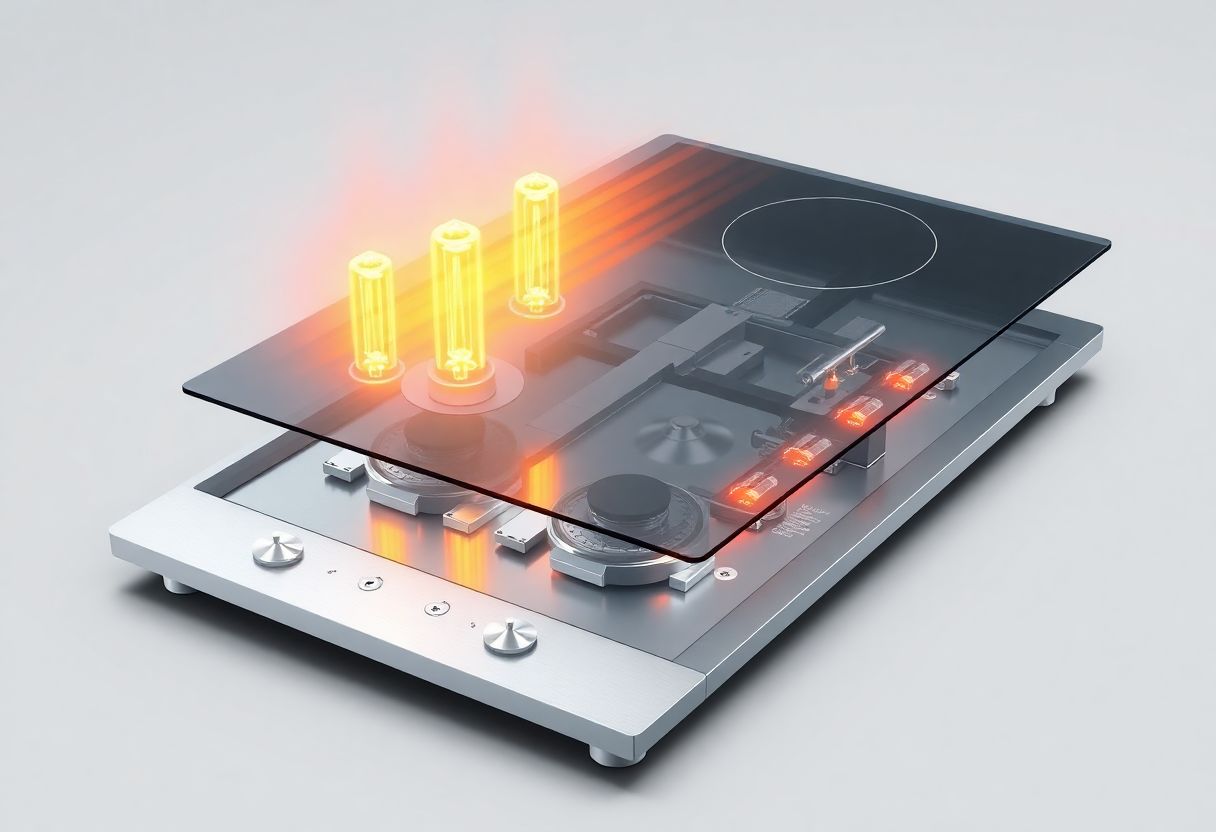
Illuminating the Future of Cooking: A Comprehensive Guide to Halogen Hobs
Imagine a kitchen where the power of light itself transforms raw ingredients into culinary masterpieces. This isn't science fiction – it's the reality of cooking with halogen hobs. As a fusion of cutting-edge technology and timeless culinary art, halogen cooking represents a fascinating leap forward in how we prepare our meals. In this comprehensive guide, we'll explore the science, benefits, and practical applications of halogen hobs, shedding light on why this innovative cooking method is capturing the attention of home cooks and professional chefs alike.
The Science Behind the Glow: How Halogen Hobs Work
At the heart of every halogen hob lies a principle as old as the universe itself: the transfer of energy through electromagnetic radiation. Halogen hobs primarily utilize infrared radiation, a form of energy that sits just beyond the visible spectrum. This radiation is produced by halogen lamps, which contain a tungsten filament surrounded by halogen gas.
When electricity flows through the filament, it heats up to temperatures exceeding 2,500°C (4,532°F). At these extreme temperatures, the tungsten would typically evaporate quickly. However, the halogen gas performs a remarkable feat of atomic recycling. It captures the evaporated tungsten atoms and redeposits them back onto the filament, allowing the lamp to burn hotter and brighter than conventional incandescent bulbs.
The infrared radiation emitted by these lamps passes through a specialized glass ceramic cooktop. This material is engineered to be highly transparent to infrared wavelengths while remaining relatively cool to the touch. Beneath the lamps, a reflective surface directs more energy upward, maximizing efficiency.
When a pot or pan is placed on the hob, it absorbs the infrared radiation and converts it to heat through a process called thermal radiation. This heat is then transferred to the food through conduction (direct contact with the hot cookware) and convection (circulation of heated liquids or gases within the food).
The Electromagnetic Spectrum: Cooking with Light
To truly appreciate the ingenuity of halogen cooking, it's essential to understand its place within the broader electromagnetic spectrum. Electromagnetic radiation exists as a continuum of wavelengths, from the extremely long radio waves to the incredibly short gamma rays. Visible light occupies only a tiny slice of this spectrum.
Infrared radiation, the workhorse of halogen cooking, sits just beyond the red end of visible light. Its wavelength typically ranges from about 750 nanometers to 1 millimeter. This position in the spectrum gives infrared radiation its unique properties – invisible to the human eye but readily absorbed by many materials and converted to heat.
The use of infrared radiation for cooking is not entirely new. In fact, it's the same principle that makes traditional campfires and charcoal grills effective. However, halogen technology allows for precise control over this radiation, harnessing it in a way that's far more efficient and controllable than open flames.
Efficiency and Speed: The Halogen Advantage
One of the most compelling aspects of halogen hobs is their remarkable efficiency. According to a study published in the Journal of Food Engineering, halogen heating can be up to 80-85% efficient in transferring energy to food. This is significantly higher than traditional gas stoves, which typically achieve around 40% efficiency, and even surpasses many conventional electric stoves.
This efficiency translates directly into speed. Halogen hobs can reach full power in mere seconds, a stark contrast to the minutes required for traditional electric coils to heat up. In practical terms, this means less time waiting for water to boil or pans to preheat, and more time actually cooking.
The rapid heating capability of halogen hobs isn't just about convenience – it can also have a positive impact on food quality. Quick heating allows for better temperature control, which is crucial for techniques like searing that rely on precise heat management. The ability to rapidly adjust temperature also means less risk of overcooking, helping to preserve the nutritional value and texture of foods.
Precision and Control: Cooking with Light
Temperature control is a critical aspect of cooking, and it's an area where halogen hobs truly shine. The output of halogen lamps can be adjusted almost instantly, allowing for precise control over cooking temperatures. This responsiveness is comparable to gas stoves, long favored by professional chefs for their controllability.
Most halogen hobs offer multiple power settings, typically ranging from gentle warming to high-intensity cooking. Some advanced models even feature touch-sensitive controls that allow for minute adjustments, giving cooks an unprecedented level of control over their cooking environment.
This precision extends beyond just temperature control. The nature of infrared heating means that the energy is transferred directly to the cookware, with minimal heating of the surrounding air. This can lead to more even heating and reduced cooking times, as less energy is lost to the environment.
Safety and Convenience: The User-Friendly Kitchen
While the technology behind halogen hobs may be complex, their operation is remarkably simple and safe. The glass ceramic surface remains relatively cool during operation, as it's largely transparent to the infrared radiation. This significantly reduces the risk of burns compared to traditional stovetops.
The smooth, flat surface of halogen hobs also contributes to their safety and convenience. There are no grates or coils to navigate, making it easier to move pots and pans around the cooking surface. This design also makes cleaning a breeze – spills can be easily wiped away without having to remove any parts or navigate around burners.
From an environmental and indoor air quality perspective, halogen hobs offer advantages as well. Unlike gas stoves, they produce no direct emissions during use, contributing to cleaner indoor air. This can be particularly beneficial for individuals with respiratory sensitivities or in homes with poor ventilation.
Versatility in the Kitchen: From Simmering to Searing
One of the most appealing aspects of halogen hobs is their versatility. They're capable of handling a wide range of cooking tasks, from gentle simmering to high-heat searing. This adaptability comes from their ability to precisely control heat output and the fact that they work with virtually any type of cookware.
Unlike induction cooktops, which require specific magnetic cookware, halogen hobs are compatible with all types of pots and pans. This means you can use your existing cookware, whether it's stainless steel, copper, aluminum, or even glass and ceramic.
The even heating provided by halogen hobs makes them particularly well-suited for techniques that require consistent temperatures, such as making delicate sauces or melting chocolate. At the same time, their ability to reach high temperatures quickly makes them excellent for searing meats or stir-frying vegetables.
Energy Efficiency and Environmental Impact
In an era of increasing environmental consciousness, the energy efficiency of halogen hobs is a significant selling point. As mentioned earlier, halogen cooking can be up to 85% efficient in transferring energy to food. This high efficiency not only translates to lower energy bills but also reduced environmental impact.
A study published in the journal Energy Policy found that switching from a traditional electric stove to a more efficient cooking method like halogen could reduce household energy consumption for cooking by up to 25%. Over time, this can add up to significant energy savings and a reduced carbon footprint.
However, it's important to note that the overall environmental impact of halogen cooking depends on the source of the electricity used to power the hob. In regions where electricity is primarily generated from renewable sources, the environmental benefits are even more pronounced.
The Future of Halogen Cooking: Innovations on the Horizon
As with any technology, halogen cooking continues to evolve. Researchers and engineers are constantly working to improve efficiency, durability, and functionality. Some exciting developments on the horizon include:
-
Advanced materials: New glass ceramic compositions that are even more durable and efficient at transmitting infrared radiation.
-
Smart integration: Halogen hobs that can be controlled via smartphone apps or integrated into broader smart home systems.
-
Hybrid technologies: Cooktops that combine halogen heating with other methods like induction for even greater versatility.
-
Energy harvesting: Systems that capture and reuse some of the waste heat generated during cooking.
These innovations promise to make halogen cooking even more efficient, convenient, and versatile in the future.
Conclusion: Illuminating the Path Forward in Culinary Technology
Halogen hobs represent a fascinating intersection of physics, materials science, and culinary art. By harnessing the power of light, they offer a cooking experience that combines the best aspects of traditional methods with cutting-edge technology.
The benefits of halogen cooking are clear: rapid heating, precise control, energy efficiency, and user-friendly operation. While there may be a learning curve for those accustomed to traditional cooking methods, the advantages often outweigh the initial adjustment period.
As we look to the future of cooking technology, halogen hobs stand out as a shining example of how innovative thinking can transform even the most fundamental aspects of our daily lives. Whether you're a professional chef or a home cooking enthusiast, the precision, efficiency, and versatility of halogen cooking offer exciting possibilities for culinary exploration.
In the grand spectrum of cooking technologies, from the first controlled use of fire to the latest in molecular gastronomy, halogen hobs occupy a unique and promising position. They remind us that even in something as ancient and universal as cooking, there's always room for enlightening innovation.