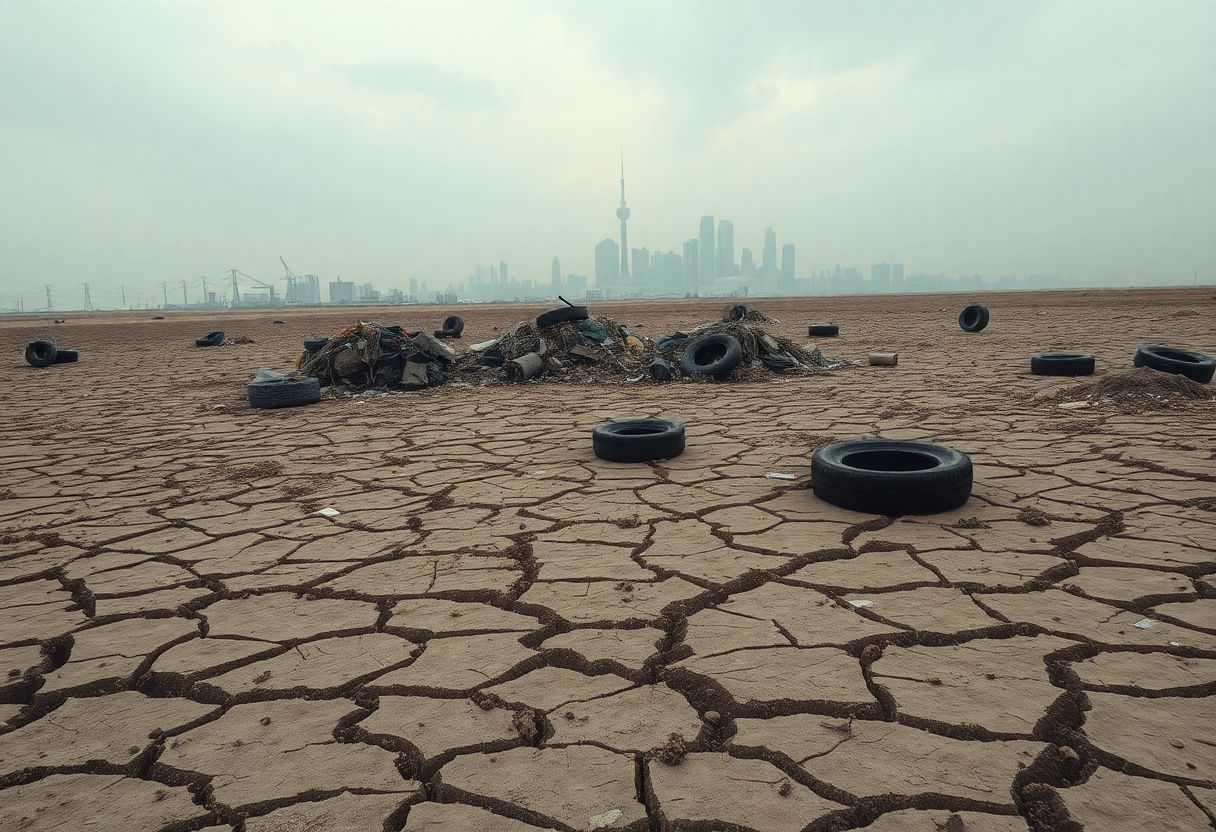
Land Pollution: A Silent Crisis Threatening Our Planet’s Future
In an era where environmental concerns dominate global discourse, land pollution often takes a backseat to more visible issues like air and water pollution. However, this silent crisis is steadily eroding the very foundation of our ecosystems and livelihoods. As a science educator deeply invested in environmental issues, I feel compelled to shed light on this critical problem that affects us all.
Understanding Land Pollution: More Than Meets the Eye
Land pollution is a multifaceted environmental issue that extends far beyond visible trash or debris. It encompasses the contamination of soil, alteration of land structures, and degradation of Earth's surface due to human activities. This form of pollution is insidious, often invisible to the naked eye, yet its impacts are far-reaching and long-lasting.
The scope of land pollution is staggering. According to the United Nations Environment Programme, up to 40% of the world's agricultural land is seriously degraded. This degradation not only affects food production but also contributes to climate change, biodiversity loss, and water scarcity. The problem is not confined to rural areas; urban landscapes are equally susceptible, with industrial sites, landfills, and even residential areas contributing to the pollution of our land.
The Many Faces of Land Pollution
Waste Management: A Growing Mountain of Problems
One of the most visible forms of land pollution stems from improper waste disposal. As global population and consumption patterns increase, so does our waste output. The World Bank reports that global waste generation is expected to increase to 3.40 billion tonnes by 2050, a stark increase from 2.01 billion tonnes in 2016.
Landfills, once considered a solution, are now recognized as significant contributors to land pollution. Even modern, well-managed landfills can leak harmful substances into surrounding soil and groundwater. A study published in the journal Environmental Science & Technology found that 82% of surveyed landfill sites produced leachate plumes that contaminated groundwater.
Electronic waste, or e-waste, presents a particularly challenging aspect of waste management. The Global E-waste Monitor 2020 reported that a record 53.6 million metric tonnes of e-waste was generated worldwide in 2019, up 21% in just five years. This e-waste contains hazardous materials like lead, mercury, and cadmium, which can leach into soil and water systems when improperly disposed of.
Industrial Activities: The Hidden Polluters
Industrial processes, while driving economic growth, often leave a toxic legacy in our soil. The European Environment Agency estimates that there are 2.8 million potentially contaminated sites across Europe, many of which are the result of past industrial activities.
Mining operations, in particular, can have devastating effects on land quality. A study in the journal Environmental Science and Pollution Research found that soil near mining sites often contains elevated levels of heavy metals, with concentrations sometimes hundreds of times higher than background levels. These contaminants can persist in the environment for decades, affecting ecosystems and human health long after mining activities have ceased.
Oil spills, while often associated with marine pollution, also significantly impact land. The Niger Delta, for instance, has suffered from ongoing oil pollution for decades. A report by the United Nations Environment Programme found that soil contamination in some areas extended to a depth of 5 meters, severely impacting agricultural productivity and ecosystem health.
Agricultural Practices: A Double-Edged Sword
Modern agriculture, while essential for feeding the world's growing population, can also be a significant source of land pollution. The overuse of pesticides and fertilizers has led to widespread soil contamination. A global study published in Nature Geoscience found that 36% of the world's croplands are at high risk of pesticide pollution, threatening both biodiversity and water resources.
Intensive farming practices can deplete soil nutrients and structure, leading to erosion and desertification. The United Nations Convention to Combat Desertification reports that over 12 million hectares of productive land become barren every year due to desertification and drought alone.
Urbanization: Concrete Jungles and Polluted Lands
As cities expand, they often encroach on natural or agricultural land, leading to various forms of pollution. Urban areas generate significant amounts of pollutants through construction activities, transportation, and industrial processes. A study in the Journal of Cleaner Production found that urban soil often contains higher levels of heavy metals and organic pollutants compared to rural areas.
The proliferation of impermeable surfaces in urban areas, such as roads and buildings, increases runoff and soil erosion. This runoff can carry a cocktail of pollutants, including oil, heavy metals, and microplastics, into surrounding soil and water bodies. Research published in Water Research showed that urban runoff can contain up to 300 times more copper and up to 30 times more zinc than rainwater.
The Far-Reaching Impact of Land Pollution
Environmental Consequences: A Domino Effect
The effects of land pollution extend far beyond the immediate area of contamination. Soil degradation leads to reduced agricultural productivity, threatening food security for millions. The Food and Agriculture Organization (FAO) estimates that 33% of the Earth's soils are already degraded, and over 90% could become degraded by 2050.
Polluted land also contributes to water pollution as contaminants leach into groundwater or are carried into water bodies by runoff. A study in the journal Water Research found that up to 90% of water pollutants in some regions originate from contaminated soil.
Moreover, land pollution plays a role in climate change. Deforestation and soil degradation release stored carbon into the atmosphere. The Intergovernmental Panel on Climate Change (IPCC) estimates that land-use changes, including deforestation, account for about 23% of total human-caused greenhouse gas emissions.
Health Implications: An Invisible Threat
The health impacts of land pollution are often overlooked but can be severe. Exposure to contaminated soil can lead to a range of health issues, from skin irritations to more serious conditions like cancer. A study published in The Lancet found a significant correlation between soil pollution and increased cancer risk in certain regions.
Contaminated soil can also affect human health indirectly through the food chain. Plants grown in polluted soil can accumulate toxins, which are then passed on to animals and humans who consume them. Research in the Journal of Hazardous Materials demonstrated that vegetables grown in soil contaminated with heavy metals could accumulate these pollutants at levels exceeding safe limits for human consumption.
Solutions and the Path Forward
Addressing land pollution requires a multifaceted approach involving individuals, communities, businesses, and governments. Here are some key strategies:
Sustainable Waste Management
Implementing comprehensive recycling and composting programs can significantly reduce the amount of waste ending up in landfills. Countries like Germany have achieved recycling rates of over 65% through stringent regulations and public education campaigns. Innovations in waste-to-energy technologies also offer promising solutions for managing non-recyclable waste while generating energy.
Remediation Technologies
Advances in bioremediation and phytoremediation offer hope for cleaning up contaminated sites. For instance, researchers at the University of York have developed a method using bacteria to clean up oil spills, potentially revolutionizing how we deal with petroleum contamination. Phytoremediation, using plants to remove contaminants from soil, has shown promise in cleaning up sites contaminated with heavy metals and organic pollutants.
Sustainable Agriculture
Promoting organic farming practices and precision agriculture can reduce the environmental impact of food production. Studies have shown that organic farming practices can increase soil organic matter content by 3.5% per decade, improving soil health and reducing erosion. Precision agriculture, using technologies like GPS and remote sensing, can optimize the use of fertilizers and pesticides, reducing pollution while maintaining productivity.
Urban Planning and Green Infrastructure
Integrating green spaces and sustainable design principles into urban planning can mitigate many of the pollution issues associated with urbanization. Cities like Singapore have shown that it's possible to combine dense urban development with extensive green spaces, improving air quality and reducing the urban heat island effect.
Policy and Regulation
Strong environmental regulations and their strict enforcement are crucial in combating land pollution. The European Union's Industrial Emissions Directive, for example, has led to significant reductions in pollutant emissions from industrial activities. Similar stringent regulations worldwide could dramatically reduce industrial contributions to land pollution.
Conclusion: A Call to Action
Land pollution is a complex, global issue that demands immediate attention and concerted action. As a science educator, I believe that raising awareness and fostering a deep understanding of this problem is the first step towards meaningful change. Each of us has a role to play, whether it's making more sustainable consumer choices, supporting environmentally responsible businesses, or advocating for stronger environmental protections.
The health of our land is inextricably linked to the health of our planet and all its inhabitants. By working together to address land pollution, we're not just preserving the ground beneath our feet – we're safeguarding the future of life on Earth. The challenge is enormous, but so is the opportunity to create a cleaner, healthier world for generations to come. Let us embrace this challenge with urgency, innovation, and collective responsibility.