Platinum: The Noble Metal Powering Innovation and Industry
Introduction: The Shining Star of the Periodic Table
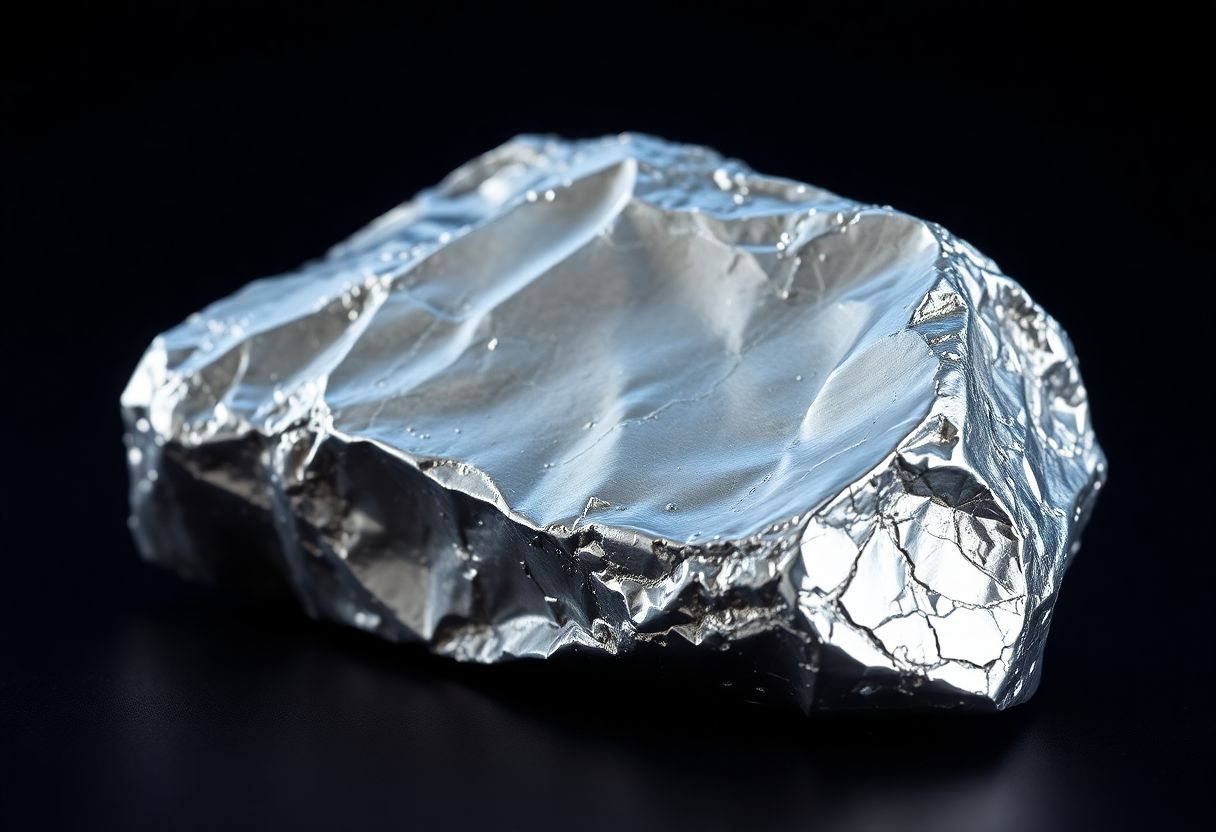
In the vast expanse of the periodic table, few elements capture the imagination quite like platinum. This lustrous, silvery-white metal, with its atomic number 78, has been captivating scientists, jewelers, and industrialists for centuries. From its ancient origins to its pivotal role in cutting-edge technologies, platinum stands as a testament to the enduring importance of elemental discovery and application.
A Journey Through Time: The Discovery and History of Platinum
The story of platinum begins long before it earned its current name. Ancient civilizations encountered platinum-rich alloys, though they lacked the means to fully understand or utilize this noble metal. The first documented description of platinum came in 1557 from Italian chemist Julius Scaliger, but it wasn't until the 18th century that platinum truly began to make its mark on the scientific world.
The Spanish conquistadors, in their relentless pursuit of silver in the New World, stumbled upon platinum in the riverbeds of Ecuador and Colombia. Frustrated by what they perceived as an impurity contaminating their precious silver, they dubbed it "platina," or "little silver." This name would eventually evolve into the English "platinum" we know today.
It was in the early 19th century that platinum caught the attention of the scientific community in earnest. German chemist Johann Wolfgang Döbereiner's groundbreaking discovery of platinum's remarkable catalytic properties in the 1820s laid the foundation for some of its most crucial modern applications. This revelation would prove to be a turning point, setting the stage for platinum's rise to prominence in various fields of science and industry.
The Science Behind the Shine: Understanding Platinum's Unique Properties
To truly appreciate platinum's significance, we must delve into its atomic structure and chemical behavior. With 78 protons in its nucleus and an electron configuration of [Xe] 4f¹⁴ 5d⁹ 6s¹, platinum exhibits properties that set it apart from other elements.
Platinum belongs to the transition metals, a group known for their ability to form multiple oxidation states and their excellent catalytic properties. More specifically, platinum is part of the Platinum Group Metals (PGMs), which includes palladium, rhodium, ruthenium, iridium, and osmium. These metals share similar properties, often occurring together in nature and exhibiting exceptional resistance to corrosion and chemical attack.
The unique electronic structure of platinum contributes to its catalytic prowess. The partially filled d-orbitals allow platinum to form temporary bonds with reactant molecules, facilitating chemical reactions without being consumed in the process. This property is the key to platinum's role in catalytic converters, where it helps transform harmful vehicle emissions into less noxious substances.
Platinum in Nature: A Rare and Precious Resource
Despite its importance, platinum is one of the rarer elements in Earth's crust, ranking 72nd in abundance among naturally occurring elements. This scarcity contributes significantly to its high value and has driven the development of sophisticated mining and refining techniques.
Platinum can be found in nature in several forms. While it occasionally appears as pure metallic nuggets, it more commonly occurs in mineral ores, with sperrylite (platinum arsenide) being a primary source. The global distribution of platinum is highly concentrated, with South Africa dominating production, accounting for approximately 70% of the world's supply. Russia, Canada, Zimbabwe, and the United States also contribute to global platinum production, though to a lesser extent.
The extraction and refinement of platinum is a complex process that showcases the ingenuity of modern metallurgy. In South Africa, where most of the world's platinum is produced, a unique method has been developed to extract platinum from nickel-copper matte, a byproduct of nickel and copper mining. This process involves smelting, electrolysis, and chemical treatment to separate platinum from other metals and impurities. The efficiency of this method allows for the extraction of platinum even when it constitutes a mere 0.14% of the initial material, a testament to the value placed on this precious metal.
The Marvels of Platinum: Physical and Chemical Properties
Platinum's physical properties are as impressive as they are useful. With a density of 21.45 g/cm³, it's one of the densest elements known to science. This high density, combined with its malleability and ductility, allows platinum to be shaped into intricate forms or drawn into extremely thin wires, properties that are invaluable in various industrial and jewelry applications.
The metal's high melting point of 1,768.3°C (3,214.9°F) and boiling point of 3,825°C (6,917°F) make it suitable for use in high-temperature environments. Its bright metallic luster and resistance to tarnishing have made it a favorite in the jewelry industry, where it's often preferred over white gold for its natural white color and durability.
Chemically, platinum is renowned for its nobility and resistance to corrosion. It does not react with oxygen in the air, preventing the formation of oxides that cause tarnishing in other metals. This inertness extends to its resistance to most acids, though it can be dissolved in aqua regia, a mixture of nitric and hydrochloric acids. These properties make platinum invaluable in laboratory settings, where it's used in crucibles, electrodes, and other equipment that must withstand harsh chemical environments.
Platinum in Action: Applications Across Industries
The versatility of platinum is evident in its wide range of applications across various industries. Perhaps its most well-known use is in catalytic converters for vehicles. In this application, platinum acts as a catalyst, facilitating the conversion of harmful exhaust gases into less harmful substances. The platinum catalyst helps convert carbon monoxide to carbon dioxide, unburned hydrocarbons to carbon dioxide and water, and breaks down nitrogen oxides into nitrogen and oxygen. This process significantly reduces the environmental impact of vehicle emissions, playing a crucial role in air pollution control.
In the realm of clean energy, platinum is making waves in fuel cell technology. Proton exchange membrane (PEM) fuel cells rely on platinum catalysts to convert hydrogen and oxygen into water and electricity, offering a promising path towards sustainable energy production. However, the high cost of platinum has driven ongoing research to reduce the amount needed or find alternative materials, aiming to make fuel cells more economically viable for widespread adoption.
The medical field has also benefited greatly from platinum's unique properties. Platinum-based drugs, such as cisplatin, have revolutionized cancer treatment. These compounds work by interfering with DNA replication in cancer cells, effectively halting tumor growth. Additionally, platinum's biocompatibility makes it ideal for use in medical implants, including pacemakers, where platinum electrodes play a crucial role in regulating heart rhythms.
In the world of high-precision instruments, platinum's stability and resistance to corrosion make it invaluable. It's used in thermocouples for high-temperature measurements, in laboratory equipment that must withstand corrosive chemicals, and in the production of high-quality optical glass. The electronics industry also relies on platinum for its excellent conductivity and durability, using it in electrical contacts and other components where reliability is paramount.
The Platinum Market: Economics and Investment
The platinum market is a complex ecosystem influenced by a myriad of factors. Supply is primarily controlled by South African production, making the global platinum market susceptible to geopolitical events and labor issues in the region. Demand is driven by the automotive, jewelry, and industrial sectors, with the balance between these sectors often shifting in response to economic conditions and technological advancements.
Price fluctuations in the platinum market can be significant and are influenced by factors such as changes in industrial demand, geopolitical events affecting major producing countries, and competition from other materials. For instance, the increasing use of palladium in catalytic converters as a cheaper alternative has impacted platinum demand in recent years.
As a precious metal, platinum also holds a place in the investment world. It's available as bullion coins and bars, and is used in exchange-traded funds (ETFs). Some investors view platinum as a hedge against economic uncertainty, similar to gold and silver. However, its price can be more volatile due to its greater industrial utility, making it a complex asset for investors to navigate.
Environmental and Ethical Considerations in the Platinum Industry
As with many mining operations, platinum extraction comes with significant environmental considerations. Open-pit mining can lead to land disturbance, altering landscapes and ecosystems. The mining and refining processes are water and energy-intensive, raising concerns about resource consumption and carbon footprint.
In response to these challenges, the platinum industry has been making strides towards more sustainable practices. Recycling has become an increasingly important source of platinum, with efforts to recover the metal from catalytic converters, electronic waste, and other sources. This not only reduces the need for new mining but also addresses the issue of electronic waste management.
Improved mining techniques are being developed to minimize environmental impact, including more efficient water use and energy consumption. There's also ongoing research into alternative materials that could reduce reliance on platinum in certain applications, though its unique properties make it challenging to replace in many cases.
Ethical sourcing has become a key concern in the platinum industry, mirroring similar movements in other precious metal markets. There's growing awareness among consumers about the origin of platinum in products, leading to increased transparency in supply chains and the development of ethical sourcing certifications. These efforts aim to ensure that platinum production does not contribute to conflict or human rights abuses, a particular concern in some mining regions.
The Future of Platinum: Emerging Technologies and Ongoing Research
As we look to the future, platinum is poised to play a significant role in several emerging technologies. The hydrogen economy, seen by many as a key component of a sustainable energy future, relies heavily on platinum. From fuel cells to hydrogen production through water electrolysis, platinum's catalytic properties are central to many hydrogen-based technologies.
In the field of nanotechnology, platinum nanoparticles are opening up new possibilities. These tiny particles exhibit unique catalytic properties that differ from bulk platinum, potentially leading to more efficient catalysts for a variety of applications. From more effective fuel cells to novel medical treatments, platinum nanoparticles are at the forefront of nanoscale research.
The electronics industry is also exploring new applications for platinum. In the realm of spintronics, a field that aims to harness electron spin for information processing, platinum's strong spin-orbit coupling makes it a material of interest. This could lead to more efficient and powerful electronic devices in the future.
Ongoing research aims to address some of the challenges associated with platinum use. Scientists are working to develop new platinum alloys with enhanced properties, potentially expanding its range of applications. There's also significant effort being put into reducing the amount of platinum needed in catalytic converters and fuel cells, aiming to make these technologies more cost-effective and sustainable.
Conclusion: Platinum's Enduring Legacy and Promising Future
From its mysterious beginnings as an unwanted impurity in silver mines to its current status as a critical component in clean energy technologies, platinum has come a long way. Its unique combination of properties – catalytic activity, resistance to corrosion, high melting point, and malleability – have made it indispensable in a wide range of industries.
As we face the challenges of the 21st century, from environmental concerns to the need for advanced medical treatments and clean energy solutions, platinum continues to be at the forefront of scientific and industrial innovation. Its role in catalytic converters has already made a significant impact on reducing air pollution, and its potential in fuel cell technology could be key to a sustainable energy future.
While the rarity and cost of platinum present challenges, ongoing research and technological advancements are opening up new possibilities. From more efficient extraction methods to novel applications in nanotechnology and electronics, the future of platinum looks bright.
As we continue to unlock the secrets of this noble metal, one thing is clear: platinum will remain a crucial element in our technological world. Whether it's adorning our fingers, purifying our air, powering our vehicles, or enabling new medical treatments, platinum's importance in our lives is set to grow. It stands as a shining example of how a single element, when thoroughly understood and creatively applied, can have a profound impact on human progress and our interaction with the world around us.